How to Clean Blankets Without Washing: What Works
Learn how to clean blankets without washing: vacuum, spot-treat and air them safely, and know when a stain or odour needs professional cleaning.

Most stale blankets don't need washing. They need moving air and about twenty minutes with a suction nozzle.
The smell that makes you reach for detergent is usually trapped humid air and fine debris sitting in the pile, not soil that water and agitation would lift. A wash cycle is the most aggressive thing most blankets ever meet: it saturates fibres, puts stress on every seam, and in wool it risks felting that can't be undone. Refreshment is the quieter option, and it works far more often than people expect.
What no-wash advice usually gets wrong is scope. Freshening a surface and controlling allergens are two different jobs, and airing does only the first. The method that fixes a musty smell won't fix a dust mite population, and neither one rescues a blanket that sat damp in a basement for a season. Identify the problem, then pick the tool.
Which Method Fits Your Blanket Problem
Most blankets can be refreshed without water, but only when the problem is on the surface: loose dust, light odour, a fresh spill that hasn't soaked through. Anything embedded, widespread or health-related moves into a different category, and no amount of brushing will shift it.
The table below pairs each common blanket problem with the low-moisture method that addresses it and states whether washing or professional cleaning is the required next step.
| Problem | Low-moisture method | Washing or professional cleaning needed? |
|---|---|---|
| Loose dust, lint, pet hair | Suction-only vacuum through a fibreglass screen | No, unless the fabric is fragile |
| Stale or lightly musty odour | Air in shaded, moving room air for about 24 hours | No if it fades; professional if it persists |
| Fresh spill, still damp | Blot with a white towel, spot-treat after a dye test | Wash only if the liquid soaked through |
| Set-in stain, older than a few days | One localized attempt, then stop | Yes, professional assessment |
| Dust mites or allergen control | Vacuum both sides as partial control only | Yes, hot wash where the fabric allows |
| Mould, smoke or damp storage | No safe home method | Professional; discard porous items that stayed wet for long |
| Bodily fluids or infection concern | No safe home method | Professional cleaning |
| Heated or electric blanket | Disconnect power, follow the manufacturer's method | Manufacturer-approved cleaning only |
Read the last column first. Most of the time the answer is no, and that's the point: a blanket in sound condition with a surface problem doesn't need a wash cycle, and the wash cycle is often what shortens its life.
Two rows deserve a closer look. A musty smell that fades after a full day in moving air was a humidity problem. A smell that returns within a day or two was never a surface problem, and repeat airing only delays the decision. Likewise, a spill that has soaked into the batting under the surface pile has moved from spot treatment to cleaning, and blotting the top won't reach it.
The rule of thumb: if the problem sits on the surface and the label permits it, start with low-moisture methods. If it's embedded, widespread or tied to health, stop and escalate.
Where escalation leads depends on the fibre. For the solvent-versus-water question, the dry cleaning versus laundry comparison sets out which fabrics and which soils belong on each side.
Check the Label and Fabric Before You Start
The care label is the primary decision point, and the Canadian system is more specific than often assumed. The federal Guide to Apparel and Textile Care Symbols covers washing, drying, ironing, bleaching and professional cleaning, and it includes explicit non-washing options: tumble dry no heat or air dry, do not tumble dry, and dry flat after excess water has been removed. It also carries do not dry and professional-cleaning symbols, which settle the question outright.
Where drying is permitted, the same guide sets hard ceilings. Low heat must not exceed 55°C, medium heat must not exceed 65°C, and high heat must not exceed 75°C. Those numbers matter for a blanket you're only airing or spot-treating, because a dryer setting that conflicts with the fibre content will do more harm in fifteen minutes than a season of use.
The Condition Check Comes Second
A blanket that's powdering, splitting, fragmenting, shedding material, or has loose threads and broken seams isn't a candidate for home surface cleaning. Treat it as an assessment job, along with hand-tied quilts and anything whose backing is separating.
Run a dye test before any liquid touches the surface. Wet a white cotton cloth with cool water, rub an inside seam allowance or a hidden corner, and look for colour on the cloth. If colour transfers, water-based spot treatment is off the table.
Where the numbers bite: a no-heat dryer cycle is still a dryer cycle. If the label says do not tumble dry, air it flat, and don't talk yourself into the air-only setting because it feels gentler.
Match the Fabric to the Method
| Fabric or type | Safe low-moisture approach | Avoid |
|---|---|---|
| Cotton or acrylic | Suction-only vacuum, then air-dry | Rotating brush heads; heat above the label limit |
| Wool | Air in room-temperature moving air; sponge localized marks | Wringing, direct heat, saturating the fibres |
| Fleece or polyester | Vacuum, air and spot-treat; reduce wash frequency | Steam that wets the fibres; repeated wash cycles |
| Sheepskin or long-pile | Suction-only vacuum, no rotating heads | Brushing that pulls fibres |
| Down or weighted | Surface vacuum only; professional for weight-bearing pieces | Home soaking; stress on the seams |
| Heated or electric | Disconnect power; manufacturer-approved method | Solvents, bleach, dry-cleaning fluids |
| Vintage, damaged or loose seams | Specialized assessment before any treatment | Any surface cleaning |
Synthetic fleece is the fabric where wash frequency matters most, which makes low-moisture care the better first step rather than a compromise. Down is the opposite case: once the fill is soaked, home drying rarely gets it fully dry, and clumped down is hard to recover, which is why down duvet cleaning is a separate job from surface refreshment.
How to Vacuum and Air a Blanket Step by Step
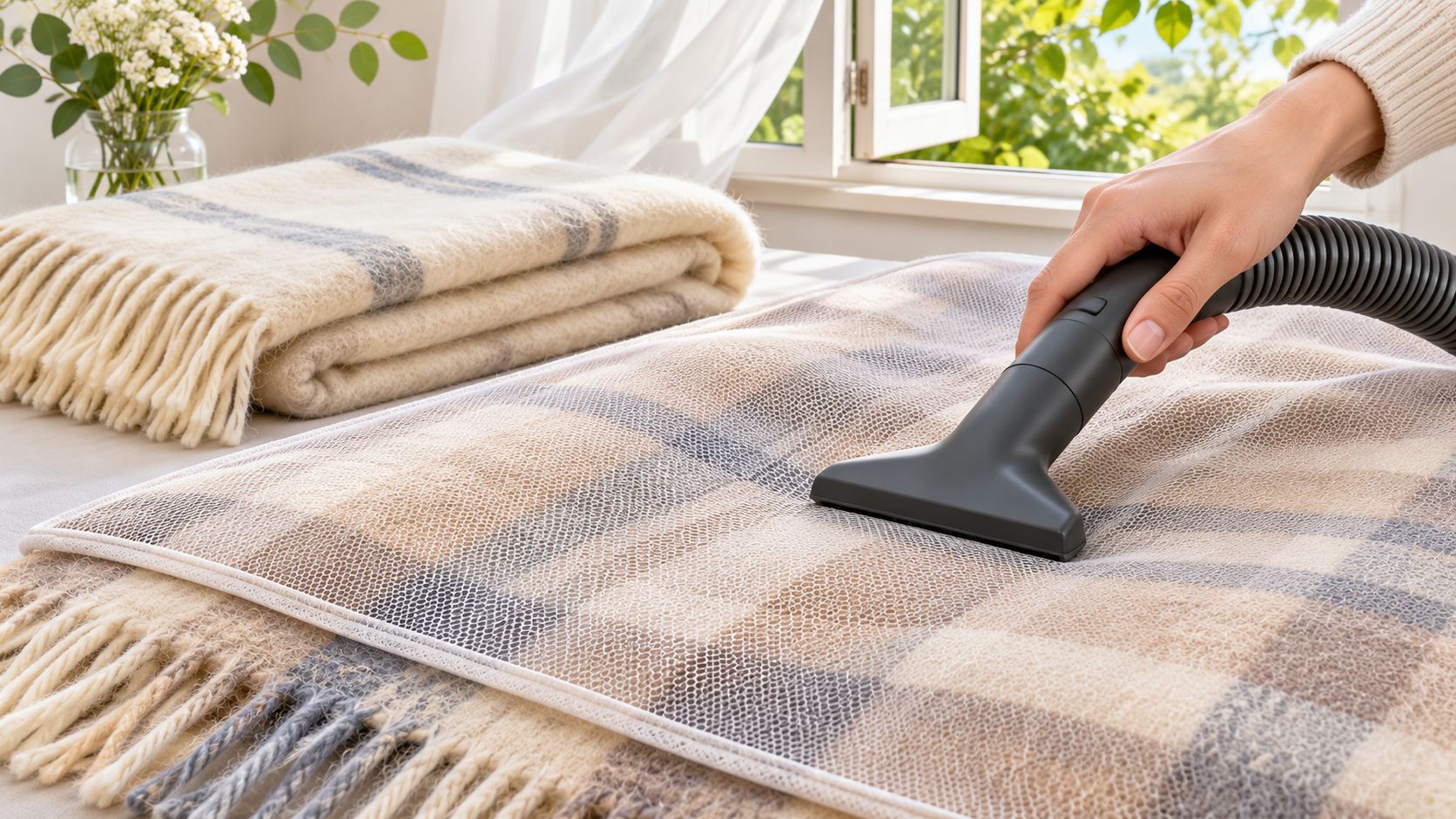
This routine suits blankets in sound condition, and it's the one I'd run on anything wool, cashmere-blend, vintage or otherwise not built for a wash cycle. Surface cleaning is an established conservation method in Canada, not a household shortcut. The Canadian Conservation Institute's textile care guidance describes careful vacuuming for textiles in good condition, using a low-powered handheld vacuum with fiberglass screening laid over the fabric, moving the nozzle from place to place in the direction of the fabric nap rather than rubbing back and forth. A soft artist's brush loosens surface dirt first.
That approach lifts dust and loose particles without saturating fibres, causing shrinkage or stressing seams through a full wash cycle. Here's the sequence in visual form, then the detail that makes each step work.
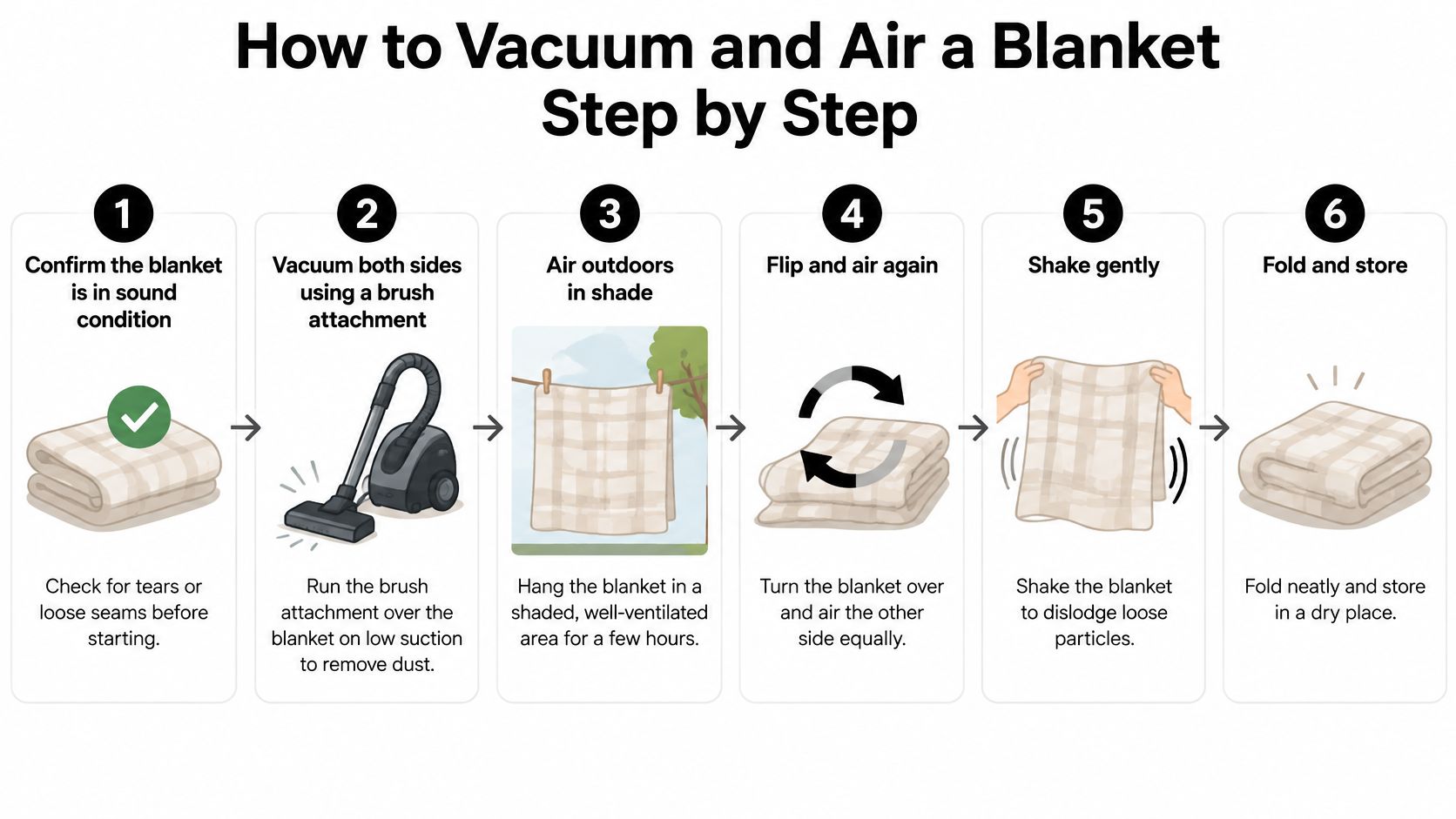
- Confirm the blanket can take it. Check the label allows surface care and the fabric shows none of the fragile signs. The mistake here is skipping the check because the method feels gentle. It isn't gentle on a blanket that's already fragmenting.
- Lay it flat and screen it. A fibreglass screen or fine protective mesh goes over the textile. Vacuuming bare against a loose weave pulls yarns and can catch a pulled thread that runs.
- Vacuum in the direction of the nap. Use a low-powered handheld on suction only, moving from place to place. Rubbing back and forth against the pile is the common slip, and it abrades the surface rather than lifting what sits on it.
- Brush only where dirt is loose. A soft artist's brush, one direction. Never on raised, hairy or sheepskin-like surfaces, where a brush drags fibres out instead of releasing dust.
- Turn it and repeat. Soil settles through a blanket, not just onto it, and the reverse side collects what the bed doesn't hold.
- Air it, then store it dry. A clean, shaded, ventilated spot until completely dry, then storage in a cool, dark, dry, well-ventilated place. Folding a blanket that's still holding moisture is how a musty smell starts.
Order matters: vacuum before you air. Airing moves moisture; it doesn't lift dust bound into the pile, and anything you loosen afterwards settles straight back into the fibres.
Airing has limits. It won't break down what has soaked into batting or filling, which is why layered, thick items need a different approach. The same logic behind Restore Heroes' mattress deodorizing guide applies to any thick textile, where the smell lives deeper than the surface. The nap rule isn't blanket-specific either: the pieces in this guide to cleaning heavy drapes behave the same way.
Success looks like this: the surface feels clean and dry under the hand, the edges look even in daylight, and a light shake outdoors raises no visible dust cloud. If dust still flies, the vacuum pass was too fast or the screen sat too far off the surface.
Spot-Treating Fresh Marks Without Soaking the Blanket
A fresh mark comes out without a wash only when the liquid stays small and the liquid is the right one. Too much water, or the wrong cleaner, is why spot treatment fails. Set out a white absorbent towel, a white cloth, cool water, and a mild detergent suitable for delicates.
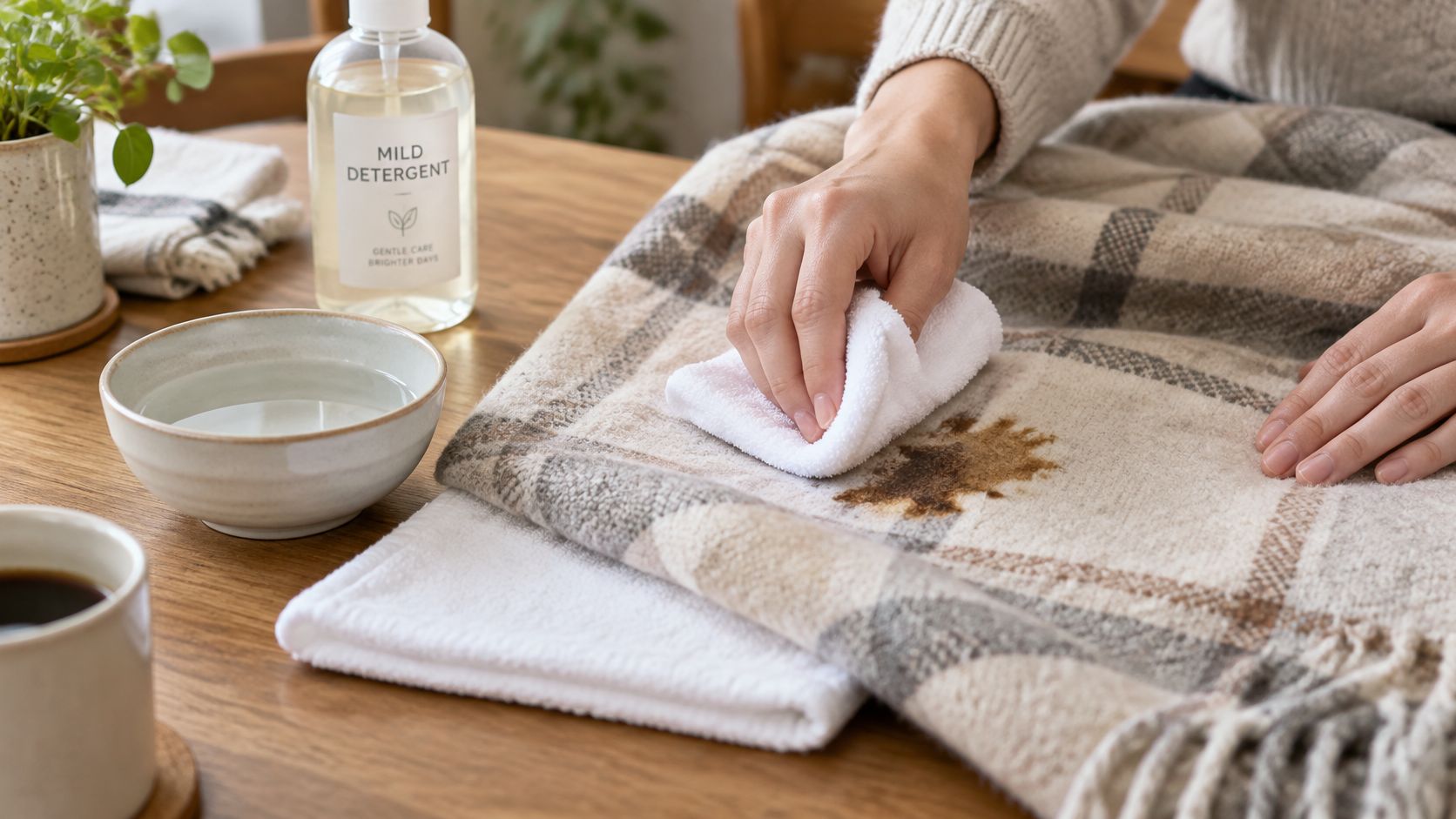
The blanket stays barely damp. I treat that as the limit, not a suggestion. A wool blanket wet through distorts as it dries, can take a day or more to recover, and may develop an odour while it stays damp. You are working on the surface, not into the filling.
Lift anything sitting on top with a spoon or a blunt edge before liquid touches the mark. Slide an absorbent towel underneath so contamination has somewhere to wick. Work from the outside toward the centre so you do not leave the ring that traces a half-treated stain. Blot. Rubbing drives the mark deeper and creates a halo, and both outcomes are worse than the original spot.
Canadian wool-care guidance changes the first liquid by contaminant, which is where most home attempts go wrong: cold water for coffee or tea, carbonated water for alcohol or food, and a gentle cold-water treatment after vinegar for blood, as set out in the wool care fact sheets from the Canadian Cooperative Wool Growers. One universal solvent is the usual failure.
Steam is for texture, not cleanliness. Wool can hang in a steamy bathroom to release wrinkles, but it must not become wet and should dry at room temperature afterwards, as the wool blanket cleaning guidance explains.
Heated blankets add an electrical protocol on top of the fabric one. Disconnect the power before care, follow the manufacturer's method, and do not reconnect or use the item until it is completely dry. On heated bedding, avoid dry-cleaning solvents, bleach and cleaning fluids, and follow the manufacturer's care instructions.
Before you fold, run the acceptance check. The treated area should be dry to the touch, odour-free and visually even. Stop if dye bleeds, the stain spreads, or the mark does not respond after one careful attempt.
This refreshes a fresh surface mark and a light odour. It does not reliably disinfect, and it does not remove embedded grease, body oils, mould or staining that has spread. A careful blot can make the blanket look and smell better while the hygiene problem is still in the fibres. For a wool coat with the same limit, the sequence in cleaning a wool coat applies.
When Airing Is Not Enough and When to Call a Professional
Airing can reduce stale odours, but it does not remove allergens trapped in blanket fibres. Health Canada identifies dust mites in bedding, furniture, carpets and plush items, and notes that they can trigger allergies or worsen asthma. Its recommended controls include regular HEPA-filter vacuuming and frequent hot-water washing of bedding, as described in Health Canada's dust mite guidance. Vacuuming helps with surface material; it does not replace washing when the fabric can tolerate it.
Killing Mites Is Not the Same as Removing the Allergen
Dust-mite allergens include waste and body fragments. Killing mites can leave these particles in the blanket, so a treatment may reduce living mites without removing the allergen load. For someone sensitive to dust mites, vacuuming and airing are partial controls, not a substitute for laundering.
A blanket stored wet or left damp for an extended period is a different problem. Airing will not resolve potential mould or contamination. Don't use it until the cause and extent of the dampness have been addressed.
Where the Hot Wash Route Breaks Down
Hot-water washing can help control dust mites, but only if the blanket's care label permits it. Water above 48.9°C can burn children, and recommended dust-mite washing temperatures may exceed what a household water heater should safely deliver, according to this Nova Scotia asthma and dust-mite resource. Wool, weighted and down blankets may also have care restrictions that rule out a hot wash. Follow the label rather than risking shrinkage, damaged filling or unsafe washing.
Match the Method to the Goal
- Freshening: Vacuum and air the blanket to address surface dust and stale odours.
- Pet hair: Use suction with overlapping passes. Avoid a rotating head on pile fabrics.
- A small stain: Test for colourfastness, then make one careful localized treatment. Stop if the dye transfers or the mark spreads.
- Dust-mite control: Vacuum both sides as partial control. Wash in hot water only when the care label allows it; otherwise, seek a professional assessment.
- Bodily fluids or infection concerns: Airing and vacuuming are not sufficient. Arrange appropriate cleaning rather than trying to freshen the blanket.
How often a blanket can be washed depends on its fibre and care instructions. Frequent washing may affect some fabrics, so don't apply one schedule or cleaning method to every blanket.
Escalation Triggers
Get professional advice if a musty smell returns after thorough airing, smoke has penetrated the fibres, a stain spreads or bleeds, or a blanket has been stored damp for a long time. Do the same for a weighted, down or oversized blanket that you cannot vacuum evenly, and for fragile seams or fibres. For a heated blanket, follow the manufacturer's instructions and stop using it if it has a fault or the care method is unclear.
For bonded backing or built-in filling, the cleaning method and solvent both matter. How dry-cleaning solvent works explains how dry cleaning differs from wet laundering. CleanOnline provides household-item cleaning, including home linen dry cleaning for blankets, comforters and duvets. Professional cleaning can address soil and stains, but it does not automatically remove allergens or replace laundering when mite control is the goal.