Dry Cleaning vs Laundry: Which Method Suits Your Clothes
Dry Cleaning vs Laundry explained: cleaning method, fabric safety, stain care and cost, plus a guide to choosing the right service for each garment.

Dry cleaning isn't automatically gentler than washing. Commercial dry cleaning involves solvent, mechanical movement and heated drying, so a delicate garment can still suffer if the process isn't matched to its fabric and construction. The useful question in dry cleaning vs laundry isn't which service sounds more protective. It's which treatment removes the soil without damaging the garment, and whether the whole item needs cleaning at all.
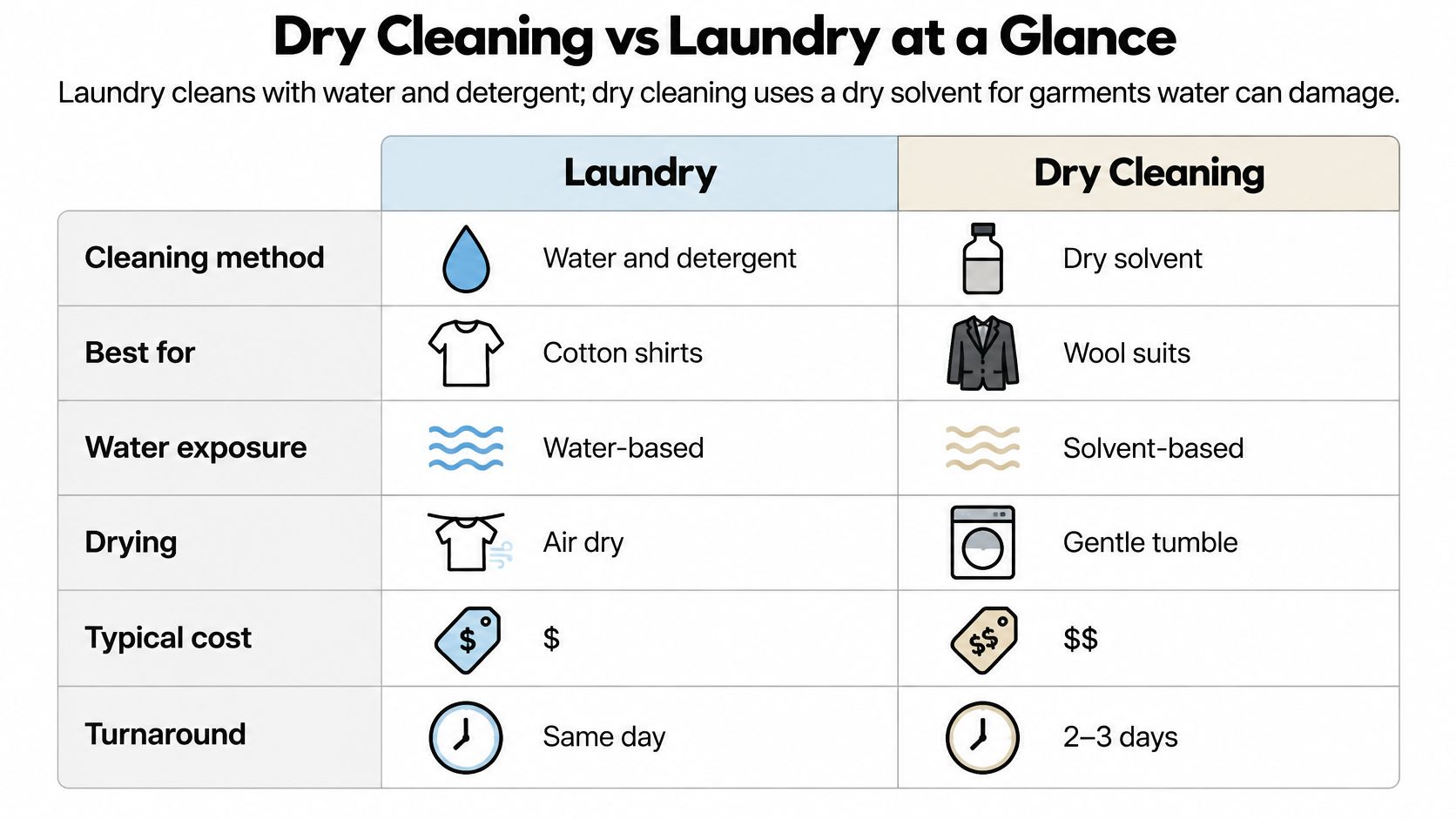
Dry Cleaning vs Laundry at a Glance
Laundry cleans with water and detergent; dry cleaning uses solvent rather than a water-based wash, making it useful for garments that ordinary washing could damage.
| Factor | Laundry (washing with water) | Dry cleaning (solvent-based) |
|---|---|---|
| Cleaning agent | Water with detergent | Solvent, such as perchloroethylene or alternative solvents |
| Best suited to | Washable cottons, synthetics, towels and bed linens | Tailored, structured, embellished or oil-stained garments |
| Main risk | Shrinkage, colour bleeding or distortion when care instructions are ignored | Damage from unsuitable solvent, agitation or heat |
| Oil-based stains | Often need pre-treatment and may persist | Solvent removes oily soils efficiently, though results aren't guaranteed |
| Water-based stains | Usually respond well to suitable detergent and water | Often need targeted spotting; solvent alone may not remove them |
| Typical turnaround | Confirm the washing, drying and folding schedule when booking | Confirm the cleaning, stain-treatment and finishing schedule when booking |
Match the service to the job
The word dry doesn't mean the clothes remain untouched by liquid. Garments contact liquid solvent, but they don't undergo ordinary immersion in water and detergent. Professional laundry, meanwhile, can include sorting, controlled washing, drying and pressing rather than putting everything through a household cycle.
According to Statistics Canada's household clothing-care overview, the average Canadian household spent $63 on laundromats, dry-cleaning and laundry services in 2021. That's a combined annual household expenditure, not a price guide for an individual cleaning order.
For a North York household, these services solve different problems. A bag of washable everyday clothing calls for efficient bulk processing; a lined blazer calls for attention to its shape, interlining and finish.
Practical rule: Choose the process for the garment you have, not the prestige of the service name.
The care label settles many straightforward decisions. Read the entire instruction, including drying and ironing restrictions, rather than stopping at the fibre name. If the label is missing, the garment has mixed materials, or its trim looks fragile, set it aside for assessment instead of guessing.
Turnaround also needs confirmation. Stain treatment, repairs and specialist finishing can affect when an item is ready, so don't plan an important outfit around an unconfirmed collection date.
How Each Method Cleans Your Clothes
Laundry and dry cleaning both use cleaning chemistry and mechanical action. Their main difference is the liquid carrying loosened soil away from the textile.
What happens during laundry
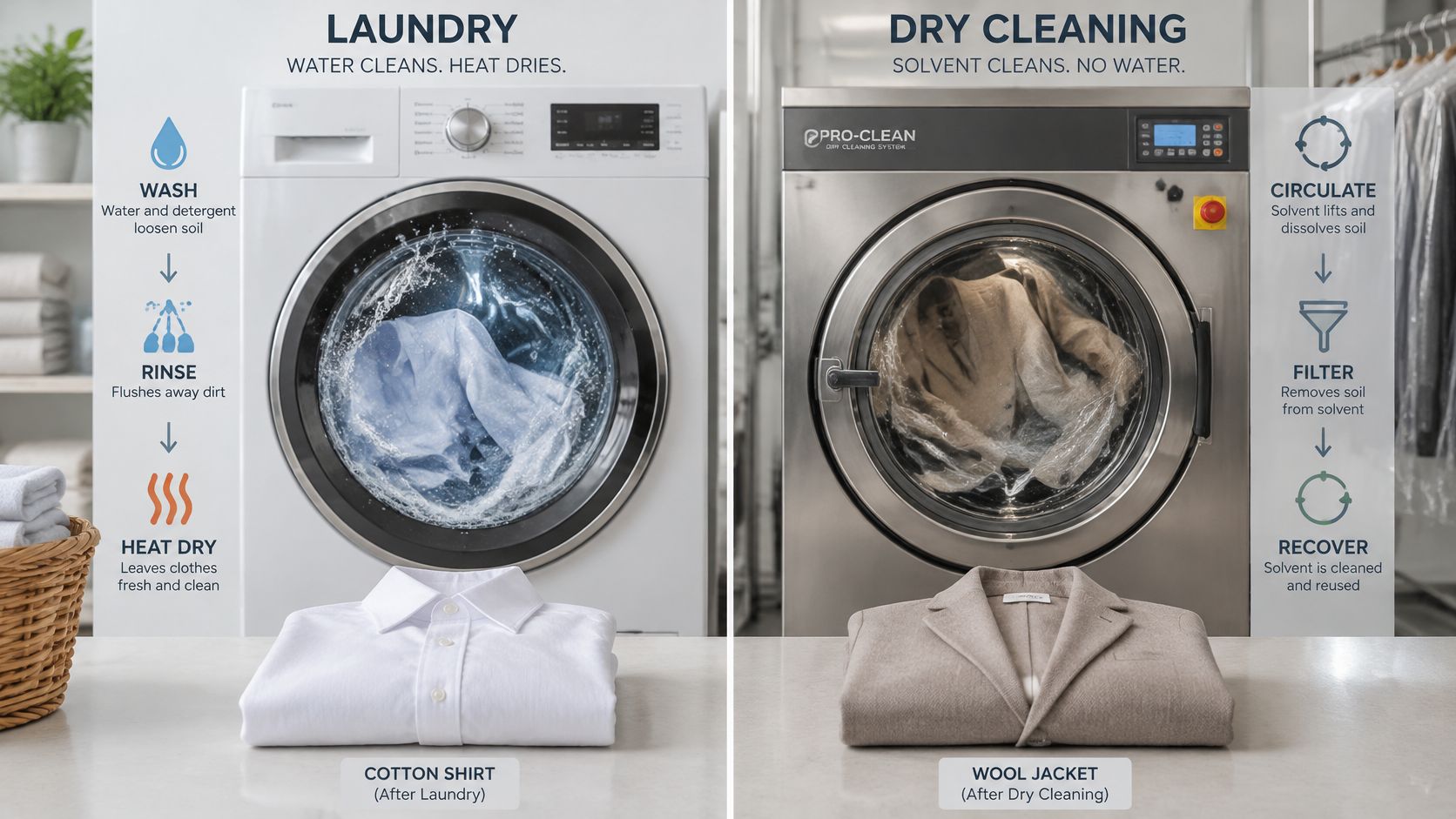
Water wets the fabric, while detergent helps release and suspend soil. Drum movement works the solution through the load, rinsing removes suspended dirt and detergent, and extraction removes excess water before drying.
Each stage needs control. Overloading restricts movement and rinsing; excessive detergent can leave residue; aggressive drying can shrink a garment that survived washing perfectly well.
A Canada Mortgage and Housing Corporation washer demonstration measured front-loading washers using 70.5 litres of total water per cycle, compared with 127.8 litres for the comparison machines, a 45% reduction. In the same demonstration, hot-water use fell from 40.4 to 15.4 litres per cycle, a 62% reduction.
Those results describe the equipment tested, not every washer. The practical lesson is to consider both machine efficiency and temperature: cold or low-temperature washing is a sensible starting point for routine washables when the label, detergent and soil level allow it. Towels and hygiene-sensitive loads may need a different programme.
For an outsourced load, our guide to how wash-and-fold works explains the collection-to-return process. Keep items with special drying instructions separate from ordinary tumble-dry clothing.
What happens during dry cleaning
A cleaner inspects and spots the garment before processing it in solvent. The machine moves solvent through the load, extracts it and dries the garments under controlled conditions; finishing then restores the intended appearance through pressing or steaming.
Perchloroethylene, also called PERC, has a long history in Canadian dry cleaning. Environment and Climate Change Canada states that federal regulations governing its use in dry cleaning became law on February 27, 2003, with requirements addressing equipment, spills and waste management.
Not all dry cleaning uses PERC. Our solvent options include liquid silicone, but an alternative solvent doesn't remove the need to control agitation, drying and finishing.
Check the label's washing tub, drying and professional-cleaning symbols together. A permitted cleaning method isn't permission to use unrestricted heat at every later stage.
Which Garments Suit Each Method
Fibre matters, but construction can matter more. A washable outer fabric doesn't make a jacket washable if its lining, interfacing or trim reacts differently.
| Garment or textile | Usual choice | Reason |
|---|---|---|
| Cotton T-shirts and jeans | Laundry, cold water, inside out when the label permits | Washable, colourfast examples tolerate water well |
| Cotton dress shirts | Laundry with pressing | Washable cotton tolerates water; pressing restores the collar |
| Silk blouses and rayon dresses | Dry cleaning unless the label allows washing | Water can cause marking, shrinkage or distortion |
| Wool suits and blazers | Dry cleaning | Tailoring needs shape control; ordinary washing risks felting |
| Cashmere and fine knits | Dry cleaning, or cold hand washing if permitted | Agitation and unsupported handling can distort knits |
| Leather and suede | Specialist leather cleaning | Water and unsuitable solvents can damage the finish |
| Wedding gowns | Specialist assessment before dry cleaning | Beading, boning, adhesives and mixed fabrics need checking |
| Bedding, towels and pillows | Laundry when the care label permits | Washable household textiles generally don't need solvent |
| Outerwear and coats | Label-approved cleaning before seasonal storage | Remove accumulated soil; not every coat should be dry cleaned |
Everyday washables and vulnerable garments
Cotton basics and washable synthetics usually belong in laundry. Separate dark denim from pale fabrics, close zips and turn printed or dark garments inside out to reduce surface abrasion.
Silk and rayon need closer inspection. Some are washable, but the finished garment's dye, lining and construction may rule that out; a fibre name alone isn't enough information.
For cashmere that permits hand washing, use cool water and a suitable wool detergent without scrubbing or wringing. Support the wet garment, press out moisture gently and dry it flat rather than hanging it from the shoulders.
Specialist care isn't simply a gentler cycle
The Canadian Conservation Institute's textile-care guidance explains that commercial dry cleaning uses strong solvents, mechanical manipulation and high-temperature drying, and is particularly effective on oily soils. It also warns that household washers and dryers can be too rough for delicate textiles.
Use a practical triage:
- Routine washables: Launder colourfast garments with suitable washing and drying instructions.
- Structured or shape-sensitive pieces: Choose professional care matched to the complete garment.
- Fragile, vintage or ceremonial textiles: Request assessment before authorising a full cleaning process.
Wedding garments deserve attention beyond the gown itself. Get Spliced's advice on keeping wedding morning keepsakes pristine is useful context for planning care for related keepsakes without assuming every item needs the same treatment.
For outerwear, our wool coat cleaning guide helps identify the decisions that matter before treatment. We offer special-fabric dry cleaning for leather, silk, rayon and velvet; flag trim, previous damage and finishing concerns when arranging specialist care.
Stain Removal Depends on What Caused the Mark
Start with what caused the stain, not how dark it looks. Cooking grease, foundation, sunscreen and body oil need a different approach from spilled juice or blood, while mixed stains may need more than one treatment.
Oil responds well to suitable solvent treatment. Water-soluble residues generally need an aqueous spotting treatment, and protein-containing marks need particular care with temperature.
Follow a fabric-safe sequence
Blot, don't scrub. Lift excess material with a spoon if necessary, then blot liquid using a clean white cloth. Scrubbing can spread the stain, roughen the surface or force soil farther into the textile.
Use cold water only where washing is permitted. For a washable garment with a fresh water-based stain, rinse from the reverse side to help push the mark out. Avoid hot water on blood or egg because heat can set protein residues; don't rinse a dry-clean-only silk blouse because the spill was water-based.
Keep the item out of a hot dryer. Inspect it after washing and before drying. A remaining shadow needs reassessment, not another round of heat.
Record the stain history. Put a note with the garment describing the substance, how long it has been there and anything already applied. Don't attach adhesive tape directly to delicate fabric.
A stain that looks smaller after scrubbing isn't necessarily easier to remove. Stop if colour transfers to your cloth or the fabric's texture changes.
Know when home treatment stops helping
Avoid combining household cleaners. Don't use chlorine bleach, acetone or an improvised solvent mixture on a valuable garment without knowing how every component will react.
Professional stain removal involves more than stronger detergent. Our process includes sorting by fabric, colour and soil level, targeted spotting and custom detergent selection, so the treatment addresses both the mark and the textile carrying it.
Smoke odour is a different problem from a localised spill. Our guide to removing smoke smell from clothes addresses that situation without treating fragrance as a substitute for cleaning.
Leave ink, dye transfer and old set stains on silk for assessment. Previous treatment can make removal harder, so an honest account of what you've tried is more useful than another experiment.
Cost, Turnaround and Pickup Compared
| Item | Laundered or wash and fold | Dry cleaned |
|---|---|---|
| Dress shirt | $3.99 laundered | $6.99 |
| Silk shirt | Washing only if the label permits; request an estimate | $7.99 |
| Press-only suit | Not a laundry service | $16.99 for pressing only, not cleaning |
| 2-piece men's suit | Request an assessment for laundering | $21.99 |
| 3-piece men's suit | Request an assessment for laundering | $26.99 |
| Wash and fold laundry | $3.00 per pound | Not a solvent-cleaning service |
These CleanOnline price examples are a starting point, not a quote for every variation of an item. Final charges depend on the garment and selected service, including whether it needs special handling.
Compare the same outcome
Per-pound laundry and per-item dry cleaning aren't interchangeable price measures. Estimate the washable portion of your order by weight, then account separately for shirts requiring pressing and garments needing individual treatment.
A dress shirt that tolerates laundering doesn't become better cared for merely because you choose the more expensive process. Conversely, saving on a wash cycle is false economy if a structured garment loses its shape.
Press-only service fills a separate need. It suits an otherwise clean suit with creasing, but it won't remove embedded soil, odour or stains; don't mistake a sharper appearance for a cleaned garment.
Our guide to dry-cleaning costs provides additional context for planning a mixed order.
Budget check: Pay for the treatment the garment needs. Don't buy a full cleaning cycle solely to solve a pressing problem.
Plan around the return date
Turnaround matters most when there's no substitute outfit. Mention an event date before handing over formalwear, and confirm whether specialist treatment or alterations affect availability.
Our doorstep pickup and delivery remove the trip to an outlet. When booking, confirm collection windows, return arrangements and how items with special instructions should be identified.
For a recurring household order, keep the packing routine consistent: ordinary washables together, separately identified dry-cleaning items, and a clear note for exceptions. Call for a pricing estimate when the load contains bulky household textiles or unusual garments rather than treating all bag contents as equivalent.
Real Situations Where Each Option Wins
The most useful comparison follows how clothes are worn. These Toronto-area scenarios show why a single cleaning habit rarely suits an entire wardrobe.
-
The office commuter with shirts and a suit. Choose laundering with pressing for washable cotton dress shirts, and have the suit assessed separately when it needs cleaning. Keeping those services distinct avoids paying for solvent cleaning where a water-based process already does the job.
-
The condo household with accumulating linens. Washable towels, sheets and everyday clothing favour laundry because they can be processed as a practical bulk load. Reserve individually treated service for exceptions rather than sending every textile through the same route.
-
The owner of a wedding gown or vintage outfit. Choose specialist assessment before committing to a process, particularly where there are glued decorations, weakened seams or an uncertain fibre blend. Bring information about storage and previous cleaning, since an apparently minor stain may sit beside fragile material.
-
The household preparing winter clothing for storage. Have a soiled wool coat or fitted blazer cleaned using its approved method before putting it away, rather than leaving accumulated oils and dirt in the fabric. A technical parka needs its own label checked, especially for restrictions involving insulation, coatings or dry cleaning.
-
The restaurant, salon or care facility with recurring textile loads. Commercial laundry makes sense for washable uniforms and linens, with handling matched to their use and contamination level. Keep heavily soiled work textiles out of a household mixed bag, and identify any particular hygiene requirements before arranging service.
Convenience without treating everything alike
Our services include periodic coat dry cleaning before seasonal storage and commercial laundry for hotels, restaurants, salons, gyms, daycare centres and assisted living facilities. Those are different workloads, so the order should describe the textiles and intended result rather than request cleaning.
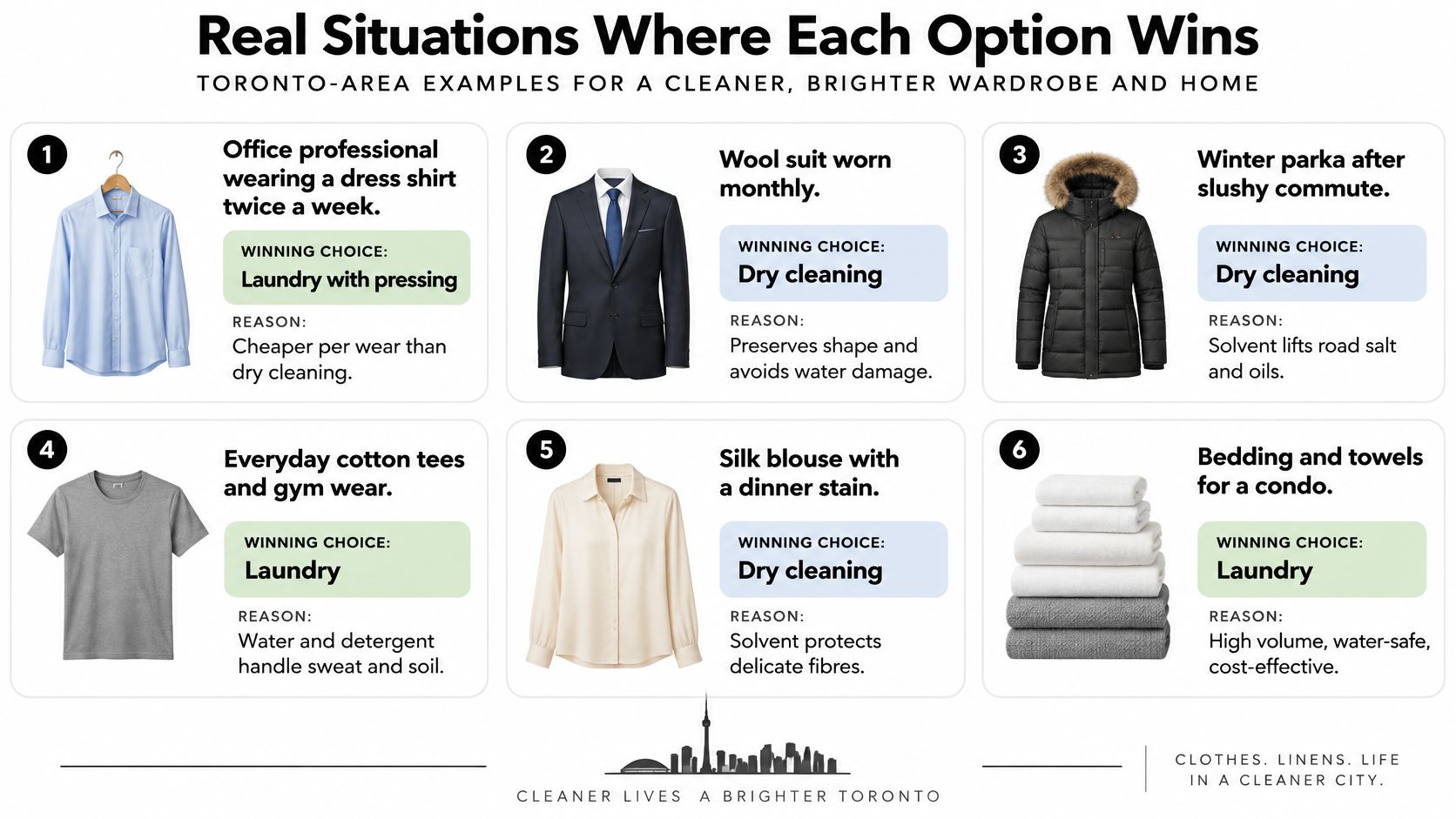
Treat illustrated examples as prompts, not overrides for the care label. Road salt needs appropriate water-based treatment rather than an assumption that solvent alone will remove it, and a delicate blouse needs its actual stain and construction assessed.
For a household deciding whether recurring collection is worthwhile, the practical calculation includes sorting, drying, folding and travel, not just machine time. Our wash-and-fold value guide helps weigh that trade-off against your available time and the kinds of clothing you wear.
Choose the Right Option for Your Next Garment
Clean less when appropriate, repair more when useful, and clean promptly when hygiene or staining requires it. A wool coat worn over other clothing doesn't necessarily need the same cleaning frequency as underwear or a sweat-soaked gym top.
There isn't a reliable universal wear count for a blazer, jeans or formalwear. Check the collar, cuffs, underarms and lining, consider direct skin contact, and judge visible soil and odour rather than following a fixed calendar.
Give wearable clothing another wear
Air suitable outer layers on a supportive hanger in a ventilated place. Brush surface dust from sturdy wool with a soft garment brush, and use label-compatible spot care for a small local mark instead of automatically cleaning the whole item.
Don't confuse airing with hygiene treatment. Clothing exposed to illness, heavy perspiration or significant contamination needs appropriate cleaning, even when it doesn't look dirty.
Research cited by CBC's reporting on clothing disposal found that 65% of textiles in Ontario's residential waste stream were still suitable for reuse. Keeping a serviceable garment wearable is a more useful goal than discarding it because of a repairable fault.
Sort the next load deliberately
Use the garment-care choices to organise a practical sorting session:
- Laundry pile: Gather ordinary washables, separating anything with unusual drying needs.
- Dry-cleaning pile: Identify items requiring professional solvent care and attach stain notes.
- Specialist or repair pile: Set aside fragile pieces, missing labels, damaged trims and garments with loose hems or broken fastenings.
A missing button shouldn't make an otherwise useful shirt unwearable. Repair a loose seam before it opens farther, and assess a damaged zip before deciding the garment needs replacement.
Our alteration services cover fit, hems and loose stitching, so cleaning and repair needs can be raised together. For load planning, our laundry service uses volume-based pricing, with the item type affecting the estimate; call with a description of what you're sending.
Choose the least intensive treatment that achieves the cleanliness and finish you need. Sometimes that's professional laundry, sometimes specialist dry cleaning, and sometimes it's a brush, a repair and another wear.
We offer everyday laundry, specialist dry cleaning, alterations and doorstep pickup and delivery, so your washable basics and delicate garments don't have to receive the same treatment. Visit CleanOnline, North York's Premium Dry Cleaners to arrange collection or request a pricing estimate, and include any care-label restrictions, stains or repairs with your order.