Down Duvet Cleaning at Home or by a Pro
Down duvet cleaning starts with the care label. Match symbols to a safe wash, dry the fill fully, and know when a pro should do it.


The popular advice to wash every piece of bedding on the same schedule doesn't work for a down duvet. Sheets and covers can be laundered frequently, but immersing the insert creates a different job: you must clean a delicate shell, rinse a dense filling and remove moisture from deep inside it.
Good down duvet cleaning starts with choosing whether to wash at all. Home washing costs you time and requires enough machine space to finish drying properly. Professional cleaning takes the bulky item out of your hands, but the cleaner still needs its care instructions. Neither route should begin with a generic temperature recommendation.
Match the Care Label Before You Wash
A down duvet isn't a bed sheet. Before water touches it, remove the cover, find the insert's label and decide which cleaning method that particular item allows. Its shell, stitching, filling and finishes matter more than its resemblance to another duvet you've washed successfully.
The Competition Bureau's textile-labelling guidance explains that care instructions are voluntary in Canada, but supplied instructions must be accurate, appropriate and not misleading; it describes the five usual care-symbol stages and states that permanent textile labels must remain affixed and legible for at least 10 cleanings.
Read the complete sequence: washing, bleaching, drying, ironing and professional textile care. Permission to machine-wash doesn't automatically mean permission to tumble-dry, bleach or apply whatever heat setting is convenient.
Which down duvet cleaning path the label allows
| Label instruction | Safe path | Who should do it | Main risk if ignored |
|---|---|---|---|
| Gentle or delicate machine wash | Label-specified warm water, low detergent and a large machine | Household, if the tub holds the duvet without cramming | Torn shell, twisted fill and leftover soap |
| Maker-approved delicate warm cycle | Reduced detergent, followed promptly by permitted drying | Household with suitable equipment | Soap trapped in clusters and heat damage |
| Professional textile-care symbol | Specialist assessment for the indicated wet-cleaning or dry-cleaning process | Professional cleaner | Unsuitable treatment, trapped moisture and compressed loft |
| Dry clean only | No home water wash | Professional dry cleaner | Water damage, altered filling and shell marks |
| Do not wash or do not tumble dry | Only permitted spot care or airing, otherwise a cleaner's assessment | Professional assessment when a workable home method isn't specified | Shrinkage, damaged finishes and clumps |
Say the label permits a gentle machine wash and tumble drying, with no instruction requiring professional treatment. Home care may be reasonable if both machines have enough room. A dry-clean-only instruction rules out that same wash, even if the duvet fits easily.
A crossed-out tumble-dryer symbol isn't a minor detail. If you can't complete the permitted drying method, don't start the wash.
Inspect the item behind the symbols
Read the shell fibre content and the stated down or feather percentage. Check whether you're reading the insert's label rather than the removable cover's label. If the instructions are missing or unreadable, treat the duvet as an unknown textile, not an ordinary blanket.
The same label-first thinking applies to insulated outerwear, as explained in this guide to dry cleaning a winter jacket. Appearance alone doesn't establish a safe cleaning method.
If you're comparing bedding layers, quilt inspiration from SouthShore Fine Linens provides useful visual context for a quilt-style bed arrangement. Keep those styling choices separate from the care instructions for your down insert.
Photograph the label clearly, including any written instructions. Commit to the applicable cleaning path before preparing detergent or booking a machine.
What Counts as Down in Canada
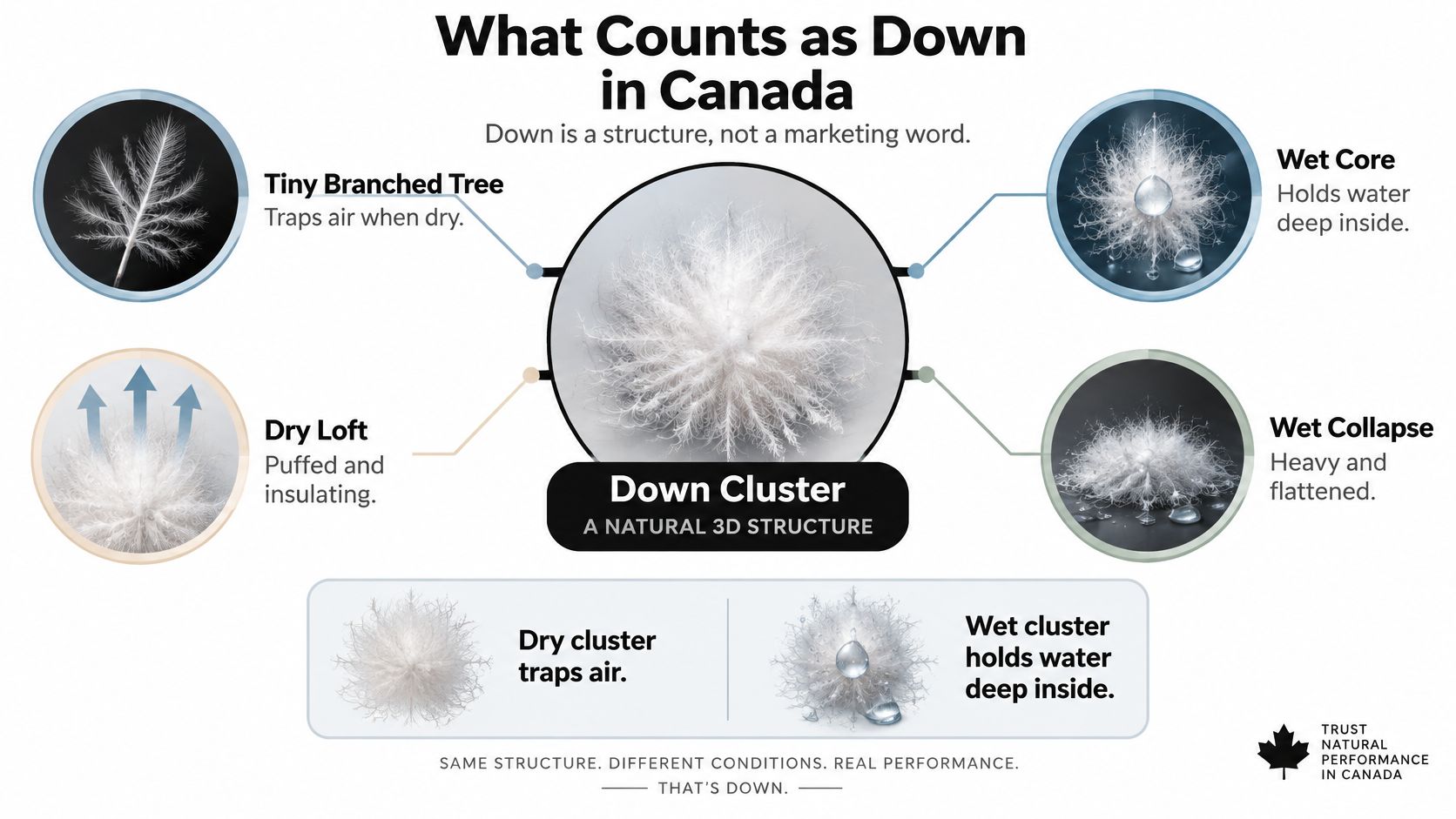
A down cluster resembles a tiny branched tree rather than a flat feather. Its fine branches spread out and trap air when dry. That airy volume is loft, the puffiness that helps a duvet feel light and insulating.
Wet clusters behave differently. Their branches gather together, and water can remain inside a compacted pocket even when the surrounding fabric feels reasonably dry.
Canadian commercial down composition limits
The federal Textile Labelling and Advertising Regulations establish the following commercial down composition limits, including at least 75% down and plumules, and requirements for plumage-content disclosure.
| Component | Limit | Why it changes cleaning |
|---|---|---|
| Down and plumules | At least 75% | Clusters need thorough, even drying |
| Waterfowl feathers no longer than 60 mm | No more than 25% | Feather structure differs from soft down clusters |
| Waterfowl feather fibre and down fibre | No more than 20% | Fine material can gather into damp mats |
| Residue, including landfowl feather and fibre | No more than 5% | Additional material can collect in clumps |
| Label disclosure | Down or feather percentage where required | Similar-looking items can have different fillings |
These aren't ingredients to add together into a household recipe. They're composition limits that help define what a commercial down designation means. They also explain why the word down alone isn't enough information for cleaning.
Similar warmth doesn't mean identical construction
Consider a duvet labelled with a high down percentage and a cotton shell. Compare it with another containing more feather material inside a blended or treated shell. Both might be described casually as down-filled bedding, yet the filling mixture isn't their only difference.
The shell's weave affects how water moves through it. Internal stitched compartments, often called baffles, control where filling collects. A surface treatment or delicate fabric can restrict the cleaning method even when the fill itself tolerates washing.
A cleaner therefore needs more than the duvet's size and colour. Shell condition, seam strength and filling distribution all affect the assessment.
Copy the stated down or feather percentage beside your care-label photograph. That small record keeps the decision tied to the duvet you own, rather than a generic description of down bedding.
Spot Clean and Air Between Full Washes
A small mark on the shell doesn't always justify immersing the entire insert. Spot cleaning is a limited surface treatment, suitable only when the manufacturer's instructions permit it. Don't assume a do-not-wash symbol automatically authorizes local wet treatment.
Gather a clean white cloth, mild detergent, a bowl of lukewarm water and a dry towel. A white cloth lets you notice colour transfer without introducing dye from the cleaning cloth.
Keep the treatment at the surface
- Confirm permission first. Look for written spot-cleaning or airing instructions. If the label is unclear, stop rather than inventing an approved method.
- Mix a few drops of mild detergent into the bowl and dampen the cloth. Don't pour the mixture directly onto the shell, which can push water into the fill.
- Blot from the stain's edge towards its centre. Work gently instead of scrubbing, which can spread the mark and abrade the fabric.
- Use another cloth wrung out in plain water to lift soap, then press with the dry towel. Leaving detergent behind can create a visible ring or stiff patch.
- Air the duvet loosely. Drape it across chairs in a ventilated room, away from radiators and strong direct sunlight, and reposition it to expose the treated area.
- Stop if the centre becomes wet or the stain spreads into the filling. The job now requires an approved full cleaning and drying method, not more surface blotting.
The useful distinction is between dampening a cloth and soaking the duvet. Similar restraint matters with other bulky household textiles; this guide to cleaning heavy drapes addresses another item whose size can complicate home care.
Practical rule: A disappearing stain doesn't prove the filling underneath is dry.
For a dry duvet that needs freshening, permitted airing avoids unnecessary immersion. But if moisture has reached the filling, surface airing alone isn't proof that you've finished the job.
How to Wash a Down Duvet at Home
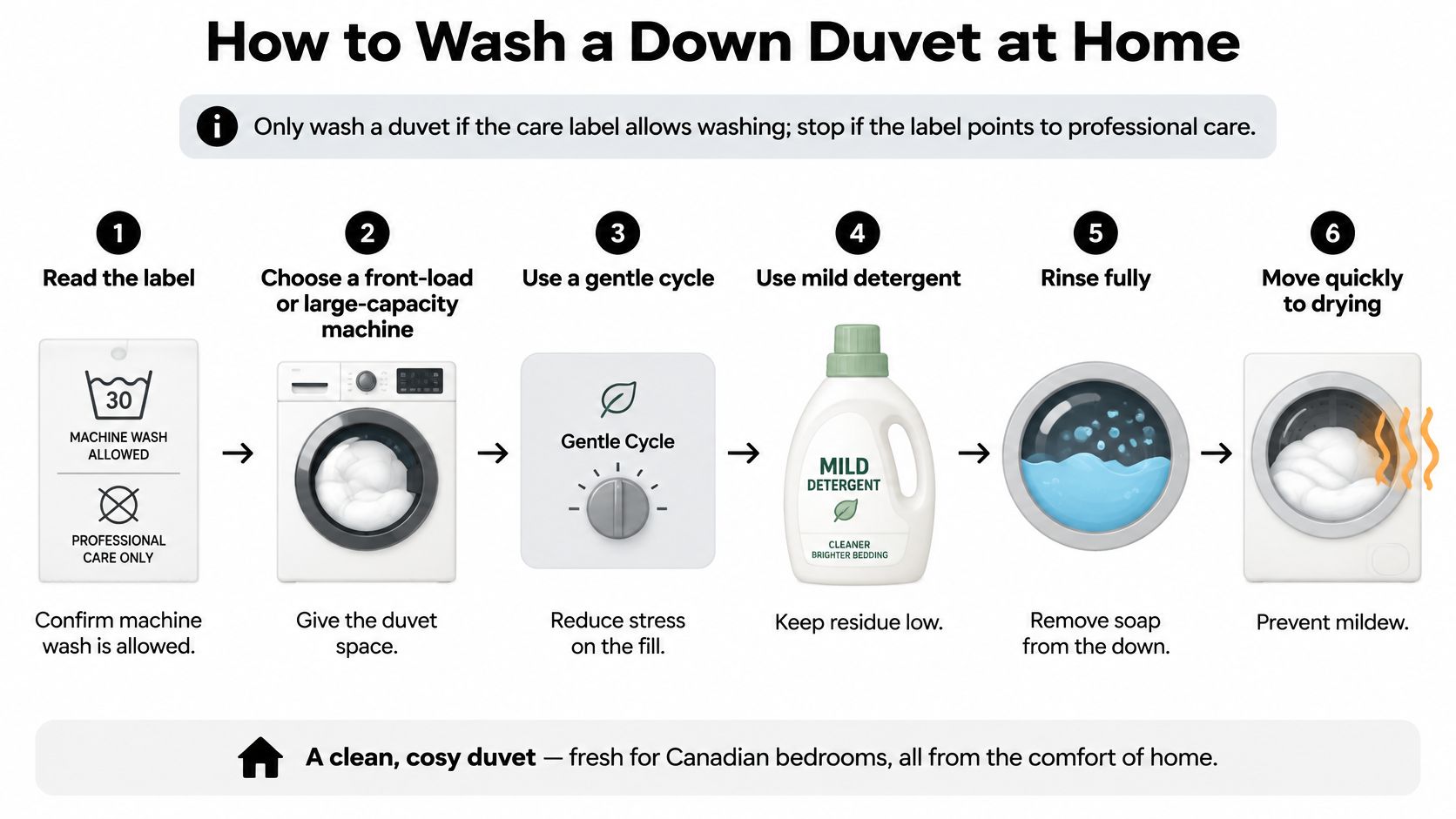
Use this procedure only when the insert's label permits washing. Professional care and dry-clean-only instructions are stop signs, not suggestions to compensate with a gentler household cycle.
Choose a front-loading or suitable large-capacity machine with space for the duvet to move. A drum that closes only after you force the duvet inside is too small. You also need an approved drying arrangement ready before starting.
Prepare before loading
Remove the cover and wash the insert separately. Unfold it so you can inspect both faces, the perimeter seams and the corners rather than checking only the most visible surface.
Manufacturer advice gives a useful example, not universal permission: IKEA Canada's duvet-care guide recommends a delicate warm cycle at 60°C, approximately one-third of the normal detergent quantity, and immediate transfer to a tumble dryer for suitable down products. Use that temperature and dose only when they're compatible with your duvet and detergent instructions.
Follow the washing sequence
- Inspect seams and thin spots. Repair small openings before washing so wet filling can't escape through them. Extensive damage needs assessment rather than an improvised patch.
- Pretreat a small shell stain with a little compatible mild detergent. Avoid bleach unless the care instructions explicitly permit it, because stain removal shouldn't come at the expense of the shell.
- Select the permitted delicate cycle and temperature. Match the machine setting to the label rather than assuming that a warmer wash is automatically better.
- Measure a reduced detergent dose where the manufacturer's directions call for it. Dense filling is difficult to rinse, so extra soap can leave residue instead of improving the result.
- Add an extra rinse if the machine permits it. This helps remove detergent rather than leaving it caught within the filling.
- Transfer the duvet promptly when the programme finishes. Support its wet weight with your arms instead of lifting it by a corner, and don't leave it compressed in the drum or a basket.
Keep other laundry out of the load. Even small additions take away movement space and make it harder to judge whether the duvet is circulating freely.
A king-size duvet presents a common edge case: the washer may technically accept it while leaving no useful room for movement. Choose a larger suitable machine or professional handling instead of forcing it through a cramped tub.
Professional washing also isn't synonymous with dry cleaning. This comparison of wet cleaning and dry cleaning explains the distinction, which matters when the label specifies a particular professional method.
Once the wash finishes, the next task is immediate transfer to the approved drying setup. Don't begin another load and leave the wet insert waiting.
Dry the Fill Until No Damp Remains
Think of a sponge whose surface has dried while its middle remains soggy. A down duvet can create the same misleading impression: the shell feels fine, but compacted filling still contains moisture.
Drying isn't just restoring a pleasant texture. It's removing water from the interior. Persistent dampness can leave odour and clumps and create conditions for microbial growth.

Use airflow and gentle movement
Where tumble drying is permitted, use air or low heat, consistent with the label. Don't increase the heat to make a bulky load finish sooner. Excessive heat can damage the filling, shell or finishes before the centre dries.
Clean dryer balls or clean, colourfast tennis balls can help separate the filling as the duvet tumbles. They're aids to movement, not substitutes for checking the duvet yourself.
- Leave room to tumble. A duvet wedged against the drum can't open up effectively.
- Pause and redistribute. Take it out periodically, shake it gently and ease apart damp clumps through the shell.
- Inspect the centre compartments. Edges can feel ready while thicker areas remain wet.
- Maintain airflow. Clean the lint filter and make sure the duvet isn't repeatedly rolling into a tight bundle.
Don't pull aggressively at a clump. Support the compartment and tease the filling apart gently, especially if the shell is worn.
Check beyond the outer fabric
Press several thick compartments against your cheek after the duvet has cooled briefly. A distinctly cool, clammy patch is a reason to continue drying. Warm fabric straight from the dryer can conceal how damp the interior still feels.
Use several clues together: no damp patches, no musty smell, no heavy wet clumps and a return of the duvet's usual loft. The cheek check is a screening tool, not a guarantee, so don't rely on a single comfortable corner.
The duvet is ready for the bed only when the filling is dry, not when the shell feels dry.
A soaking insert draped in a cool room may remain wet inside long after the outside improves. Don't assume that leaving it overnight solves the problem, especially when airflow is poor or the filling stays packed together.
If tumble drying is prohibited, follow the specified alternative. Don't improvise a hot dryer cycle, and don't start a full wash unless the allowed drying method is practical. When a home attempt leaves persistent dampness or clumping, arrange professional assessment rather than hiding the problem inside a fresh cover.
Separate Cover Washes from Insert Cleaning
There's no sensible universal washing interval for every down insert. A cover exposed to skin, hair products and ordinary bedroom dust has a different cleaning job from the protected filling inside it.
Health Canada's healthy-home guide recommends washing bedding weekly and using a HEPA-filter vacuum where possible. That isn't an instruction to immerse a bulky down insert every week. Apply frequent laundering to removable bedding according to each item's label, while making a separate decision about the insert.
Cover, insert or professional cleaning by problem
| Problem | Wash the cover | Clean the insert |
|---|---|---|
| Weekly dust and skin exposure | Yes, with other bedding | No, not on a weekly cycle |
| Spill or body soil on the shell | Yes, promptly | Once if needed, with permitted washing and a workable same-day drying plan |
| Odour after storage | Air the bedding and wash the cover first | Only if the smell remains in the fill |
| After illness | Yes | Consider cleaning according to the label and the nature of the contamination |
| Dust-mite concern | Weekly, following the cover's own instructions | Use an occasional manufacturer-specified treatment, not an assumed hot wash |
Start with the lighter intervention. If only the cover smells stale, washing an otherwise clean insert adds work without addressing a separate problem. If a spill has soaked through, however, a clean cover won't remove contamination inside the duvet.
Hygiene without unnecessary wear
Repeated wet cleaning can wear the shell and filling. Manufacturers may specify a particular wash treatment for mite control, but a temperature instruction for one duvet doesn't authorize the same treatment for another. If the label doesn't permit the treatment you need, professional assessment is more appropriate than overriding it.
Keep the bedroom ventilated and the cover in regular rotation. A spare cover makes it easier to maintain the removable barrier without rushing a bulky insert through unsuitable equipment.
For recurring sheets, covers and pillowcases, this guide to finding laundry services nearby can help you organise the routine load separately from specialist bedding care.
Closet-door reminder: Wash the cover weekly according to its label. Clean the insert rarely, when needed, using its permitted method.
“Rarely” doesn't mean ignoring visible soil, persistent odour or contamination. It means avoiding an automatic insert wash every time you strip the bed.
Extra washing also uses water, detergent and energy. Laundry-related microfibre concerns are particularly relevant to synthetic textiles, so they shouldn't be treated as a measurement of natural down shedding. The practical choice is still to clean the item that needs cleaning rather than assume that more laundering is always a hygiene upgrade.
Hand the Duvet to a Pro and Book Pickup
Professional care becomes the sensible option when the label requires it or your equipment can't complete the job safely. Size alone isn't the whole decision: a delicate shell or weakened seam can make even a smaller duvet unsuitable for home washing.
Stop before another home attempt
- Professional-care or dry-clean-only instructions. Use the specified route rather than testing a home cycle.
- Insufficient machine space. A thick or king-size duvet needs room in the dryer as well as the washer.
- Split seams or fragile fabric. Cleaning can worsen an opening and release filling.
- Silk or wool shells. Choose specialist assessment unless the manufacturer clearly authorizes your proposed home method.
- Clumps or a damp smell after washing. Arrange help promptly instead of folding the duvet away.
A professional can assess the shell, seam strength and filling distribution together. The important outcome isn't just a cleaner-looking surface: the item must also be suitable for treatment and thoroughly dry before packaging.

Ontario sanitation figures aren't a home recipe
The cited version of Ontario's regulation for upholstered and stuffed articles sets out sanitation parameters including detergent washing at at least 52°C for 30 minutes, warm-water rinsing for at least 20 minutes, steam treatment at at least 110°C for 30 minutes under 104 kPa, and thorough drying at 93°C for at least 20 minutes.
Those are regulatory sanitation benchmarks for specialized handling, not household settings for a down duvet. Don't combine them into an improvised home programme or assume they override a manufacturer's care restrictions. High-temperature treatment can damage materials that weren't designed for it.
For an everyday service decision, understanding the dry-cleaning process is more useful than choosing the hottest available treatment. The method should match the textile and the problem being addressed.
Prepare the pickup information
Have your care-label photograph ready. Describe stains, storage odours, split seams and any previous wash attempt, and identify whether the shell is cotton, silk, wool or a blend. If the duvet is still damp, say so before collection rather than sealing it away.
Our home-linen dry-cleaning list includes a duvet at $40.00, a heavy or king-size comforter at $44.99, and silk or wool comforters at $50.00. We offer doorstep pickup and delivery, with cleaned clothes returned to the customer's doorstep within 48 hours of pickup; confirm the applicable bedding category and return arrangements when scheduling your duvet.
Book once you've established that the label requires professional care or that the duvet exceeds your home equipment's practical limits. Send the label details with the item so its construction, not a generic bedding programme, guides the assessment.
A bulky insert doesn't need a risky home wash to get clean. Visit CleanOnline, North York's Premium Dry Cleaners for duvet and household-linen cleaning with doorstep pickup and delivery, and have your care-label photo and stain details ready when you schedule collection.