Dry Cleaners Near Me in North York and Toronto
Find dry cleaners near me in North York and Toronto, with listed prices, garment care, doorstep pickup and what to check before you book.

You've got a wool coat with a salt line along the hem, three dress shirts that need pressing before Thursday, and a silk blouse with a coffee spot from yesterday morning. You pull out your phone, search for dry cleaners near me, and stare at a dozen map pins around North York and midtown Toronto. Every listing promises quality care and fast service, yet almost none of them tell you what a specific garment costs, whether a stain should even be dry cleaned first, or which solvent touches your clothes.
Choosing poorly is expensive in two ways. You either pay for cleaning on a garment that really needed a quick seam repair first, or you hand over delicate silk or structured suiting to a shop whose process you never verified. Toronto has been Ontario's main garment-care hub for generations: a Statistics Canada historical industry report recorded 343 of Canada's 787 dry-cleaning and dyeing plants in Ontario in 1948, and Toronto's 39 plants generated $2,493,520 in 1940, about 57% of the province's reported receipts. That deep local market gives you plenty of options today, which makes a clear way to compare prices, services, and chemical practices far more useful than picking the closest storefront.
Dry Cleaning Prices and Services at a Glance
Price is the first filter most North York and Toronto residents use, and it's also where surprises happen at the counter. Two shirts can look nearly identical on hangers yet sit in completely different price tiers because fabric fibre, finishing method, and packaging change the labour required. At CleanOnline, North York's Premium Dry Cleaners, we publish starting rates across North York and Toronto so you can estimate your bill before a bag leaves your hallway. Final charges still reflect the specific garment and service tier you select.
Our published rates start from $3.00 for general wash-and-fold laundry ($3.00 per pound), while shirt care begins at $3.49 for a press-only finish. Notice that no single dry-cleaned item on the schedule sits at $3.00; that entry figure applies to per-pound laundry rather than individual dry-cleaned pieces.
| Item | Service | Listed price ($) |
|---|---|---|
| Shirt | Dry cleaning | 6.99 |
| Shirt | Folded dry cleaning | 7.99 |
| Shirt | Hand-pressed | 5.99 |
| Shirt | Laundered | 3.99 |
| Shirt | Folded laundered | 4.99 |
| Shirt | Press only | 3.49 |
| Shirt | Linen | 6.99 |
| Shirt | Silk | 7.99 |
| Shirt | Special care | 7.99 |
| Shirt | Tuxedo shirt | 7.99 |
| T-shirt | Standard | 6.99 |
| T-shirt | Special care | 8.99 |
| Suit, 2-piece women's | Dry cleaning | 21.99 |
| Suit, 2-piece men's | Dry cleaning | 21.99 |
| Suit, 2-piece tuxedo | Dry cleaning | 25.99 |
| Suit, 3-piece men's | Dry cleaning | 26.99 |
| Suit | Press only | 16.99 |
| Suit | Special care | 24.99 |
| Suit | Vest only | 8.99 |
| Suit with leather trim | Dry cleaning | 27.99 |
| Track suit | Dry cleaning | 18.99 |
| Wash and fold laundry | Per pound | 3.00 |
Why One Shirt Can Cost Twice as Much as Another
Look at the shirt rows first. A standard cotton dress shirt goes through a commercial wet-laundering cycle and machine pressing for $3.99, whereas the same garment cleaned in solvent as a dry-cleaned shirt jumps to $6.99. Adding folding for suitcase travel raises either tier slightly, bringing folded laundered shirts to $4.99 and folded dry-cleaned shirts to $7.99.
Fibre and detailing drive the upper end of the shirt spread. Press-only service at $3.49 skips the wash entirely for a clean shirt that just came out of a suitcase creased, while hand-pressed service at $5.99 handles delicate buttons or heavy placket stitching that automated press bucks can crack. Silk, tuxedo fronts with pleats or pique bibs, and special-care shirts sit at $7.99, and a special-care T-shirt reaches $8.99 because decorative prints, beads, or fragile knits require slower manual finishing.
How Suit Construction Shapes the Bill
Suiting shows an even wider spread, running from $8.99 for a vest only up to $27.99 for a suit with leather trim. A standard two-piece men's or women's wool suit is $21.99, while adding a waistcoat pushes a three-piece men's suit to $26.99. Satin lapels on a two-piece tuxedo ($25.99) and contrast leather trims ($27.99) demand separate tensioning and protective spotting so dyes don't bleed and leather stays supple.
Smart comparison rule: Never compare a "$3.99 shirt" ad at one shop against a "$7.99 silk shirt" quote at another. Match the exact garment, fabric, and finishing level before judging who offers better value.
You can check full category rates across dresses, coats, and household textiles on our North York and Toronto dry cleaning price list. Always confirm the itemised total before handing over your order, especially if a piece has trim, lining repairs, or unusual beadwork.
Clean, Repair, Alter, Donate or Discard a Garment
Most search results for local dry cleaners treat solvent cleaning as the default fix for every wardrobe problem. That habit wastes money and ruins salvageable clothes. Putting a garment with a split seam or broken zipper slider into a mechanical cleaning drum often tears the surrounding fabric further, turning an inexpensive mend into a write-off.
Keeping wearable garments in rotation matters across the Greater Toronto Area. According to York Region's clothing and textile reuse and recycling campaign, York Region's 2025 waste audits found that approximately 17% of garbage consisted of small household items such as clothing and textiles, while Toronto's Community Reduce & Reuse Programs had diverted 37,201 kilograms of clothing and other textiles by the end of 2025 alongside local repair and reuse initiatives. Triage your closet before you pay for any treatment so each piece gets the service that extends its lifespan.
Triaging Stains, Odours and Structural Damage
Start with fresh stains, which are the most common reason people rush to a cleaner. Blot liquids gently with a clean white cloth instead of scrubbing, and skip hot water or club soda on silk and wool. Bringing the item in quickly gives a spotter the best chance to lift tannins, grease, or protein before oxidation bonds the mark to the fibre.
Set stains behave differently. Once a spill has sat for weeks or been pressed with a home iron, aggressive spotting can strip colour faster than it removes the mark. Ask the cleaner to assess the fibre first and set realistic expectations before authorising treatment.
Odours from smoke, cooking oil, or stale storage often respond well to professional cleaning, provided you tell the counter staff what you already tried at home. Spraying heavy fabric fresheners or washing a dry-clean-only blazer in a home machine can leave chemical residues that react with spotting agents. Mould sits in a separate category altogether because spores transfer easily; never toss a mildewed garment into a regular bag without flagging it first.
Structural wear calls for needlework before solvents. A loose seam or broken zipper on an otherwise sound coat or pair of trousers should be stitched or replaced prior to cleaning so agitation doesn't unravel the hem. Similarly, a poor fit rarely needs cleaning to feel better; adjusting a sleeve length, waist, or shoulder line keeps a quality piece in your weekly wardrobe instead of sitting unworn. For ideas on which subtle adjustments make the biggest difference in office clothes, Cedar & Lily Clothier shares practical tailoring tips for polished workwear, and you can book structural fixes directly through our garment alteration and repair services.
When Damage Calls for Restoration or Responsible Disposal
Water damage from a basement leak or burst pipe requires fast air-drying to stop dye transfer and mildew growth. Standard dry cleaning alone may not rescue soaked linings or warped interfacings, so specialty textile restoration is often the safer path. Fire or smoke damage always belongs in restoration rather than a routine cleaning cycle, as soot carries acidic particulates that embed into fibres.
Finally, inspect heavily worn or badly damaged textiles. Donation bins only help charities when items are clean, dry, and wearable; stained, torn, or mouldy fabrics end up costing charities disposal fees. If you aren't sure whether a favourite piece can be saved, ask a cleaner to inspect it before paying for a cycle.
| Garment condition | First step | What to tell the cleaner |
|---|---|---|
| Fresh stain | Treat promptly | Say when the stain happened |
| Set stain | Cleaner assesses the fabric first | Name the fabric and how long the stain has been there |
| Odour | Cleaning may remove it | Disclose any prior home washing or fragrance exposure |
| Mould | Must be treated only after disclosure | Disclose mould on drop-off |
| Loose seam or broken zipper | Repair first if the item is still wearable | Describe the damage |
| Poor fit | Alteration keeps the garment in use | Describe the fit issue before the fitting |
| Water damage | Dry promptly; may need restoration rather than standard cleaning | Disclose the water exposure |
| Fire or smoke damage | Restoration needed | Disclose the smoke exposure |
| Heavily worn or damaged textile | Donate only if clean and usable, otherwise discard responsibly | Ask the cleaner before paying for cleaning |
Matching Each Garment to the Right Service
Even when cleaning is the right decision, sending an item under the wrong service category leads to shrunken linings, shiny seams, or crushed velvet pile. Counter staff rely on care labels, yet labels fade, get snipped off, or understate delicate trim. Naming the exact fabric and finish you expect removes the guesswork.
High-Risk Fabrics and Heirloom Pieces
Delicate textiles carry the highest replacement cost, so start your sorting with silk, rayon, velvet, and leather. Standard dry-cleaning agitation can crush velvet nap, strip natural oils from leather panels, or distort bias-cut rayon. We offer dedicated special fabric dry cleaning for these four materials; always point out hidden silk linings, suede elbow patches, or faux-leather piping so the garment stays out of general loads.
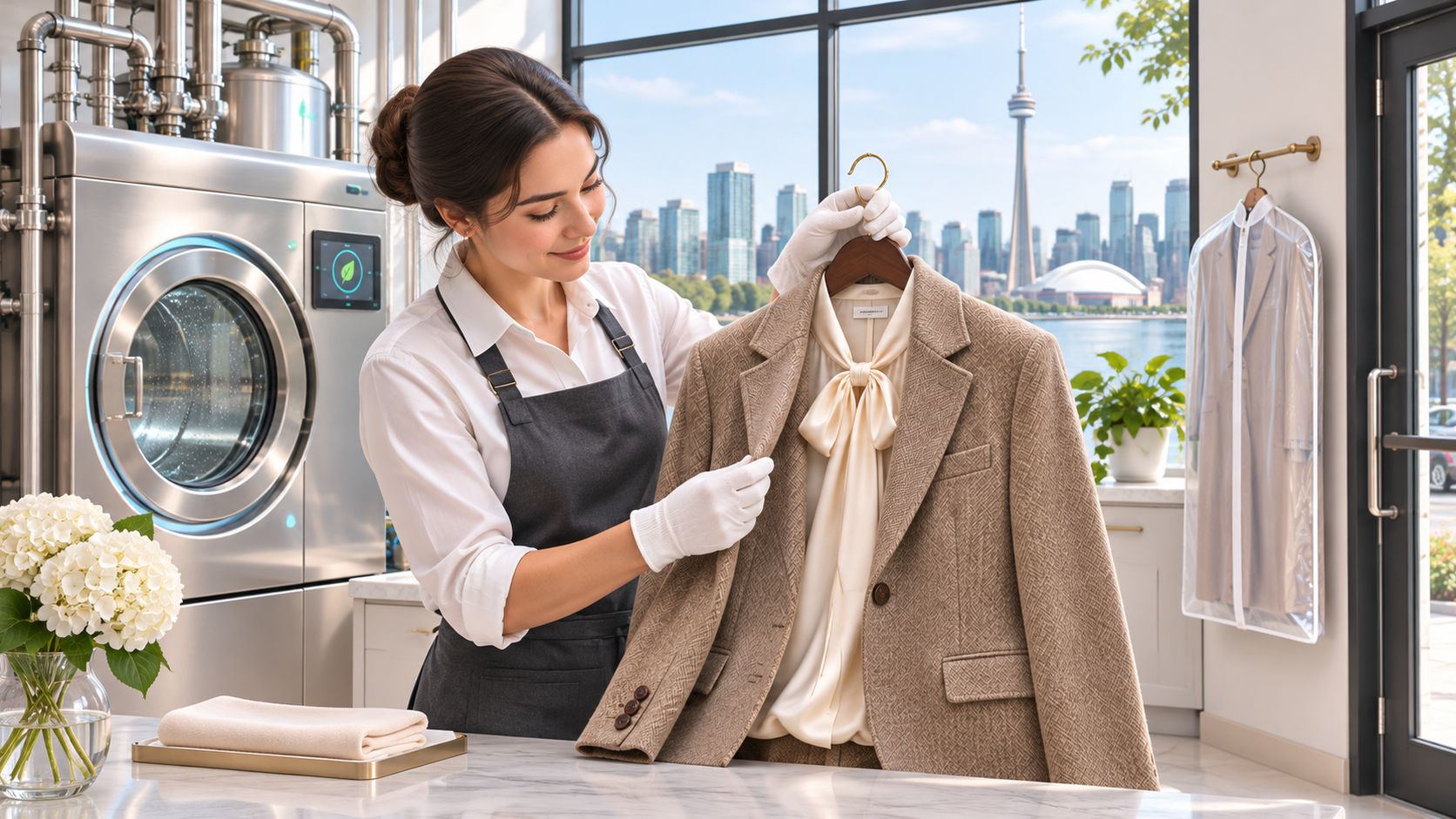
Wedding dresses deserve their own timeline and method. Sugar stains from champagne or cake often dry clear and turn yellow months later in a closet. Our wedding dress cleaning and preservation service pairs targeted stain removal with green earth solvents and finishes with storage inside an acid-free airtight box with a display window. Flag every spill you remember, including makeup along the neckline and dirt along the train, and confirm whether you want preservation boxing before drop-off.
Seasonal Outerwear, Suiting and Everyday Wear
Toronto winters punish coats with road salt, slush, and body oils around the collar. We clean jackets, coats, sweaters, overalls, woollens, denim, and fleece jackets, and we recommend periodic coat dry cleaning right before packing warm layers away in spring. Storing an uncleaned wool coat invites clothes moths, which feed on invisible food specks and perspiration rather than clean wool alone.
With suits and tuxedos, keep matching pieces together even if only the trousers got dusty. Cleaning a jacket and trousers on separate schedules causes subtle colour shifts over time. Tell the cleaner whether the set has two or three pieces and point out any leather trim or satin facings.
Everyday shirts and trousers split neatly by how crisp you want them and how you store them. Choose laundered shirts for durable cotton office wear, hand-pressed for fragile buttons or thick placket fabrics, and press-only when a clean shirt just needs sharp creases. You can review the exact options on our professional shirt laundering page and specify hanging or folded return. For casual gym clothes, T-shirts, socks, and everyday household loads in bulk, wash and fold saves hours while keeping colours and materials separated.
Home Linens, Quilts and Footwear
Bulky household items rarely fit cleanly inside condo washers without overloading the drum and leaving detergent trapped in the batting. We clean comforters, duvets, blankets, table linens, pillows, bedsheets, rugs, carpets, curtains, and draperies. Measure large drapes or rugs before booking and point out pet spots or sunlight-weakened backing. Makers and textile enthusiasts who design or style handmade quilts understand how much stitching goes into layered batting; if you create or share textile work yourself, the High Country Quilts creator partnership application connects creators across the quilting community.
Don't overlook minor hems, loose stitching, and worn shoes while assembling an order. Bundling alterations with your garment care saves a separate errand, and we also offer a pick-up and drop facility for shoe repair so scuffed heels or lifting soles get fixed alongside your weekly laundry.
| Garment or need | Service to request | What to tell the cleaner |
|---|---|---|
| Silk, rayon, velvet or leather | Special fabric dry cleaning | Name the fabric and any trim or lining |
| Wedding dress | Wedding dress cleaning and preservation | Mention stains and ask about acid-free storage |
| Coat, jacket or sweater for storage | Outerwear dry cleaning | Ask for cleaning before packing for the season |
| Suit or tuxedo | Suit dry cleaning by piece count | State two or three pieces and any leather trim |
| Everyday shirts and trousers | Laundered, hand-pressed or press-only shirt | Say whether you want folded or hanging |
| Everyday clothing in bulk | Wash and fold | Ask for separation by colour and material |
| Comforter, duvet, rug or curtains | Home linen cleaning | Note the size and any stains |
| Hem or loose seam | Alteration | Describe the fit issue before the fitting |
| Shoes | Shoe repair with pick-up and drop | Ask about turnaround before drop-off |
A care label tells you the bare minimum a manufacturer tested; telling the cleaner how the garment is lined, trimmed, and worn prevents almost every avoidable finishing mistake.
Criteria for Comparing Cleaners Near You
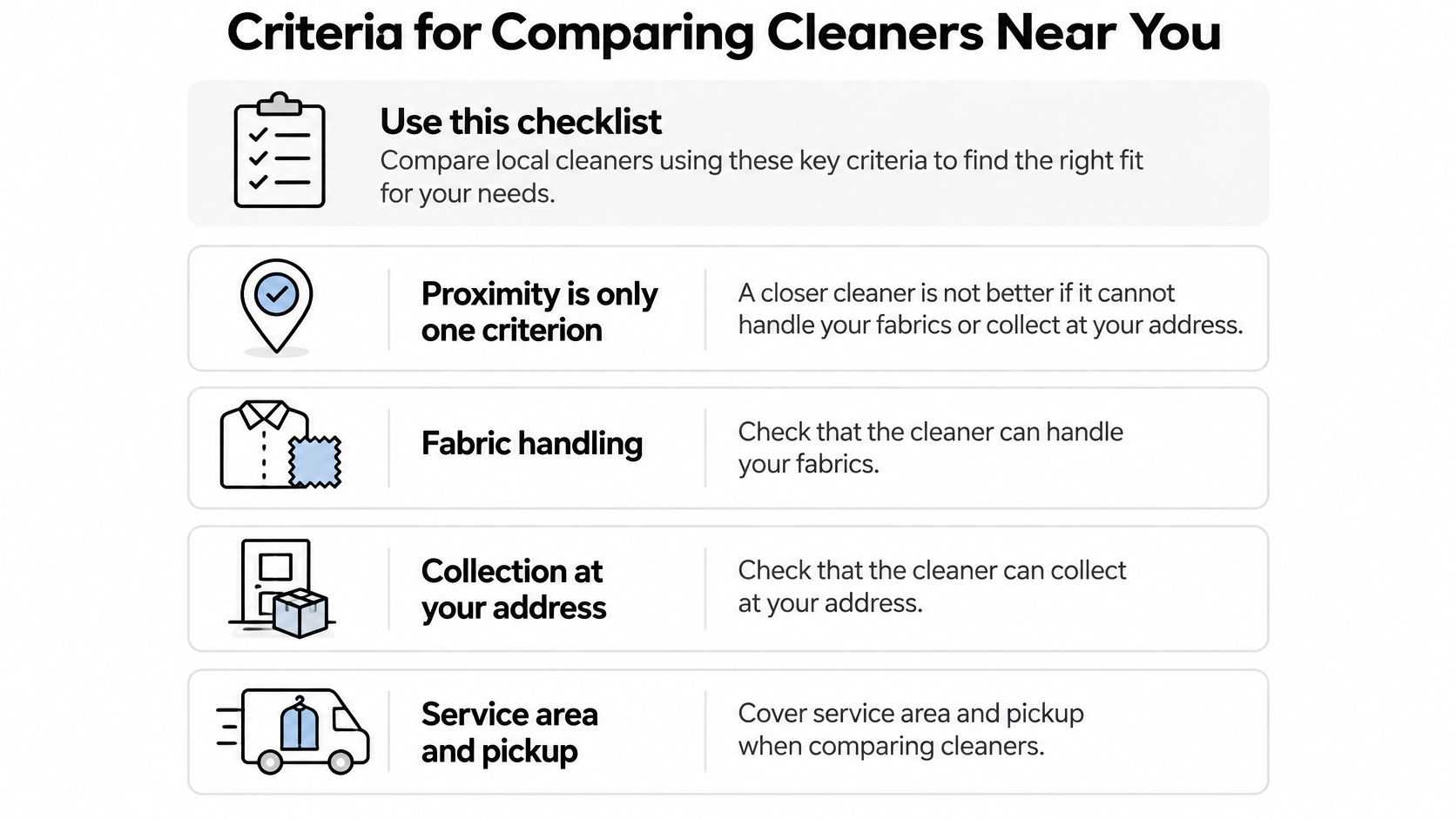
Typing "dry cleaners near me" into a map app ranks businesses by distance from your phone, not by whether they handle delicate fabrics safely or fit your schedule. A shop two blocks away that closes at 5 p.m. and sends leather jackets to an unnamed third party can easily cost you more time and stress than a full-service operation with doorstep collection.
Use the visual checklist below as a quick filter before handing over your first bag.
Logistics, Turnaround and Pricing Clarity
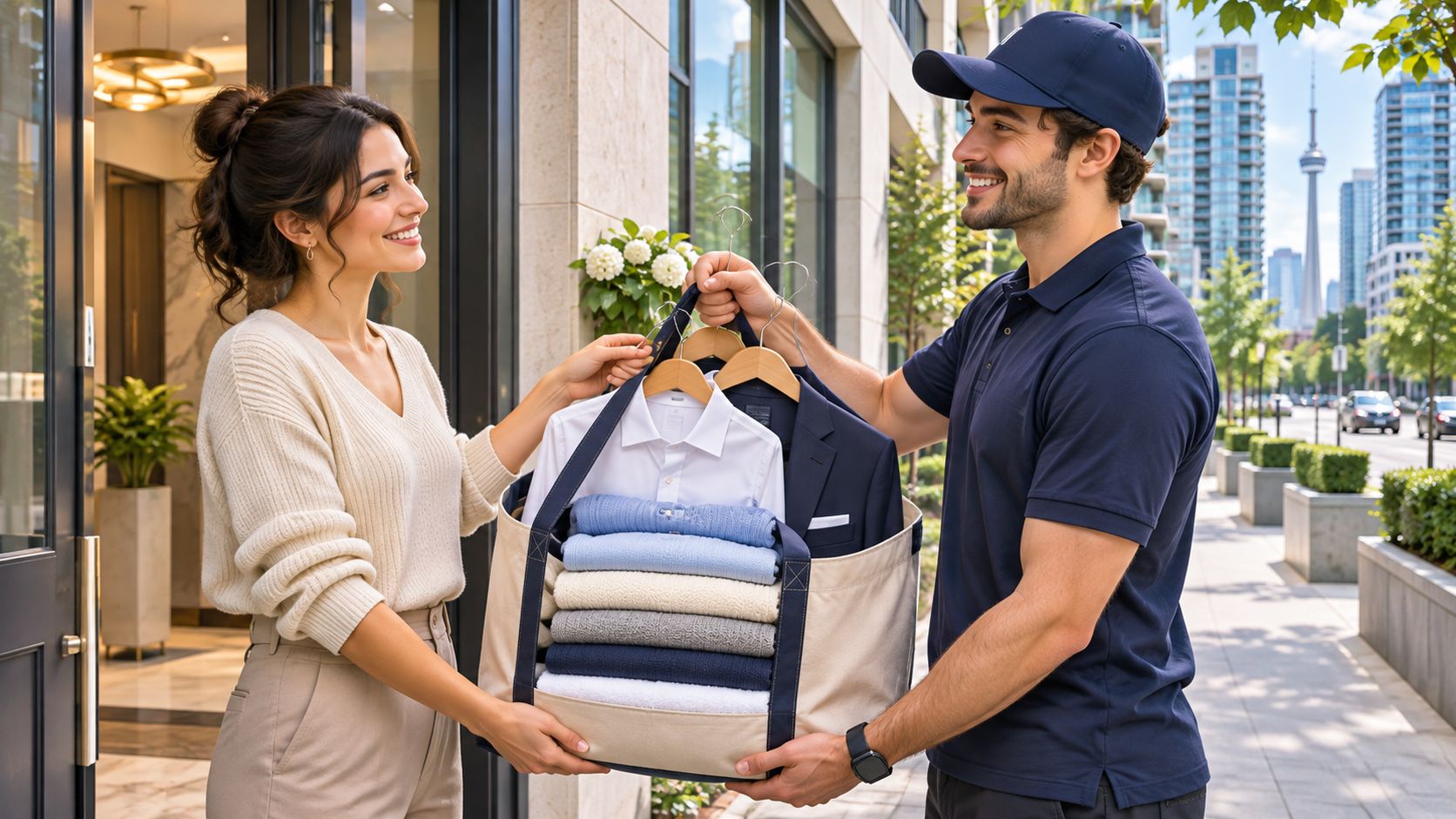
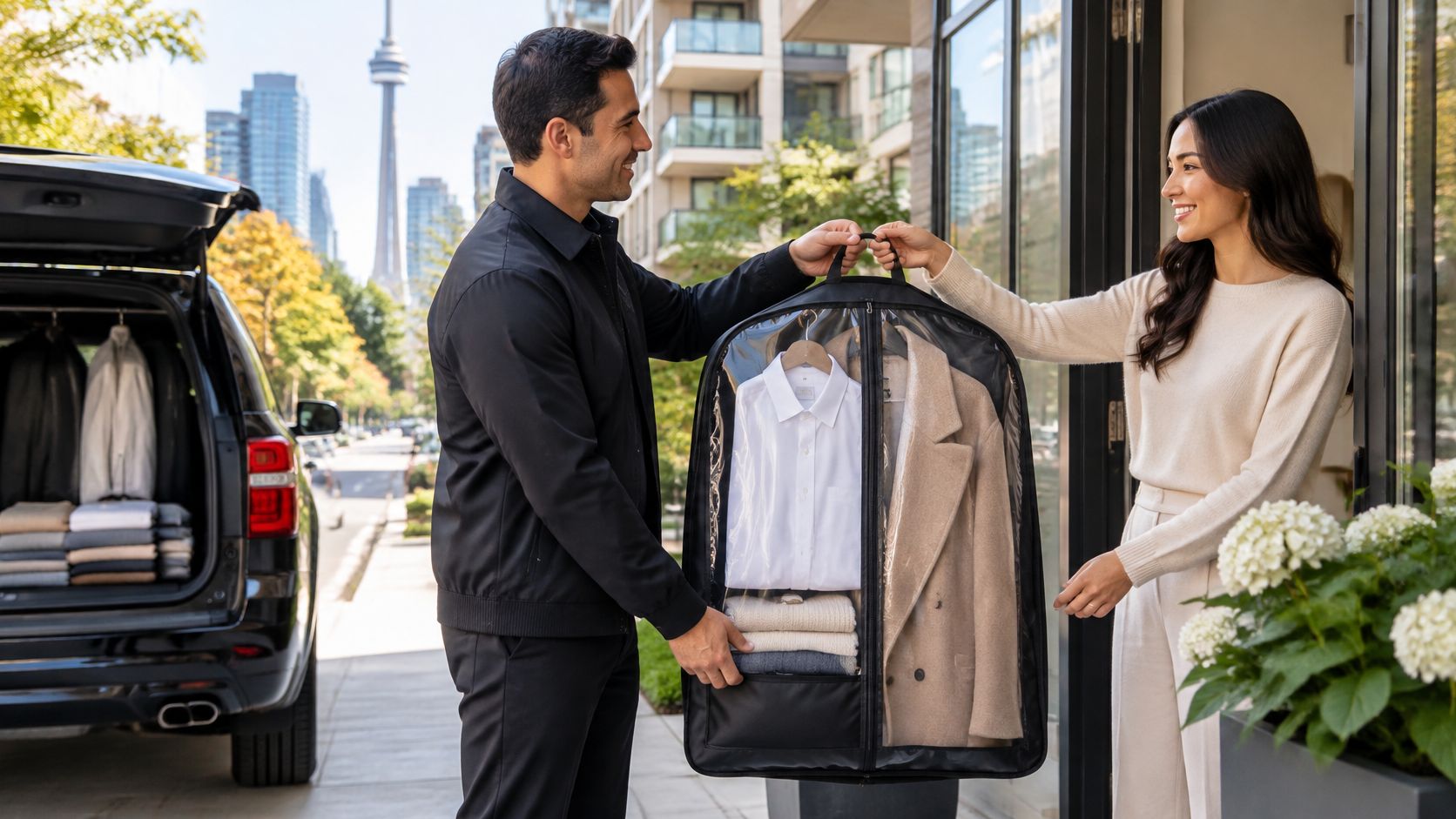
Start with service area and pickup. Driving down Yonge Street in rush hour to drop off four shirts rarely makes sense when you can schedule doorstep collection instead. We provide free pickup and delivery anywhere in Toronto, with leave-outside collection before 8 a.m. and 24x7 pickup windows so you aren't rearranging meetings around storefront hours.
Next, check turnaround times. Many local cleaners don't publish a fixed standard turnaround on their website because wool coats, drapes, and dress shirts move on different schedules. If a provider doesn't list a standard timeframe, record it as unknown and ask at booking before you commit. For last-minute flights or interviews, verify whether urgent handling exists; we offer same-day dry cleaning on special request when timing is tight.
Demand pricing transparency upfront. Vague quotes like "starting low" hide surcharges for linen, silk, or pleated fronts until pickup day. Look for published item-level starting rates by category so you can verify your estimate before your bag is processed.
Technical Scope, Policies and Commercial Readiness
Verify specialty fabric handling and full-service scope before an emergency hits. Consolidating routine and complex needs with one accountable team simplifies tracking. Our scope spans dry cleaning, laundered shirts, wash-and-fold laundry, household items cleaning, wedding dress cleaning, outerwear cleaning, alteration services, shoe repair, and restoration services covering textile, electronic, art, fire, and water damage.
Ask for the damage and stain policy in writing prior to drop-off. Reputable cleaners explain clearly how they handle stubborn spots that don't lift on the first pass and what remedies apply if a garment suffers processing damage. A verbal "we'll take care of it" leaves you with no recourse if a button melts or a seam splits.
Finally, if you manage a hotel, restaurant, salon, spa, gym, daycare centre, religious organisation, or assisted living facility, evaluate commercial capacity. Consumer storefronts often struggle with recurring high-volume towel or linen loads. Confirm recurring wash-and-fold scheduling and billing in writing before moving your operation over.
| Criterion | What to ask | Good sign |
|---|---|---|
| Service area and pickup | Do you collect at my address? | Free pickup and delivery anywhere in Toronto |
| Turnaround | What is the standard turnaround, and can I get same-day service? | Standard turnaround confirmed at booking (ask if unpublished); same-day on special request |
| Pricing transparency | What does this exact item cost at this service level? | Published item-level starting prices |
| Specialty fabric handling | What method do you use for silk, leather or wedding dresses? | A named method for each fabric, given in writing |
| Damage and stain policy | What happens if a garment is damaged or a stain remains? | A written policy before drop-off |
| Collection hours | Can I leave items outside, or book a late pickup? | Leave-outside before 8 a.m. and 24x7 pickup |
| Commercial capacity | Do you handle recurring wash and fold for businesses? | Recurring wash and fold service confirmed in writing |
Solvents, Certification and Eco Claims to Verify
A green leaf logo on a storefront window proves nothing by itself. Plenty of cleaners advertise "eco-friendly" or "organic" cleaning without stating which chemical runs inside their machines, how spent cartridges are disposed of, or whether staff hold mandatory provincial training. The claim only means something once you can name the solvent and see how the shop handles its waste.
In Ontario, solvent management is regulated closely for good reason. Under Ontario's Dry Cleaners Regulation (O. Reg. 323/94), dry-cleaning solvents include perchloroethylene (PCE), methyl chloroform, and petroleum solvents, and operations must minimise contaminant discharges. That provincial framework sets the baseline for what you can reasonably demand of any Toronto storefront.
Local emissions data illustrates why those rules matter to Toronto neighbourhoods. A City of Toronto pollution-prevention program report noted 844 facilities in Metropolitan Toronto self-identified under NAICS 8123 (personal and laundry services), with 69 facilities reporting 13,208 kilograms of PERC released into the air for the 2013 reporting year and an estimated 360 Toronto dry-cleaning facilities using PERC in 2006. The same municipal report confirmed that O. Reg. 323/94 requires every dry-cleaning establishment to employ at least one worker certified through a Ministry of Environment and Climate Change sanctioned course, and recorded that 27.9% of dry cleaners operated at a loss in 2010. Tight margins can tempt underfunded shops to stretch filter changes or skip refresher training, so a direct question at the counter protects both your clothes and the air around your block.
What CleanOnline Uses and What You Should Still Ask
At CleanOnline, we state plainly that we use eco-friendly solvents such as liquid silicone for dry cleaning, apply targeted stain removal and scent therapy treatments, clean wedding gowns with green earth solvents, and return orders in 100% reusable laundry bags. You can review our operational standards on our health and safety guidelines page. Still, I recommend treating any cleaner's published statements, including ours, as the starting point for verification rather than the finish line.
Use these three questions whenever you vet a local shop:
- Which solvent or wet-cleaning system touches this garment? Ask for the chemical name (such as liquid silicone, hydrocarbon, professional wet cleaning, or PERC) and confirm that a provincially certified employee oversees operations.
- How is solvent waste handled after the cycle? Machines recover solvent for reuse during the wash, yet filters and residue still leave the building. Ask whether that waste goes out through licensed disposal or into regular collection.
- What does your "eco-friendly" claim cover? Clarify whether the claim refers strictly to cleaning chemistry, reusable delivery packaging, energy-efficient equipment, or all three.
Reading Codes and Managing Fragrance Sensitivity
Before sending home upholstery covers, cushion casings, or decorative drapery out for cleaning, check the manufacturer's letter tag. Lewis and Sheron Textiles offers a clear breakdown of what W, S, WS and X mean so you know whether a fabric tolerates water-based detergents, solvent-only cleaning, both, or vacuuming alone. Matching that code to the cleaner's actual chemistry prevents water rings and shrinkage.
Ask about fragrance before your first order, not after. If anyone in your household reacts to scented detergents or finishing sprays, request fragrance-free handling upfront before accepting scent therapy treatments.
Book Your First Doorstep Pickup
Your shirts need washing, a coat needs cleaning, and a delicate blouse has a stain you cannot identify. Keep those jobs separate when booking. A small first order lets you assess pressing, stain treatment, and collection reliability before handing over a larger wardrobe.
Prepare the bags and care instructions before opening the booking screen. That makes the service request clearer and gives you a useful record when the clothes return.
Step-by-Step Booking and Prep Checklist
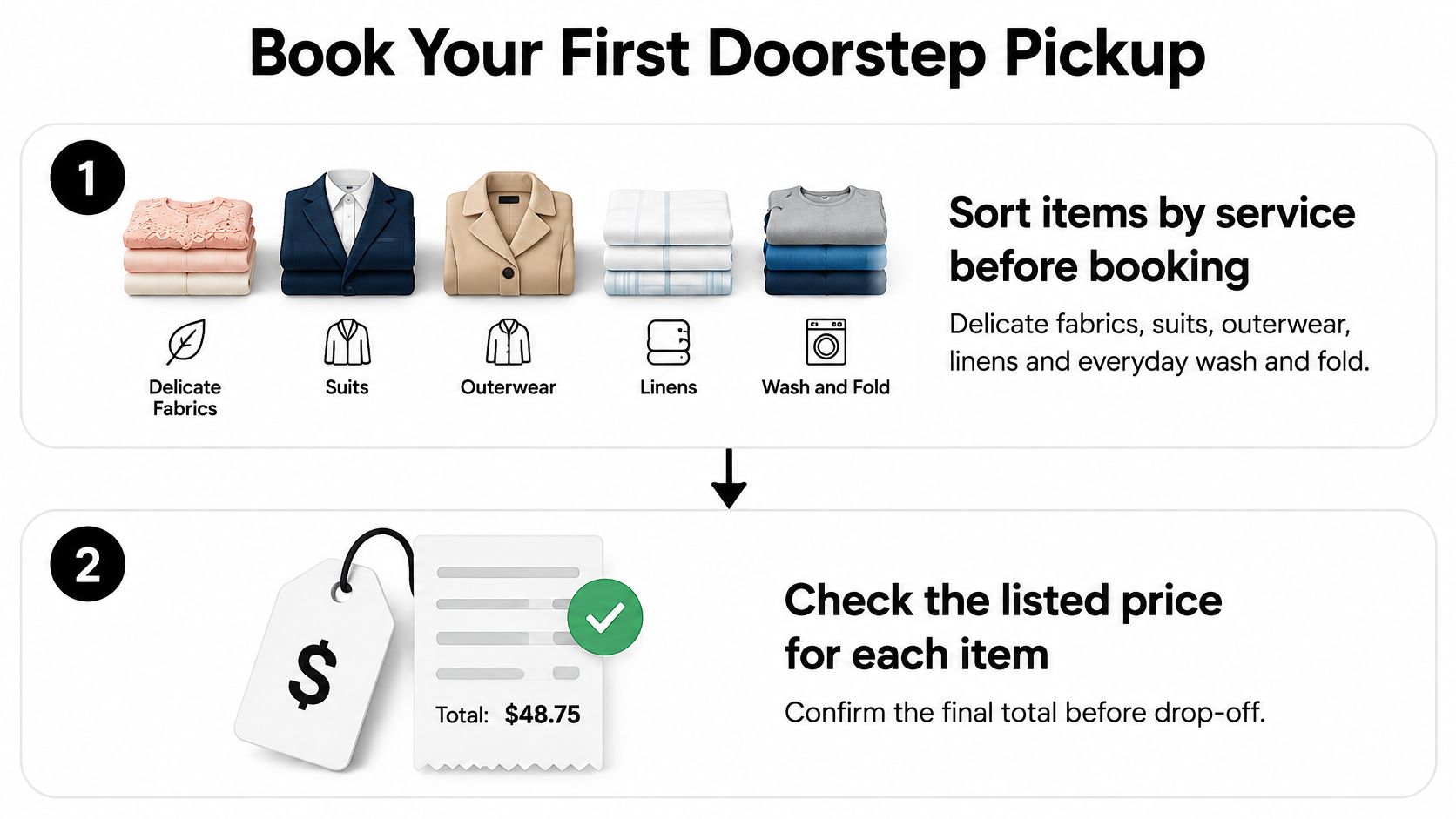
Sort items by service before booking. Separate delicate fabrics, structured suits, seasonal outerwear, bulky linens, and everyday wash-and-fold clothes into distinct bags. Keep silk, velvet, and leather out of the everyday laundry sack. Identify pieces needing repair or alteration so cleaning instructions do not obscure those requests.
Check listed rates and confirm your expected total. Match each item to its service category, distinguishing standard shirt laundering from hand-pressed or silk-shirt care. Point out trims, pleats, stains, and requested alterations before agreeing to the work. Final charges depend on the item and treatment. Record existing damage and mark stain locations in your instructions so both you and the cleaner know what needs attention.
Schedule your collection online. Book through CleanOnline's doorstep pickup and delivery service, which offers 24x7 pickup and collection and delivery that are free anywhere in Toronto. Confirm the handoff arrangements rather than leaving bags outside without instructions. Include apartment buzzer codes, concierge details, and any access restrictions. Clear collection notes matter as much as choosing a convenient time.
Flag urgent deadlines right away. Same-day dry cleaning is available on special request for urgent needs. State when you need the garment back and confirm whether that deadline can be met before collection. A request for urgent service should not be treated as an automatic promise of same-evening return.
Prepare the bag for processing. Empty every pocket, especially of pens and lip balm, and keep your item list with the service instructions. CleanOnline's delivery team takes collected clothes to the nearest outlet for cleaning appropriate to the service. Wash-and-fold loads are sorted by colour and material, washed, dried, folded in sets of five, and returned in 100% reusable eco-friendly laundry bags. Dry-cleaning and pressing requests should remain clearly separated from that laundry order.
Inspect every bundle upon return. Compare the returned items with your list. Check buttons, collars, crease lines, existing damage, and the areas marked for stain treatment. Report missed spots or pressing concerns promptly, before wearing or storing the garment. Assess fragrance separately from cleaning quality; scent alone does not establish which cleaning process was used.
Prefer In-Person Drop-Off in North York
For a complicated stain, a pinned hem, or a wedding gown, a counter conversation can be more useful than bag notes. CleanOnline has Yonge Street locations in North York, including a unit in the Yonge Sheppard Centre. In-person drop-off also gives you space to discuss leather care, fitted alterations, or restoration before committing to treatment.
Keep the first order manageable: dress shirts, a suit or seasonal coat, and a separate wash-and-fold bag. Check the finish, the folded bundles, and how closely collection arrangements matched your booking.
CleanOnline, North York's Premium Dry Cleaners offers dry cleaning, shirt laundering, wash-and-fold laundry, alterations, shoe repair, and restoration. Choose the service each item needs, confirm the expected charges and return arrangements, then book the collection.