How to Clean Heavy Drapes Without Ruining the Fabric
Learn how to clean heavy drapes safely: check care labels, vacuum like a conservator, pick the right method, and know when to call a professional.
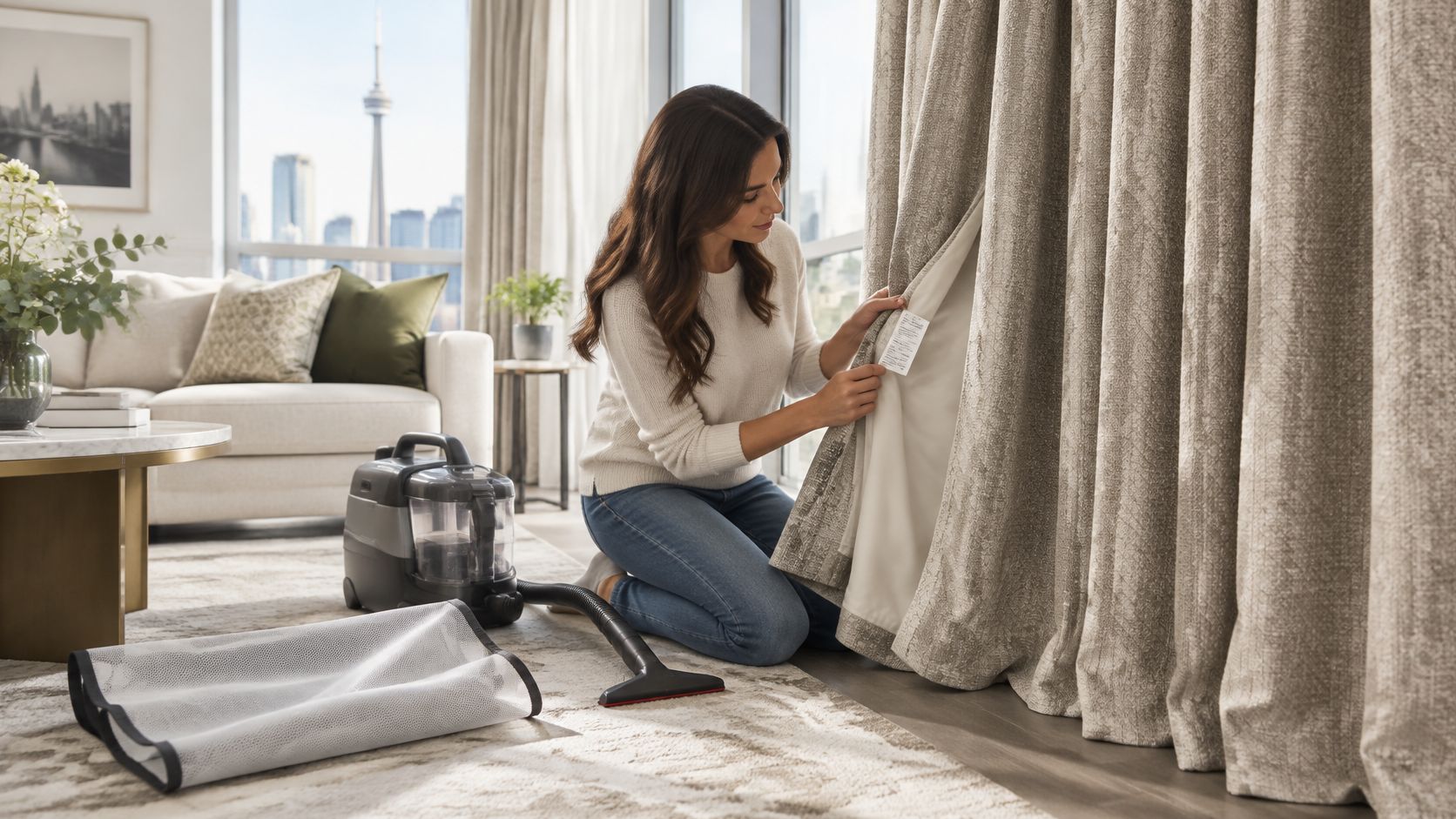
You've been meaning to deal with the drapes for months. The pleats look grey at the top, the hems have picked up pet hair and cooking film, and the panels feel heavier than you remember. The washing machine is right there, but these aren't bedsheets. One aggressive cycle can shorten a panel, separate the lining, or leave the pleats hanging crooked for good. That's why learning how to clean heavy drapes starts with assessment, not water.
Why Heavy Drapes Need a Different Cleaning Approach
A Toronto living room in late winter tells the story. Floor length drapes have hung through closed windows, forced air heating, holiday cooking, and a dog who naps against the hem. They don't look filthy at a glance. Run a hand down an inside pleat, though, and you'll feel the grit.
Heavy drapes are large, weight bearing textiles. Their job isn't only to look clean. They have to hang straight from hooks or a rod, hold a pleat, and meet the floor at the right length. If the face fabric shrinks and the lining doesn't, the panel puckers. If an interlining shifts, the drape loses its body. If a blackout backing cracks or separates, light leaks through in patches.
Cleaning doesn't automatically mean washing
Ordinary laundry tolerates agitation, spin extraction, and tumble heat. Many drapes don't. They're layered construction, face fabric, lining, sometimes interlining and weights, sewn into one oversized panel that may not even fit safely in a home drum. Wet fabric weighs far more than dry fabric, and that weight pulls on seams while you lift, wring, or hang it.
Canada's federal conservation guidance is direct on this point. Heavy drapes shouldn't automatically be machine washed or tumble dried, and home washers, dryers, and irons are too rough for delicate textiles. Washing can cause irreversible damage to historic, fragile, lined, beaded, sequined, wool, silk, or early synthetic textiles, as set out in Canadian Conservation Institute guidance on washing textiles.
The safest sequence is assess first, remove dry dust second, choose a wet method only if the label and construction allow it, and escalate when you find a red flag.
That sequence protects you from the two commonest mistakes. The first is treating every panel as washable because it looks sturdy. The second is paying for dry cleaning before checking whether surface dust is the whole problem. Most neglected drapes need dust removal and an honest inspection before they need any liquid at all.
You'll work through four decisions in order:
- Can this fabric be cleaned at home: The label, fibre, and construction answer this.
- Is the soil dry or bound in grease: Dry dust vacuums off, greasy soil doesn't.
- Does the method match the weakest layer: The lining or backing usually fails before the face fabric.
- Is this a professional job: Damage, contamination, and commercial requirements change the answer.
Check the Care Label and Inspect Before You Clean
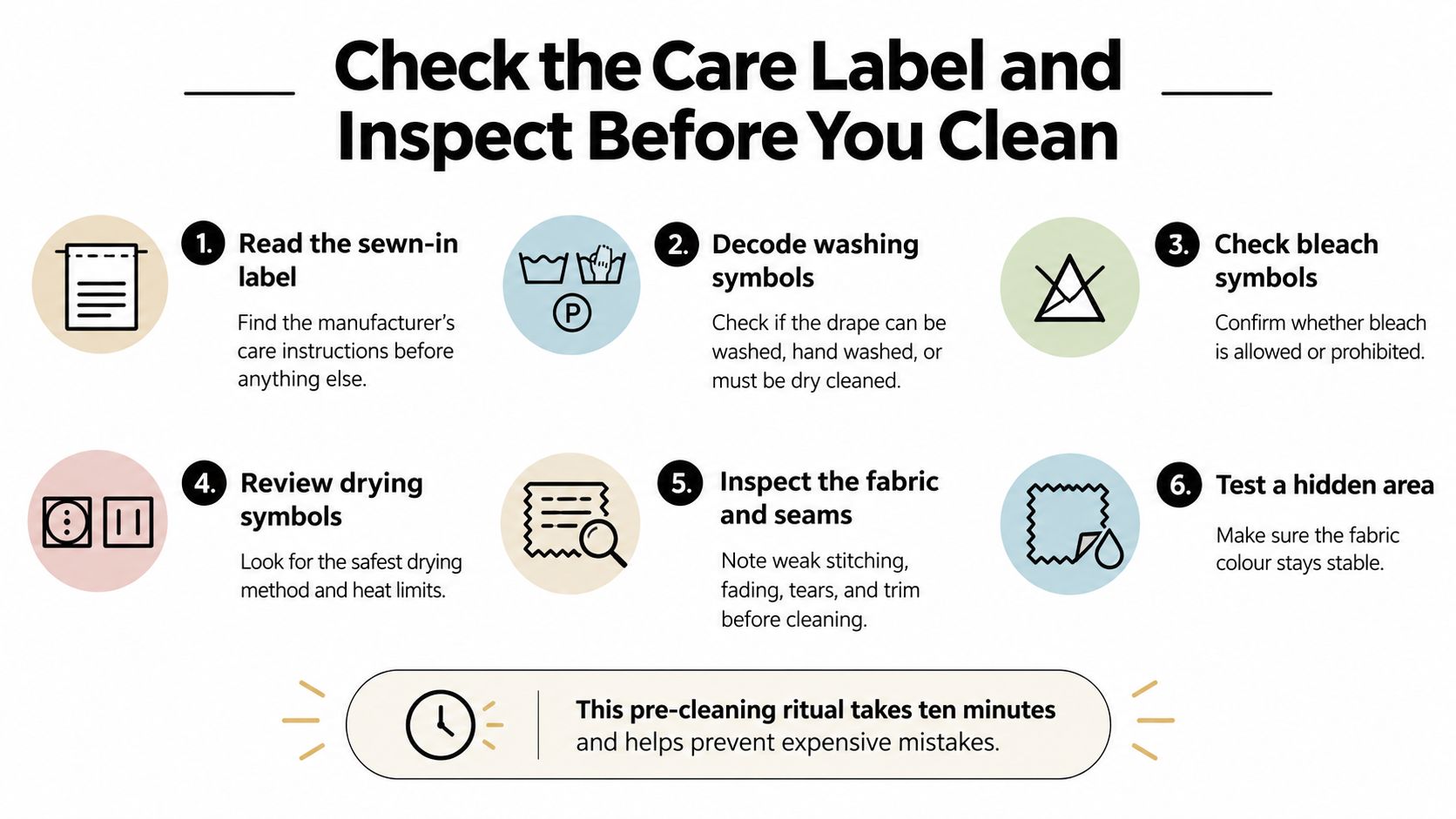
Give this stage ten unhurried minutes. It's boring, and it's where expensive mistakes get prevented. Work in good light, with the panel still hanging if it's very heavy, and note what you find before you take anything down.
Start with the sewn in label
Find the label at a top corner, side seam, or hem. Canada's national care labelling program uses five core symbols covering washing, bleaching, drying, ironing, and dry cleaning. Read all five, not just the first one you recognise. A panel can permit gentle washing but prohibit tumble drying, or allow ironing at low heat while forbidding bleach entirely.
If there's no label, treat the drape as unknown fibre. Unknown doesn't mean uncleanable. It means you don't guess, and you don't immerse it in water on a hunch.
Build a construction inventory
Identify what you're holding before you choose a method:
- Fibre: Cotton, linen, wool, silk, velvet pile, or a synthetic blend, each reacts differently to water and heat.
- Lining and interlining: Separate layers can shrink at different rates and pull the panel out of shape.
- Blackout backing: Coated backings can crack, bubble, or delaminate when flexed, heated, or solvent exposed.
- Pleat construction: Pinch pleats and buckram headers don't respond well to being crushed in a drum.
- Trims and hardware: Beads, sequins, fringe, lead weights, and hooks all need noting, and hooks come off before any cleaning.
Test colour and check structure
Dampen a white cloth, press it against a concealed hem area, and hold briefly. Colour on the cloth means the dye isn't stable, and wet cleaning at home is off the table. Repeat the thinking for any spot product you're considering, in the same hidden spot.
Then run a structural check. Look for split seams, loose threads, sun rotted leading edges, and powdering or fragmenting fibres. Gently flex a small area of the lining. If it crackles, sheds, or tears with minimal tension, it won't survive handling, let alone washing.
Stop rule: Historic, fragile, wool, silk, early synthetic, lined, beaded, sequined, or feather trimmed drapes need professional assessment before any wet or solvent cleaning.
That stop rule isn't overcaution. Those categories fail in ways you can't reverse, and a cleaner who sees the panel first can still save it. A cleaner who sees it after a home wash usually can't.
Remove Surface Dust With a Screen and Vacuum
For structurally sound drapes, this is the first real clean, and often it's enough. The method comes from textile conservation work, adapted for a home setting. It's slow, dry, and far gentler than dragging a brush attachment across the fabric.
Set up the screen and support
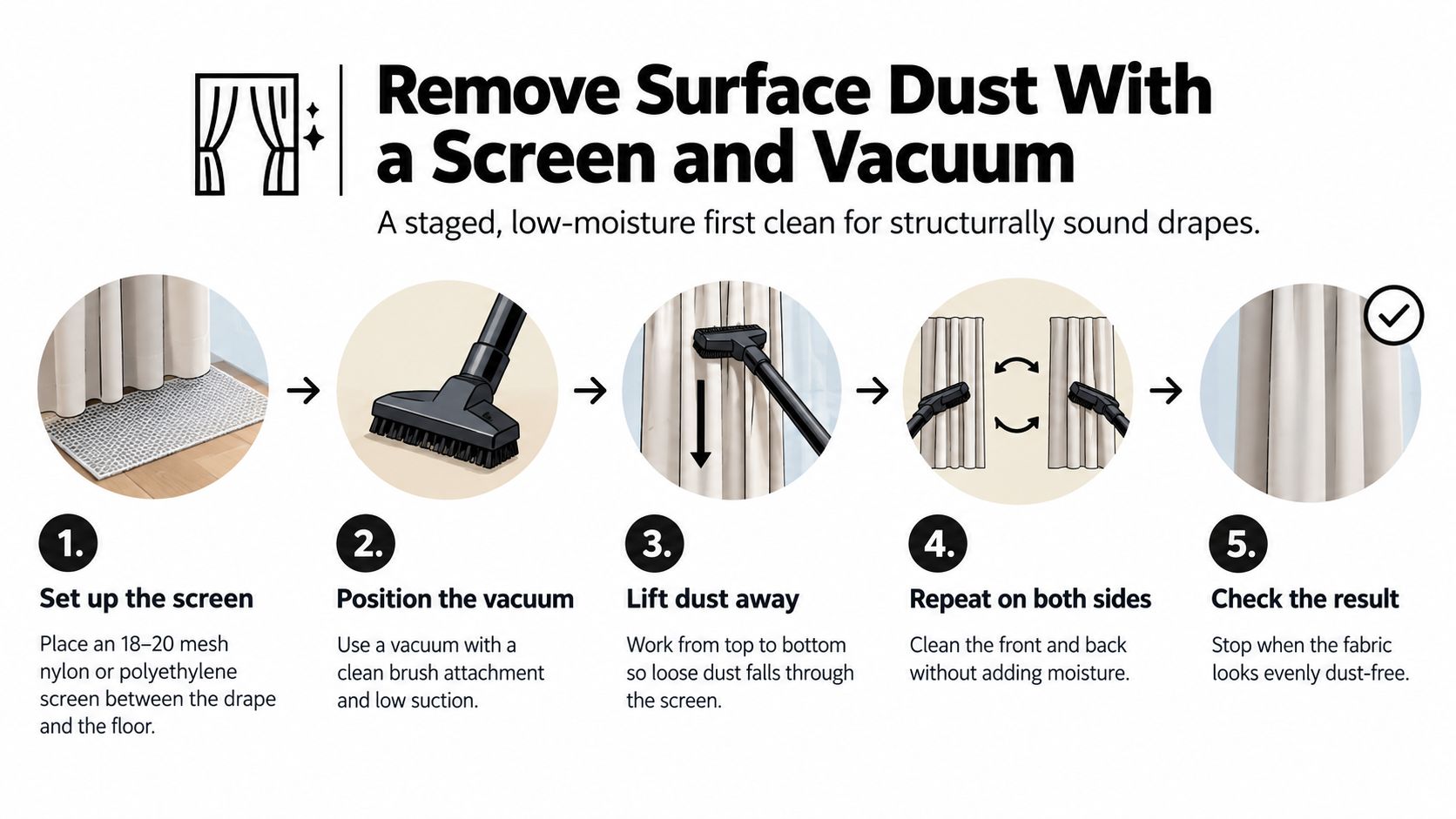
You'll need a low powered hand held vacuum or a machine with adjustable suction, a clean upholstery attachment, and an 18 to 20 mesh nylon or polyethylene screen placed between the nozzle and the fabric. The screen stops fibres and weakened areas being pulled into the suction stream. The Canadian Conservation Institute method for vacuuming textiles uses exactly this barrier approach.
Support the panel from behind with your other hand, or work with the drape laid over a clean padded surface if it's already down. Unsupported fabric gets sucked toward the nozzle and creases under its own weight. Remove hooks and rings first so nothing snags the screen.
Work with the weave, not against it
Use gentle strokes in the direction of the warp, weft, or pile. Lift the nozzle at the end of each pass instead of rubbing back and forth. Pressing and scrubbing grinds grit into the fibres and can distort a pile or open weave. Work systematically from top to bottom so you don't re dust cleaned areas, then repeat on the reverse face.
Pay attention to the upper folds and the inside of pleats. Dust settles heaviest where air movement slows, and that's the top third of the panel. Open each pleat gently and pass the screened nozzle inside it. Don't force the attachment into tight folds.
Know the limits of dry cleaning
This removes loose dust and surface soil. It doesn't remove grease bound stains, cooking film that's bonded to the fibre, or ground in marks at hand height. Those need professional wet or solvent treatment, and scrubbing harder with a vacuum won't change that.
Never vacuum a powdering, fragmented, badly split, or heavily embellished textile. Suction can pull fibres and ornaments straight off the panel.
For floor length lined curtains, this low moisture step has a practical advantage beyond gentleness. It reduces handling, avoids water exposure entirely, and leaves the panel at its original dimensions while you decide whether anything further is justified. Half the drapes people bring in for washing only ever needed this.
Choosing Between Washing and Dry Cleaning
Match the method to the label and the weakest layer, not to what's convenient this weekend. Convenience is how washable looking drapes end up two inches shorter and permanently rippled.
What each route actually suits
Machine or hand washing belongs to strong, unlined, washable fabrics whose labels permit it. Even then, think about size. A panel that barely fits dry will not move freely when wet, and poor movement means uneven cleaning and heavy creasing. Hand washing oversized panels means lifting sodden fabric, which stresses seams badly.
Spot treatment suits one isolated mark on sound, colourfast fabric. Test first, work from the edge of the mark inward, and blot rather than rub. The risk is a clean ring that's more visible than the original spot, especially on pile fabrics.
Professional dry cleaning suits lined, interlined, or delicate panels, but it isn't a universal safe option either. Commercial dry cleaning should be limited to strong textiles in excellent physical condition and handled as a custom process. Fragile drapes can fail in solvent and mechanical action just as they fail in water.
Two fibre facts that decide most cases
Natural fibres such as cotton, wool, and linen can shrink when washed or steamed, as noted in neutral fabric care guidance on fibre shrinkage and care codes. Shrinkage in a drape isn't a minor cosmetic issue. It changes the finished length and can leave the lining hanging below the face fabric.
Second, dry clean only doesn't mean any solvent is safe, and some care codes require water based cleaning while explicitly prohibiting dry cleaning. Reading the actual code matters more than assuming solvent is always the gentler route. If you can't decode it confidently, that's itself a reason to ask a cleaner before committing.
Choosing a Cleaning Method by Drape Type
| Cleaning Method | Suitable For | Main Risk | When to Skip |
|---|---|---|---|
| Screen and vacuum | Structurally sound drapes with dry dust | Pulling weak fibres if suction is too high | Powdering, split, or heavily embellished fabric |
| Gentle home washing | Strong, unlined, label approved washable panels | Shrinkage, colour loss, seam stress from wet weight | Lined, silk, wool, velvet, or unknown fibre panels |
| Spot treatment | One small mark on sound, colourfast fabric | Rings, colour change, pile distortion | Untested dyes or large greasy soiling |
| Professional dry cleaning | Lined or interlined panels in good condition | Solvent damage to coatings, trims, or weak fibres | Fragile textiles or codes prohibiting solvents |
Inspect after cleaning, whoever did it
Check the returned or washed panel before rehanging. Look for rippling along seams, delamination of blackout backing, colour bleed at the hem, and stretched or torn header tape where hooks carry the weight. Catching a problem now, while the panel is down, beats discovering it across a full window.
Commercial operators have an extra step. Daycares, hotels, restaurants, religious facilities, and assisted living settings should get written confirmation about flame retardant treatment and any retesting requirements before returning drapes to service. Cleaning can affect treatments and warranties, and verbal reassurance isn't documentation.
Dealing With Smoke Soot Mould and Water Damage
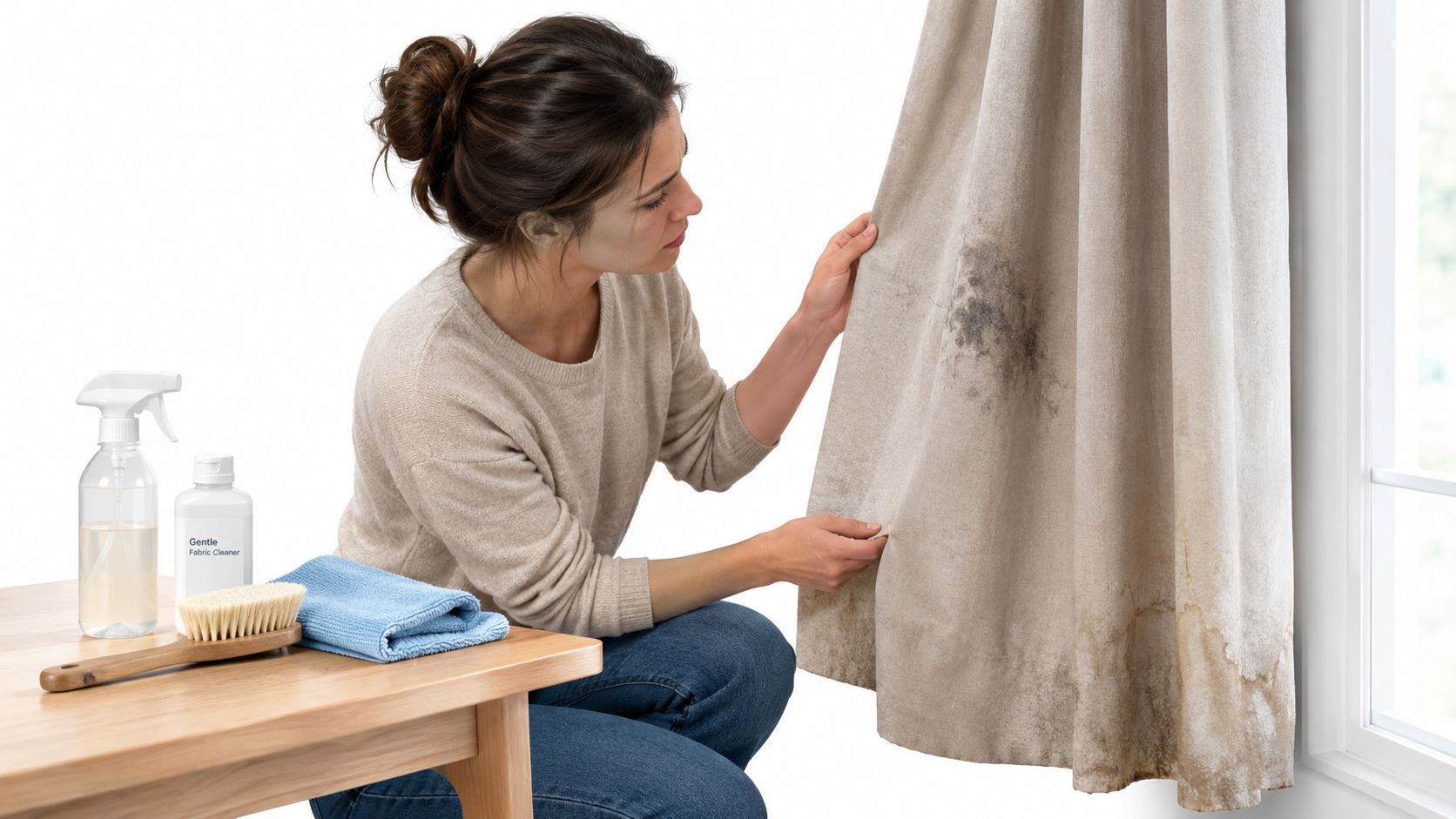
Contamination changes the rules. A soot loaded or mouldy drape isn't a dirty drape, and treating it like one usually makes the damage permanent. Resist the instinct to get it into water quickly.
This inspection stage is where you decide whether you're cleaning or containing.
Wildfire smoke and soot
Toronto smoke events now push fine particles into homes even with windows closed. Soot is oily and can permanently stain fabric, and moisture can drive that staining deeper while triggering shrinkage in the same wash. Shaking ash covered drapes indoors just redistributes fine particles through the room you were trying to clean.
Alberta Health Services advises removing soot before cleaning or deodorising curtains and soft furnishings, and recommends steam cleaning drapes after wildfire exposure, in its wildfire home restoration guidance for soot contaminated furnishings. Canadian survey data also found only 24% of respondents had checked the Air Quality Health Index during wildfires, even though 78% associated a healthy home with good indoor air quality.
Work through this sequence instead of improvising:
- Check local air advisories: Don't ventilate a smoke filled room with worse outdoor air.
- Isolate affected panels: Take them down carefully or bag them in place if they're shedding residue.
- Don't dry dust oily soot: Wiping spreads it across clean fabric.
- Photograph the condition: Useful for insurance and for the cleaner's assessment.
- Get professional assessment: Lined, fragile, or visibly soot loaded panels aren't DIY candidates.
This short video walk through is worth watching before you handle stained or mildewed panels, since sequencing matters more than scrubbing effort.
Mustiness, mould, and water damage
Apply the same contain and escalate logic. A musty smell with no visible growth may respond to thorough vacuuming and airing on a dry day. Visible mould, water staining, or fabric that's shedding fibres is different. Isolate the panel away from clean textiles, ventilate the room, and seek specialist textile or restoration advice rather than laundering it at home. Home washing spreads contamination through your machine and can set water marks permanently.
When to Call a Professional Drapery Cleaner
Home methods have a clear stopping point. Lined or interlined panels, pinch pleated or blackout backed drapes, delicate or unknown fibres, grease bound stains, and smoke or water contamination all sit past that point. So does any panel your inspection flagged as powdering, split, or colour unstable.
What a specialist actually adds
A drapery cleaner identifies fibre and backing before choosing a process, controls solvent or wet treatment for large panels, and finishes the drape so pleats rehang correctly. Finishing matters more than people expect. A clean panel with crushed pleats and a distorted header looks worse than a dusty one that hangs properly. Commercial clients also get the paper trail they need on treatments and condition.
As a local example, CleanOnline, North York's Premium Dry Cleaners lists drapery within its household cleaning services, uses environmentally friendly solvents, and offers complimentary doorstep pickup and delivery across Toronto and the GTA, bookable through its website or app. It also handles commercial laundry for hotels, restaurants, salons, daycares, and care facilities. Doorstep collection solves a real practical problem, since transporting heavy floor length panels without dragging the hems is awkward.
Questions to ask any cleaner
Ask these before you hand over the panels:
- Assessment first: Will you inspect fibre, lining, and backing before cleaning, and tell me if you won't proceed?
- Shrinkage policy: What dimensional change do you consider acceptable, and what happens if a panel comes back short?
- Lining handling: How do you manage linings and blackout coatings that react differently from the face fabric?
- Treatment records: Can you confirm in writing how cleaning affects flame retardant finishes, if that applies?
A cleaner who answers those questions directly, and occasionally advises against cleaning, is the one you want.
Keeping Heavy Drapes Clean Between Deep Cleans
Routine care is unglamorous and it works. The goal is keeping dry soil from building into the bonded grime that forces a risky wet clean.
Vacuum both faces and the upper folds periodically with an upholstery attachment on low suction, supporting the fabric as you go. Canadian federal guidance recommends frequent vacuuming of carpets, curtains, and upholstered furnishings, and holding indoor relative humidity between 35% and 50% to help control house dust mites, as summarised in Toronto curtain care guidance on vacuuming and humidity. The same Canada focused indoor air research found average settled household dust of 0.80 grams, with average dust loading of 0.60 grams per square metre, and frequent cleaning and vacuum use were associated with lower indoor fine particle concentrations.
Blot splashes quickly with a clean white cloth before they set, and air panels on dry days with windows open rather than taking them down to shake. Shaking heavy drapes stresses headers and puts dust back into the room air anyway. Watch the leading edges for sun damage during your routine passes, since that's where fibres weaken first.
The whole method on one list
- Label check: Read all five care symbols before anything else.
- Inspection: Fibre, lining, backing, trims, colourfastness, and structural damage.
- Screen vacuum: Low suction, with the weave, both faces.
- Method match: Wash, spot treat, or dry clean only as the weakest layer allows.
- Escalate when flagged: Fragile, contaminated, or commercial panels go to a professional.
Put a twice-yearly vacuum reminder on your calendar today. If your drapes are lined, stained, smoke-exposed, or overdue, book a professional assessment this week instead of gambling on the washer.
If your drapes are lined, pinch pleated, or too heavy to transport without dragging the hems, book a professional assessment instead of risking the home washer. CleanOnline offers drapery cleaning with complimentary doorstep pickup and delivery across Toronto and the GTA, for households and commercial clients alike. Schedule your pickup through CleanOnline, North York's Premium Dry Cleaners and let the panels come back cleaned, finished, and ready to rehang.
Produced via the Outrank app