Hem Dress Near Me: A Guide to Fittings and Turnaround
Looking for hem dress near me? Learn what to measure, how fittings work, and when hemming beats replacing a dress in Toronto.
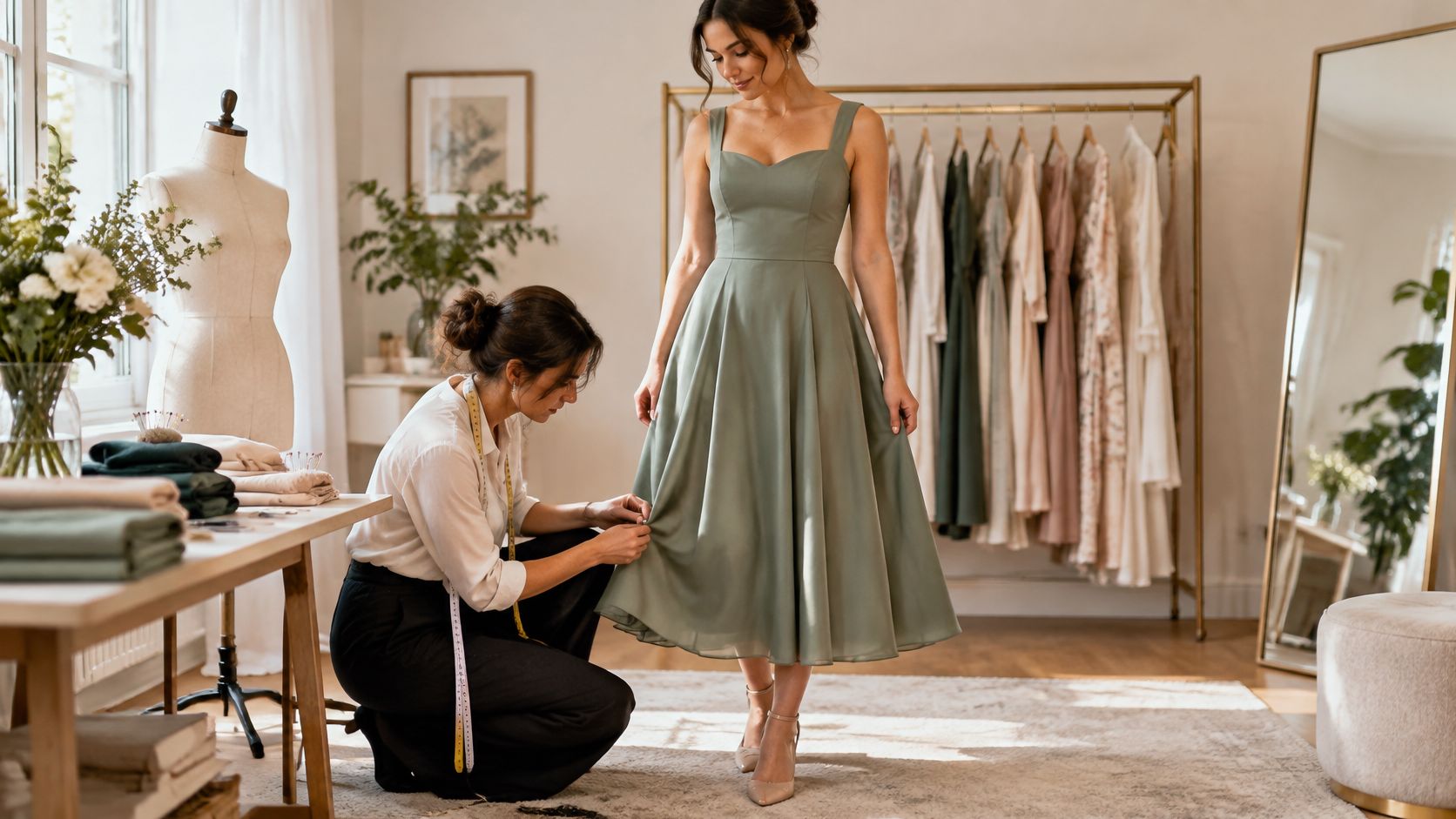
You've found a dress you want to wear, but the skirt catches under your shoes or sits at an awkward length. Searching for hem dress near me is the easy part. Deciding whether the dress can be shortened neatly, what to bring to the fitting, and whether doorstep collection will work takes a little more thought.
A good hem does more than remove fabric. It keeps the skirt balanced, allows the lining to move freely, and preserves the finish that suits the dress. Before you book, check whether you're paying for a straightforward length adjustment or a more involved reconstruction.
Check Whether Your Dress Can Be Hemmed or Should Be Replaced
A dress can be worth altering even when its hem is damaged, provided the fabric above the planned cut is sound and the new edge can be finished securely. Shortening needs enough fabric below the target line for the chosen finish. Lengthening requires usable fabric inside the existing hem, and the old crease may remain visible.
Run a home feasibility check
Turn the dress inside out and inspect the lower skirt in good light. The main question is whether the fabric, lining and design can support the new length without creating another problem.
- Fabric condition: Check for abrasion, splitting, peeling bonded layers or stretched sections. Damage below the proposed cut may disappear; damage above it needs a separate repair.
- Hem allowance: Confirm there is enough fabric for a folded edge, facing or other suitable finish.
- Independent lining: Lift the outer skirt gently. The lining should be accessible without pulling the shell out of shape.
- Design continuity: Check whether shortening would remove a lace border, interrupt a slit or change the proportions of a pleated skirt.
Replacement may make more sense if the fabric is failing and the dress also needs extensive reshaping. A damaged edge alone does not rule out hemming if the alteration can remove it completely.
Match the finish to the construction
Typical hem finishes and alteration risks by fabric
| Fabric or construction | Usual hem finish | Main alteration risk |
|---|---|---|
| Chiffon or tulle | Narrow rolled hem or double-folded edge where appropriate; some tulle stays raw-cut | Puckering or visible stitching |
| Silk or satin | Blind hem or narrow rolled hem | Water marks, pressing shine or a visible hem line |
| Lace or beaded | Hand-finished hem following the motifs | Cut beads or broken lace motifs |
| Lined dress | Lining hemmed separately, usually shorter | Lining showing or pulling |
| Stretch jersey | Twin-needle or stretch-stitch hem | Wavy edge from a stitch that is too tight |
| Asymmetric or pleated | Hem following the design line | Uneven length after shortening |
A specialist should assess the garment's balance and construction before cutting. A tilted waist or poorly seated bodice can make the skirt look uneven, so shortening the bottom may not solve the problem. Ask whether the proposed finish will preserve the original look, and how the fabric will be pressed without shine or distortion.
Practical rule: Keep the original finish when it suits the new length and can be secured neatly. Choose a new finish when preserving it would leave a bulky or unstable edge.
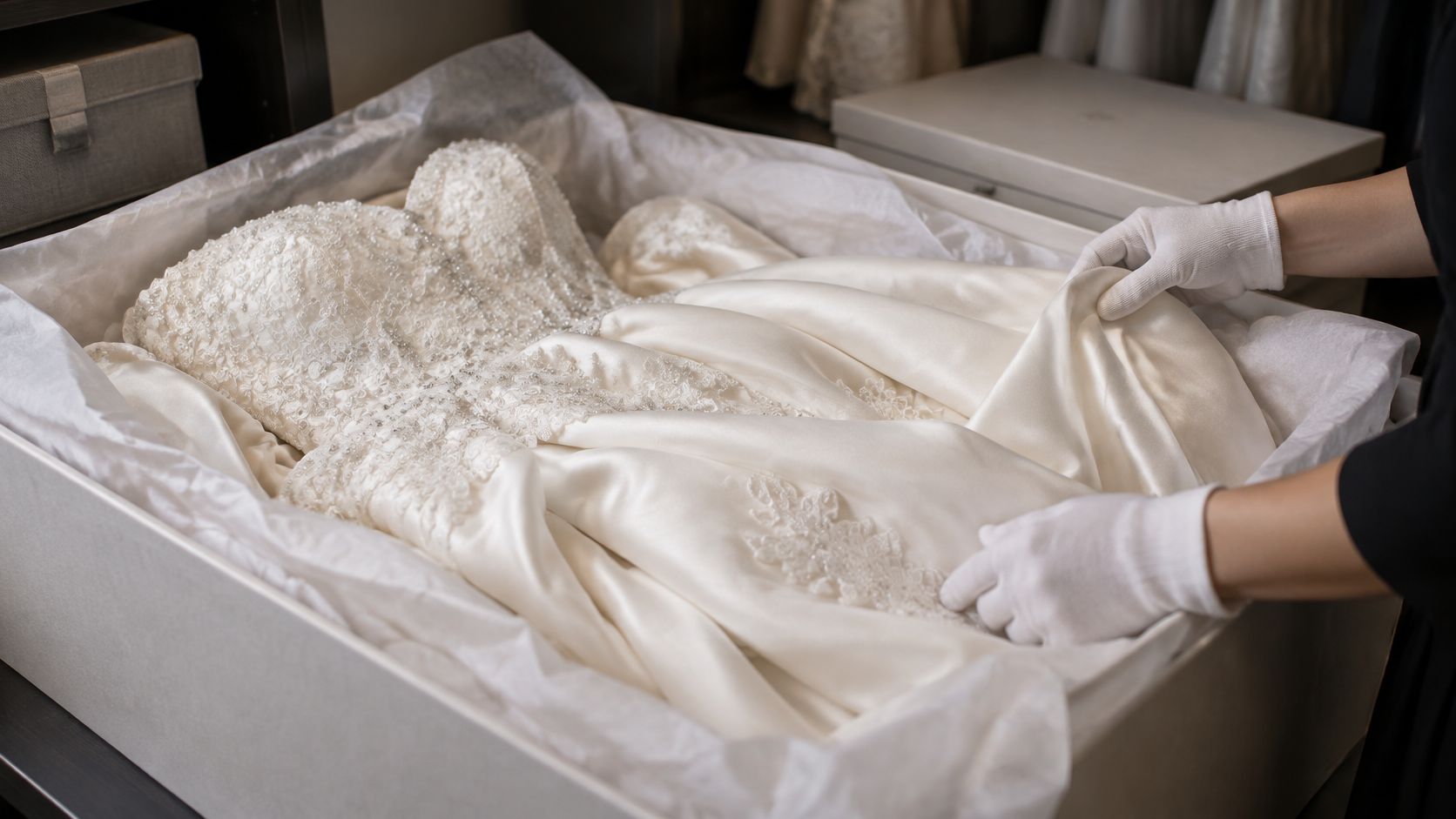
For bridal garments with soil around the skirt, read this guide to cleaning a wedding dress before deciding whether cleaning should be arranged alongside alterations.
How to Prepare Your Dress for the Fitting
The most useful fitting starts with the dress worn exactly as you intend to wear it. Shoes affect floor clearance, while a slip, petticoat, or shapewear can change how the skirt hangs over the body.
Use this visual reminder while gathering your fitting items.
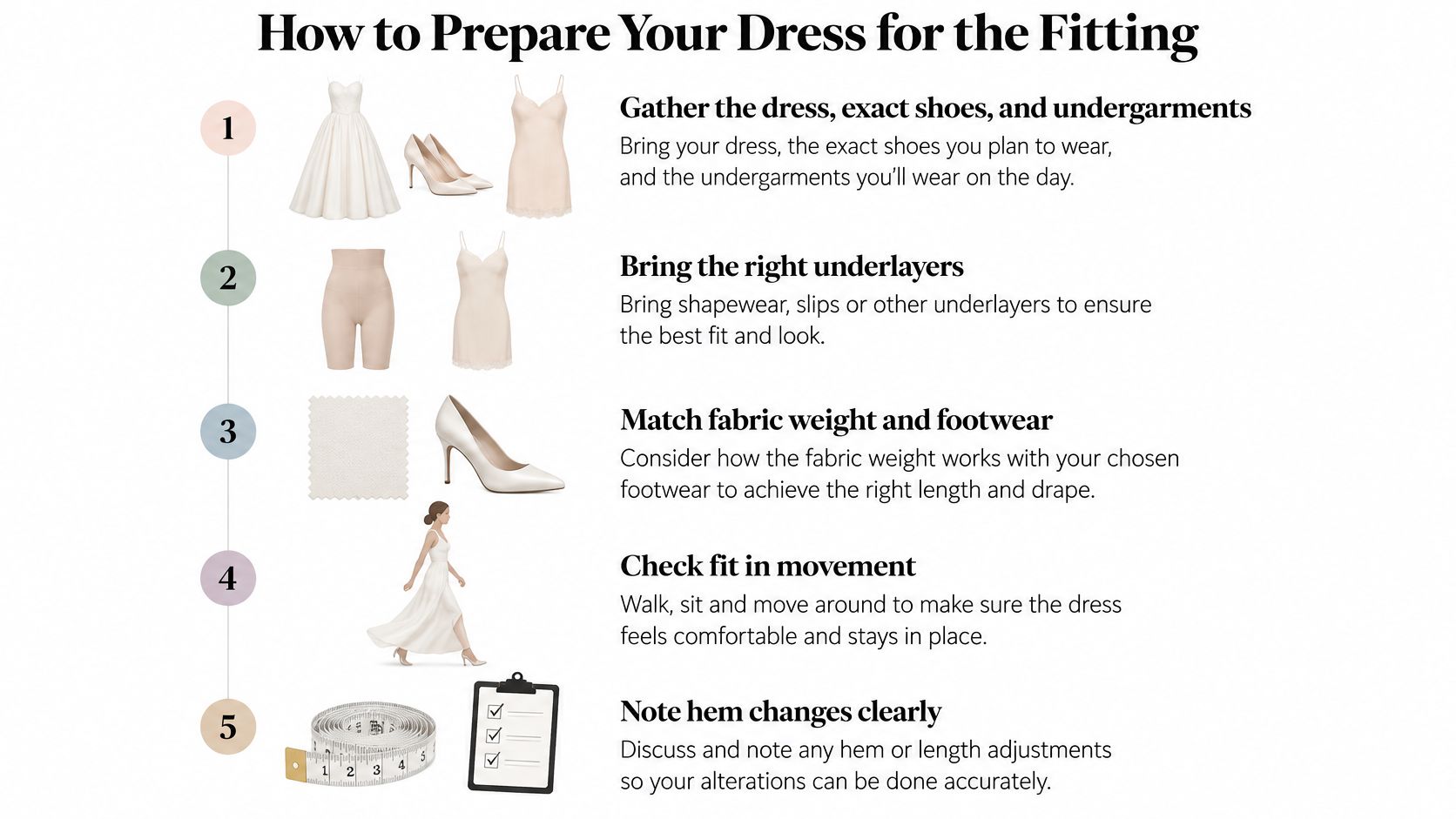
Prepare without cutting or pressing a new crease
Gather the complete outfit. Bring the dress, exact shoes, and intended slip, bra, shapewear, or petticoat. Substituting similar shoes is a common mistake because sole thickness and heel shape can change your stance.
Check the proposed height on a hard floor. With your shoes on, have a helper pin or clip the desired line while you stand naturally and look ahead. Bending down to inspect the edge changes your posture and can spoil the mark.
Record floor clearance in centimetres. Measure from the floor to the proposed edge at the front, sides, and back, identifying each position in your notes. Don't force equal clearance onto an intentionally asymmetric design or train.
Record the current garment length. Measure from a clearly named reference, such as the waist seam or shoulder seam, to the existing edge. Say whether the measurement follows the front, side, or back so the specialist isn't comparing different points.
Read and photograph the care label. Include fibre content, cleaning instructions, and any pressing restrictions, then note whether the skirt is lined. Don't assume a shiny fabric is silk or that every layer has the same care requirements.
Photograph construction details. Capture the full dress and close-ups of the hem, train, beading, slits, and unusual panels. A close-up alone won't show the proportions the alteration needs to preserve.
Flag soiling before the appointment. If the dress needs cleaning, arrange the appropriate treatment before final marking and cutting. Pressing a dirty edge can make stains harder to remove, and cleaning may change how the fabric settles.
If you're still choosing a length, ClothME's guide can help you choose the right dress hemline before discussing the construction with an alterations specialist. For a comparison with a simpler garment, our explanation of how to hem pants shows why a defined reference point matters, although dress skirts need additional balance checks.
Send a concise fitting brief
Include dress style, fabric, lining, proposed length, measurement reference, footwear, photographs, and the date you need it ready. Add whether you need an accessible fitting or courier collection, and describe your home measurements as preliminary rather than permission to cut.
Pickup and Delivery Versus In-Person Fittings
Does someone need to see this dress on you to establish the hem? That's the deciding question, not whether a courier is available.
A straightforward everyday dress that already fits through the shoulders, bust, and waist may be suitable for remote instructions. A gown with a train, lace overlays, beading, or an asymmetric skirt is harder to judge without seeing its balance on the wearer.
Compare the service formats
In-person fitting versus pickup and delivery
| Factor | In-person fitting | Pickup and delivery |
|---|---|---|
| Fittings needed | A simple hem may be marked at the initial fitting; formalwear may require return checks | Confirm whether remote instructions are accepted or a separate fitting is required |
| Best for | Trains, beading, lace or asymmetric hems | Simple hems on dresses that already fit well |
| How fit is checked | You wear the dress during the fitting | Accurate measurements you send, unless a fitting is booked |
| Turnaround | Ask for a written completion date | Ask for a written date that includes courier time |
| Access | Travel to the shop and access to a suitable fitting area | No collection trip; a collection window instead |
A courier transfers the garment, not the responsibility for establishing its fit. If your instruction is to make it shorter, the specialist still needs an agreed finished line.
For a bias-cut skirt, the fabric may need to hang and settle before final marking. For a gown with a bustle, the specialist also needs to understand whether you're approving the walking length, the train arrangement, or both.
Doorstep convenience works best when the fitting decision is settled before the garment leaves your hands.
Make access part of the booking
Tell the provider if you use a mobility device, need seated fitting options, require help with changing, or have modesty or sensory requirements. Ask whether a companion can attend and whether the fitting area can accommodate your needs without an unsafe step onto a platform.
If you'll wear the dress seated, explain that before anyone marks it standing. The skirt's relationship to footplates, wheels, and the floor needs deliberate checking.
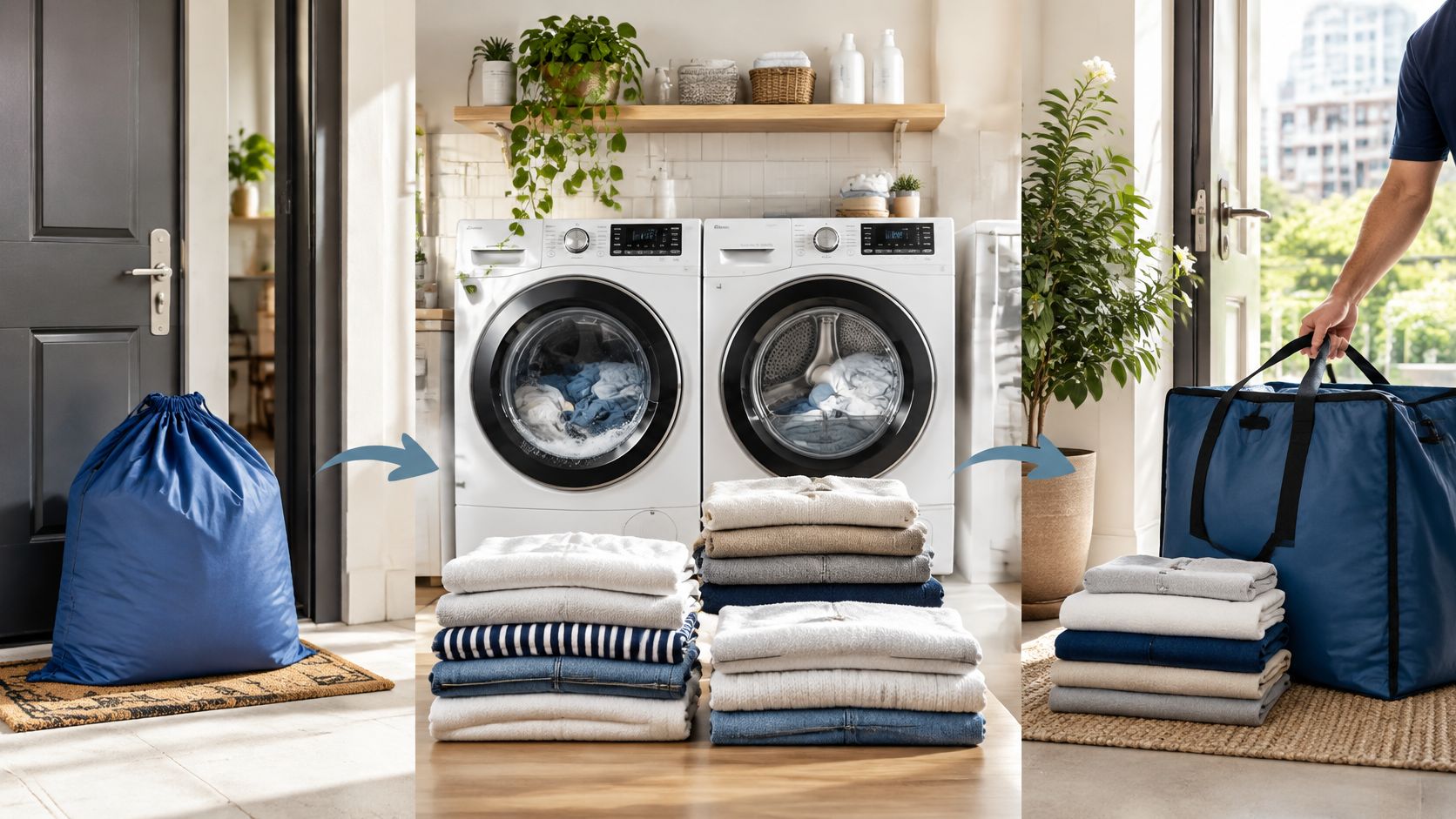
We offer pickup and delivery. Our delivery team collects clothes from the customer's doorstep, takes them to the nearest outlet for deep cleaning, and returns the cleaned and pressed clothes in tidy bundles. That cleaning collection process doesn't establish a formal dress's hem length, so confirm the fitting arrangements separately.
When comparing collection options, our guide to laundry pickup and delivery prices can help you separate transport and cleaning considerations from alteration work. Make sure the promised return date covers the entire journey, not just the sewing-room completion date.
What a Hem Costs and How Long It Takes
A hem quote should describe the work, not just the amount being shortened. Removing a deep section from a plain skirt can be easier than shortening a decorated edge by a small amount.
What moves hem price and turnaround
| Factor | Effect on price | Effect on turnaround |
|---|---|---|
| Length change | A larger change can require reshaping; request a construction-based quote | A plain edge may remain straightforward; confirm whether the new circumference needs extra work |
| Lining shortened separately | Adds a separate hem; have it included in the quote | Adds another sewing and checking stage |
| Hand finishing on beading or lace | Higher labour; request the hand-finishing charge | Longer than a straightforward machine hem |
| Train or asymmetric panels | Higher labour for marking and preserving the design | May require an in-person fitting and approval check |
| Cleaning before hemming | From $14.99 for our dress laundry service | Adds a cleaning cycle before the hem is marked |
| Price change on an online order | Staff may adjust for style or fabric with client approval | Confirm whether approval changes the scheduled completion date |
Get a quote that covers the whole job
Our dress laundry starting price is a cleaning reference, not a dress-hemming price, and it shouldn't be treated as the appropriate service for every formal fabric. A garment's care requirements determine whether laundering, dry cleaning, or another treatment is suitable.
For a fuller explanation of how construction affects estimates, see our guide to dress alteration costs. Before authorising work, settle these points:
- Included work: Does the quote cover the outer skirt, lining, decorative edge, pressing, and any required cleaning?
- Approval point: Will the specialist contact you before doing additional work?
- Completion: Is the stated date for shop collection or delivery to your address?
- Missed fitting: What happens to the schedule if you can't attend an approval appointment?
Separate an estimate from an approved charge
Our prices are subject to change at any time without notification. With client approval, management or front desk staff may also change the price of an item selected through an online order because of its style, fabric, or other factors.
Confirm the final scope and charge before cutting. A rush request shouldn't remove that approval step, particularly where an embellished border must be detached and reapplied.
Before authorising work: Ask for the price, included tasks, and completion date together in writing.
Understand the remedy policy as well as the price. If a garment is damaged or lost and not returned, we offer a full refund of the entire order. That's the stated order-refund position, not a promise of replacement-value compensation.
Choose a Hem Service Near You
Compare local services on garment-specific skills rather than the size of the brand. A shop that handles everyday repairs may be a good choice for a cotton dress, while a beaded gown calls for evidence of formalwear capability.
A 2026 Canadian clothing-alteration directory snapshot identified 684 service locations in Ontario and reported that 82.88% of Canadian alteration businesses were single-owner operations. It's a commercial directory estimate, not an official census, but it supports looking closely at individual providers rather than assuming every shop offers the same expertise.
Bring the dress or clear photographs to the consultation so you can discuss its actual construction.
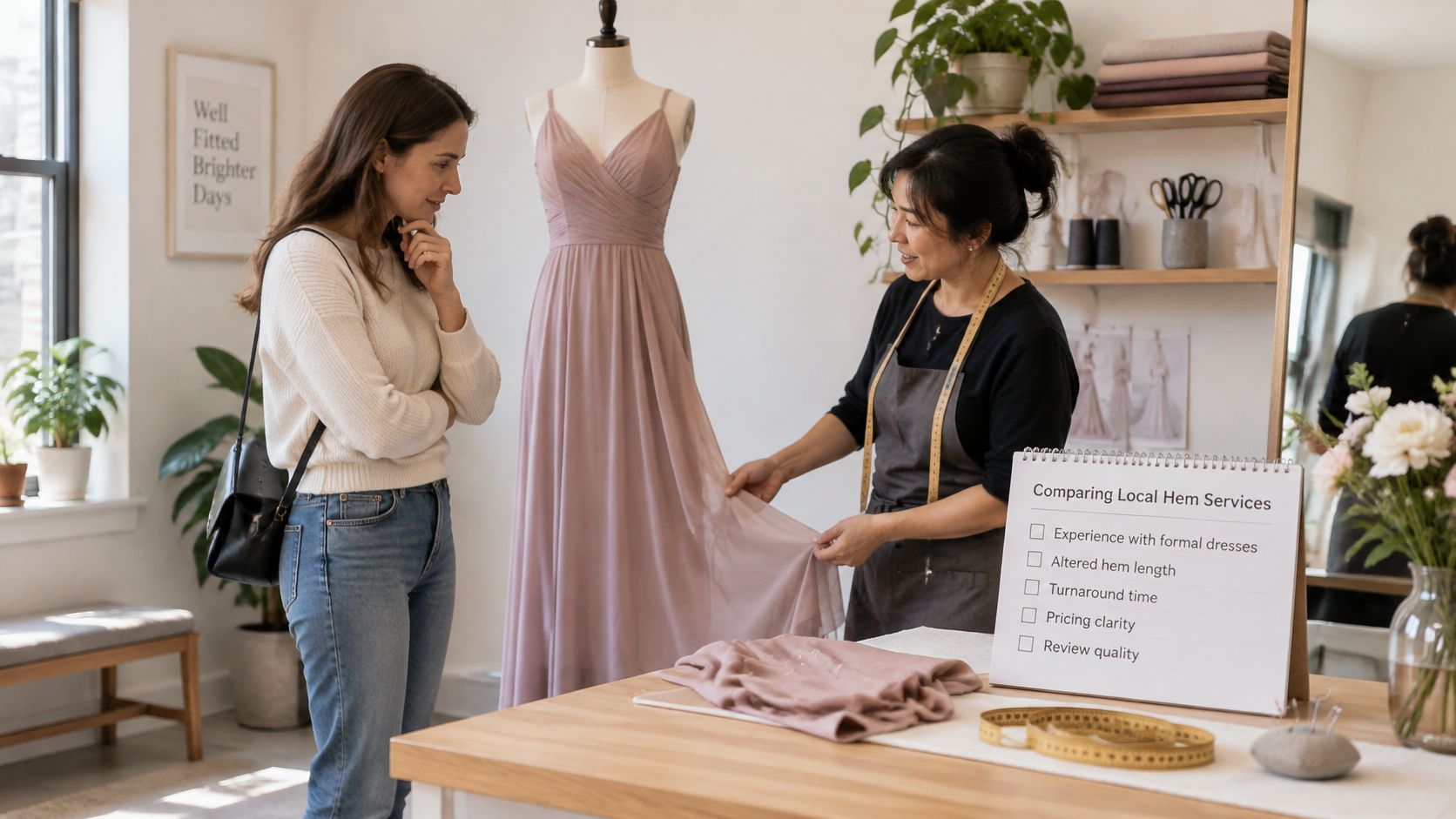
Use the same checklist for each provider
- Relevant fabric capability. Look for explicit handling of silk, satin, chiffon, lace, and tulle rather than a general promise to alter dresses.
- Suitable garment range. Formal gowns and custom garments require different construction knowledge from basic repairs.
- Repair skills. Loose stitching and an unstable existing edge should be assessed alongside the proposed shortening.
- Finish matching. Ask which existing details can be retained and what will look different after alteration.
- Lining control. Have the intended lining position included in the work description.
- Fibre-safe finishing. Confirm that pressing will follow the garment's fibre and care restrictions.
- Practical access. Establish whether collection is available and whether the required fitting can happen in person.
At CleanOnline, North York's Premium Dry Cleaners, we offer wedding dress alterations, fittings, steaming, and pressing for silk, satin, chiffon, lace, and tulle. Our alteration range includes shirts, coats, wedding gowns, dresses, suits, and blazers, and our repair services include tightening hems and fixing loose stitches.
Those are useful listed capabilities, but they don't replace an assessment of your particular dress. A heavily beaded border may need a different approach from plain satin even when both garments are evening wear.
Shortlist on clear answers
Mark each criterion as confirmed, not offered, or awaiting assessment. Don't count an unanswered question as a yes because a provider has strong general reviews.
The best response explains the proposed method and its limits. If preserving every lace motif would require substantial handwork, you should hear that before leaving the garment, not when collecting it.
Book Your Hem With Confirmed Details
Shortlist a small group of nearby providers and send each the same fitting brief. Comparable instructions make it easier to distinguish a lower price from a quote that leaves out the lining, cleaning, or finishing.
We list hemming among our alteration services for outerwear, skirts, pants, blazers, and jackets, alongside dress-fitting adjustments. With pickup and delivery also available, we can be an option for North York customers who want to coordinate garment care and alteration logistics.
Check the handover record
Before the dress leaves your possession, confirm:
- Target length: The agreed finished line is recorded in centimetres with a named measurement reference.
- Hem method: The work description identifies the finish and any decorative details to retain.
- Lining: The record states whether it needs shortening and how it should sit beneath the outer skirt.
- Approved price: Cleaning, alteration, pressing, and delivery charges are clearly distinguished where applicable.
- Completion date: The written date matches your collection or delivery arrangement, with any approval fitting accounted for.
- Changes: You know how additional work or price adjustments will be authorised.
If cleaning is part of the booking, use our guide to how long dry cleaning takes to plan the questions you'll ask about sequencing. Don't assume a cleaning estimate also covers alteration and transport.
Keep a copy of the approved instructions and photographs. At collection, try the dress with the intended shoes and check the finish before removing the garment tags.
CleanOnline offers dress alterations, formalwear fittings, cleaning, steaming, pressing, and doorstep pickup and delivery. Visit CleanOnline, North York's Premium Dry Cleaners to discuss your dress, arrange the appropriate fitting, and confirm the work and return date before handing it over.