How Long Does Dry Cleaning Take? Toronto Timelines
How long does dry cleaning take in Toronto? Plan on 2–4 business days for standard garments, and longer for stains, leather, or wedding dresses.

A practical Toronto planning benchmark for a standard dry-cleaning order is about 2–4 business days. Leather, suede, wedding dresses, heavy stains, and doorstep routes can take longer.
The interview suit is still on the hanger. The wedding guest dress has a mark you only noticed tonight. The winter coat has to be wearable before the next cold week. In North York, how long does dry cleaning take is not one universal number. It is a scheduling window, not the minutes a garment spends in solvent. A same-day promise can sound tidy and still miss the piece you handed over.
Why the Dry Cleaning Clock Starts Before the Machine
Thursday's interview, Saturday's ceremony, or Monday's commute all share the same problem. The outfit has a fixed day, and the cleaner's plant does not run on your calendar alone. For ordinary shirts, trousers, and uncomplicated dresses, plan on several business days. That span covers the queue, not a single wash cycle.
Several business days is the safe assumption for standard garments in North York and the wider Greater Toronto Area.
A counter quote that says “tomorrow” is easy to remember and easy to misread. It may describe a press-only job, an unstained item that never enters solvent, or a batch that already closed. If your piece misses the cutoff, the calendar jumps even when the machine itself is quick.
What that window is really holding
The days ahead of you usually mix four different clocks:
- Ordinary apparel: Suits, shirts, and simple dresses that can ride a normal production batch.
- Delicate or embellished construction: Silk, beading, lace, and lined pieces that need slower handling.
- Leather, suede, and wedding dresses: Specialty work that should never share a standard due date.
- Stain work and the route home: Testing, repeat treatment, weekends, and pickup days that sit outside the plant.
Speed and fabric safety are not the same promise. Rushing a grease mark on a structured jacket can cost you the jacket. Asking only “can you do it today?” skips the question that matters: which path fits this garment?
The days are not mysterious. They are spent on inspection, treatment, finishing, and the trip back to your door.
What Actually Happens Between Drop-Off and Return
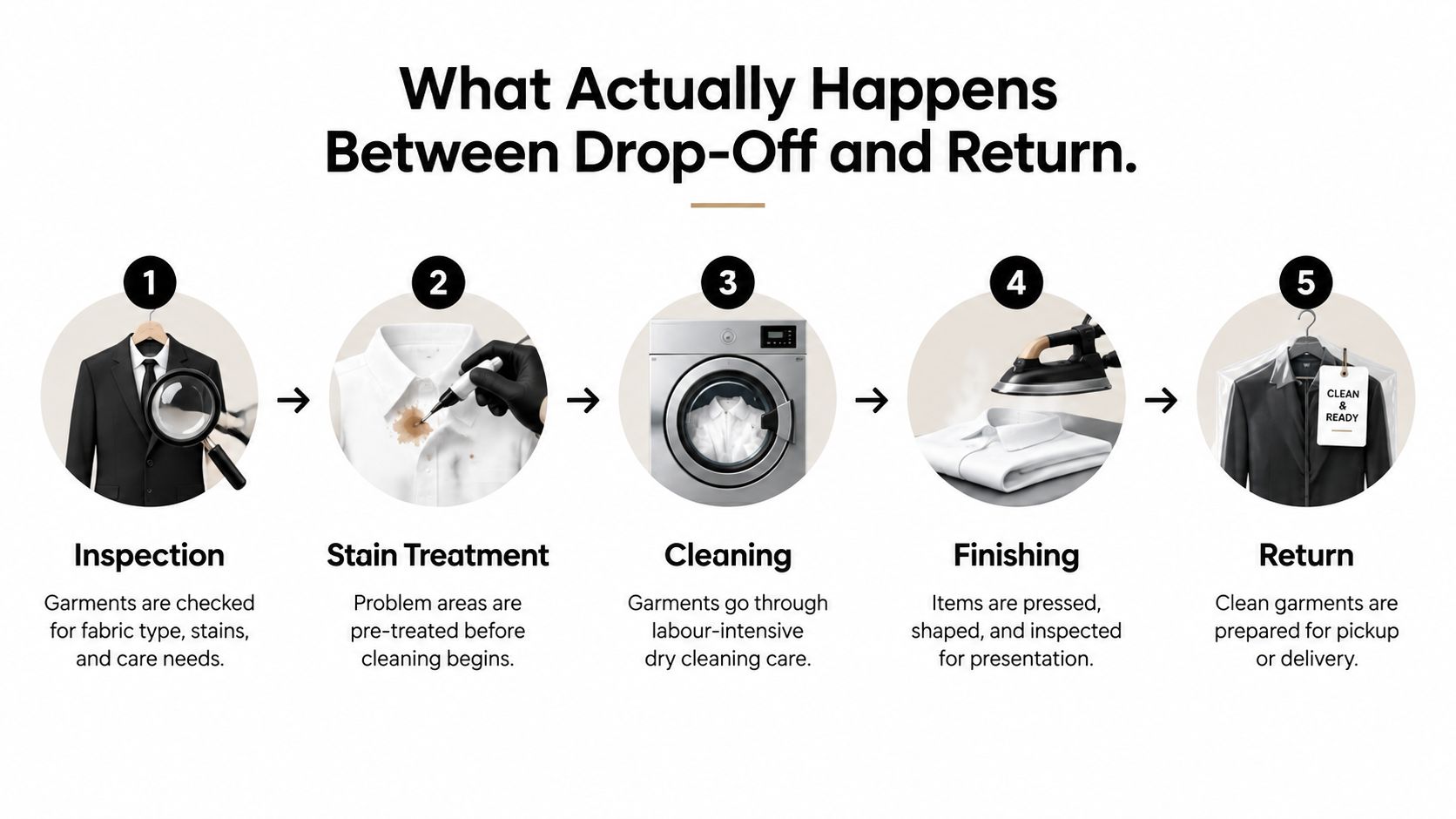
Dry cleaning is labour-intensive garment care, not one uninterrupted machine cycle. A City of Toronto technical report described the work as inspection, stain treatment, cleaning, finishing, and quality control. That same report identified approximately 360 dry-cleaning facilities using tetrachloroethylene in 2006, and estimated that Toronto cleaners purchased 205 tonnes (205,000 kilograms) of the solvent in 2005, about 40% of Ontario's purchases. Local plants have run at real scale for decades. A promised window reflects production scheduling and garment-care requirements, not solvent exposure alone.
Think of a restaurant ticket. Cooking is one station between the order and the plate. Someone still checks the ticket, preps the item, plates it, and sends it out. Garments move the same way.
Where a routine order actually sits
Inspection comes first. Staff read the fabric, linings, buttons, and care needs before anything is loaded. A hidden tear or a bead that will not survive tumbling changes the plan.
Stain treatment is separate from the main clean. Oil, wine, and street salt do not get the same spotter. Pretreatment can add a step even when the later cycle is short.
Cleaning is the solvent stage many people picture. It is necessary, and it is not the whole job.
Finishing is pressing, steaming, and reshaping. A jacket that left the machine clean can still look unfinished until the lapels and seams are set.
Quality control and packaging close the loop. Someone checks for missed marks and packs the piece for the counter or a route.
The City report also noted that customers chose cleaners mainly by proximity, turnaround time, and cost. Completion speed has been a core service attribute in this market for years, which is why a routine order commonly needs multiple business days instead of being finished at the counter. Asking only how long the machine runs misses the stations that decide when you can wear the clothes.
Standard Turnaround Times in the Toronto Area
For standard orders, keep approximately 2–4 business days as the planning benchmark. That spread is real, and it comes from workflow, not from two cleaners inventing different chemistry.
One Toronto-area cleaner describes a typical 3–4-business-day cycle because the system needs time to process the fabric and finish the garment. Another Toronto service reports that most items are ready in 2–3 business days. Both figures appear in the same public service notes from a Toronto-area cleaner. The gap is plant workflow, order cutoffs, and whether your piece makes a same-day production batch.
Ontario's network is broad and still tightening. IBISWorld's Ontario industry profile reports 1,215 dry-cleaning businesses and an estimated market size of $431.8 million for 2026, with 3,748 employees and an average annual establishment decline of 2.3% from 2021 to 2026. A consolidating network still handles ordinary garments and specialized textiles. Capacity is not infinite on a Friday before a long weekend.
Which clock you are actually booking
If you use pickup and delivery in North York, count route days as part of the clock. Machine time and van time are not the same number.
| Planning point | Published window | What to confirm |
|---|---|---|
| Combined benchmark for a standard order | About 2–4 business days | That the item is ordinary apparel, not specialty work |
| One Toronto-area cycle | 3–4 business days | Time allowed for fabric processing and finishing |
| Another reported ready window | Most items in 2–3 business days | Cutoff, and whether it entered that day's batch |
| Doorstep customer | Plant time plus route days | When the quote starts, and if weekends count |
Before you book, ask three plain questions. Does the quoted period start at pickup, at intake at the facility, or on the next business day? Are weekends and statutory holidays excluded? Will this piece ride a normal batch, or is it waiting on a stain test? Those answers move the calendar more than a slogan on a website.
Garments That Need More Than a Few Days
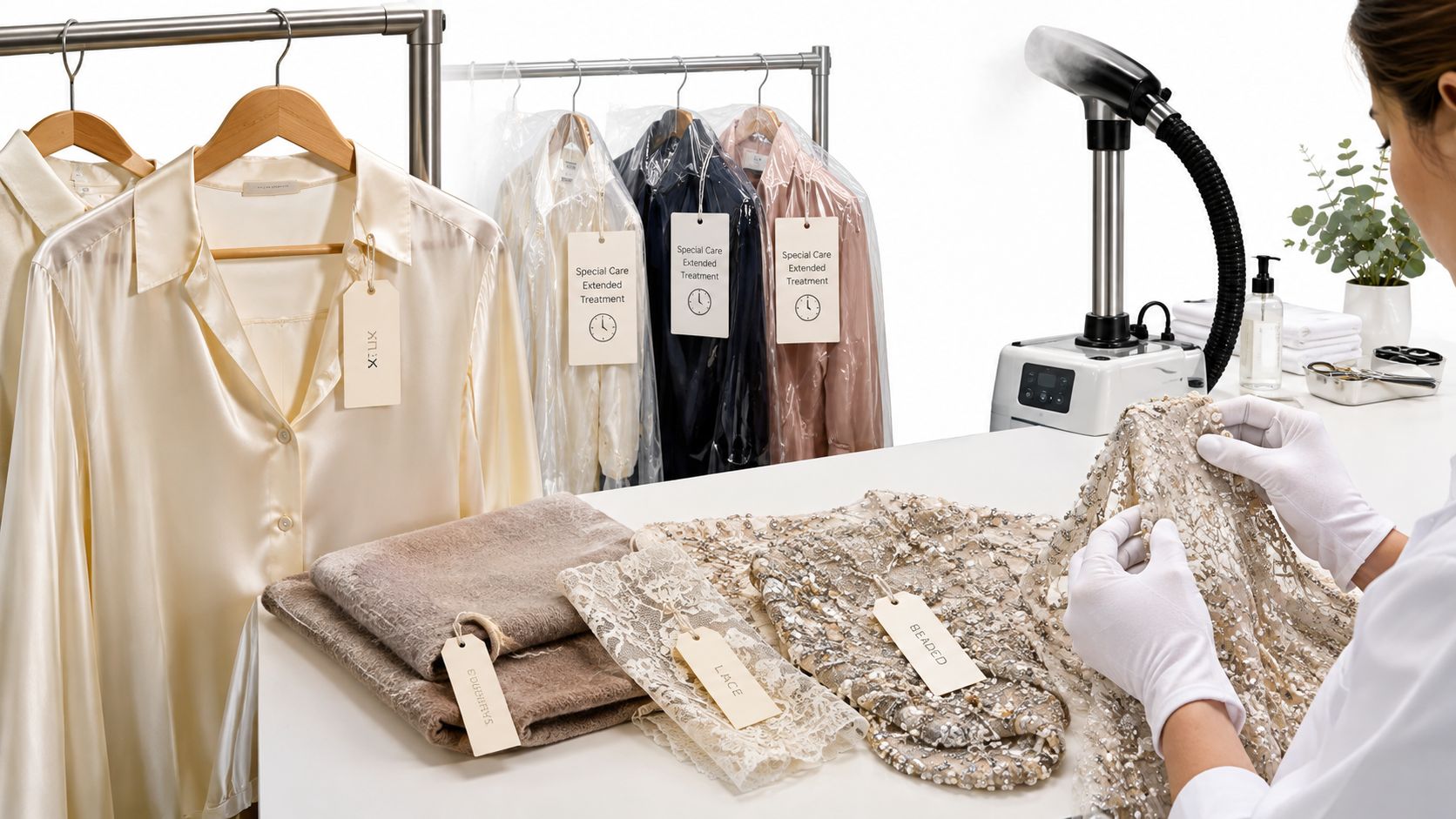
The standard window fails as soon as the garment stops being a simple suit or shirt. Toronto-area service information treats silk, cashmere, lace, beading, and other specialty fabrics as extra-care work. Broader Canadian service terms say timing varies with the item, fabric, construction, condition, requested service, and whether specialty stain treatment or another clean is required.
Four pieces that should not share one due date
A silk blouse with a water ring is not a cotton shirt. Fragile fibres need lower-risk processing and a manual look before anyone commits to a method. The extra day is caution, not a slow machine.
An embellished dress adds another pause. Beads, lace, and glued trim can fail if they are rushed through a normal cycle. Inspection is part of the time you are buying.
Leather or suede should be planned at roughly 5–7 days, depending on complexity. Structured coats and chemically complex marks may need repeat treatment, then more pressing and checks. Do not stack that work against a 2–4 day habit.
A wedding dress is its own job. Published Canadian guidance puts it at roughly 7–10 days, and complexity can push it. Disclose the ceremony date and the stain history at intake, and ask for written confirmation. An advertised same-day option does not automatically cover gowns, beadwork, or restoration.
Household textiles behave differently again. Heavy window panels, for example, follow their own handling rules, which is why a guide on how to clean heavy drapes is a better match than a shirt timeline.
If the event date is fixed, the buffer belongs on your calendar before the dress enters the plant.
When Faster Care Is Not Dry Cleaning
Speed and solvent are two separate decisions. A cleaner can hurry a wet wash and still refuse to rush a stain through the drum, because dry cleaning works with dry solvents while laundering wets the fabric. One Toronto provider's model shows the gap clearly: regular garments may take about 7 days there, while a hand-wash-and-press service can return unstained pieces the next day, as Soda Laundry's dry-cleaning notes describe. Those figures belong to that shop's setup, not to every counter in the city.
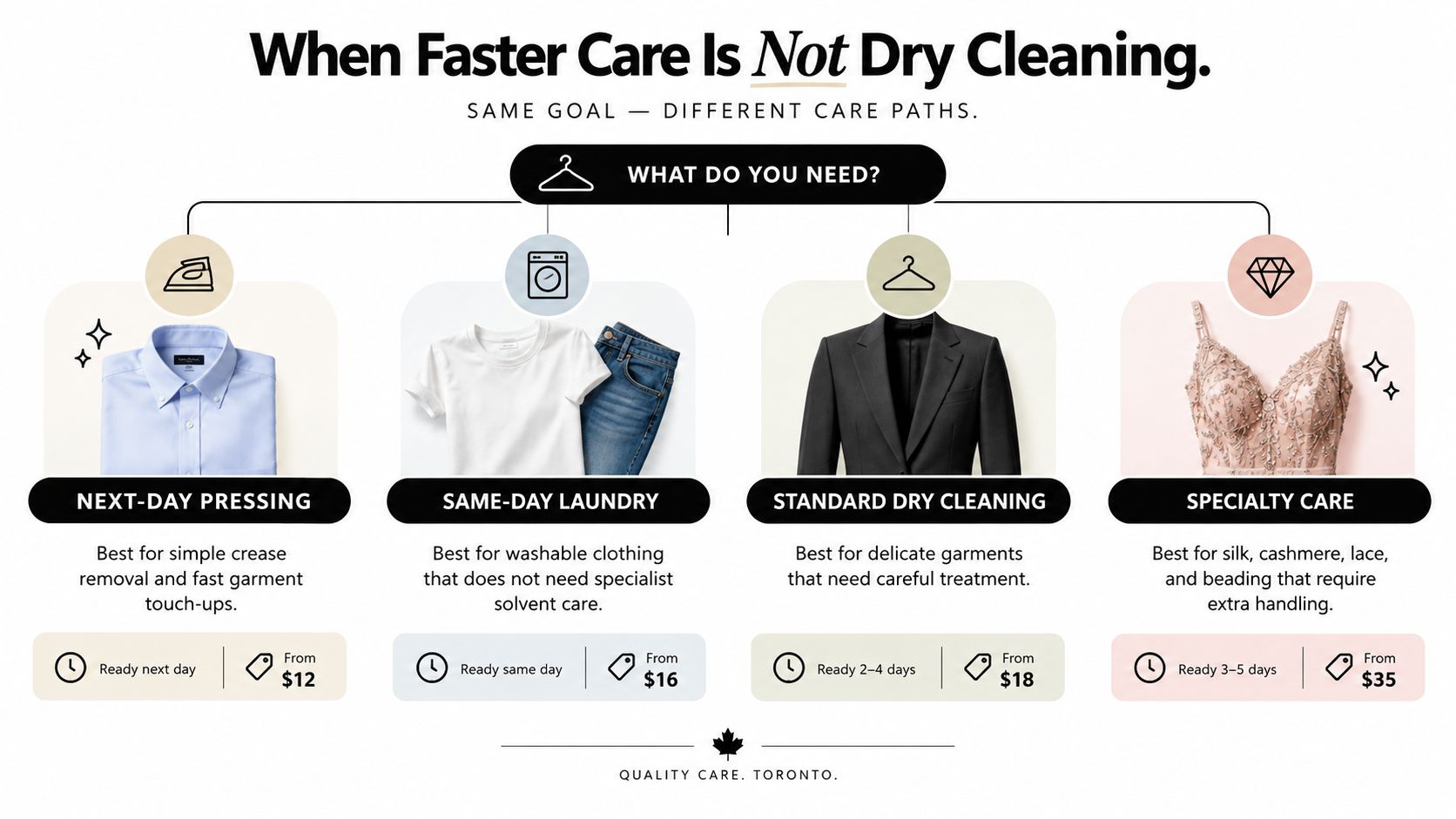
A simple decision before you ask for a rush
- Next-day care: Unstained pieces a shop can hand wash and press, where that service exists. It is a different process, not a faster solvent cycle.
- A several-day conventional clean: Routine garments that need dry cleaning, including many interview suits and travel outfits.
- Beyond the standard window: Leather and suede fit the roughly 5–7 day planning range covered above. Several weeks applies only at specific providers or for complex restoration, and a seasonal coat lands in that longer bracket when the shell, lining, or trim is specialty material.
Fastest does not always mean dry-cleaned fastest. For some unstained garments, hand washing and steaming are safer and quicker. Rushing stain treatment or delicate fibres raises the chance of a shine, a bleed, or a misshapen seam.
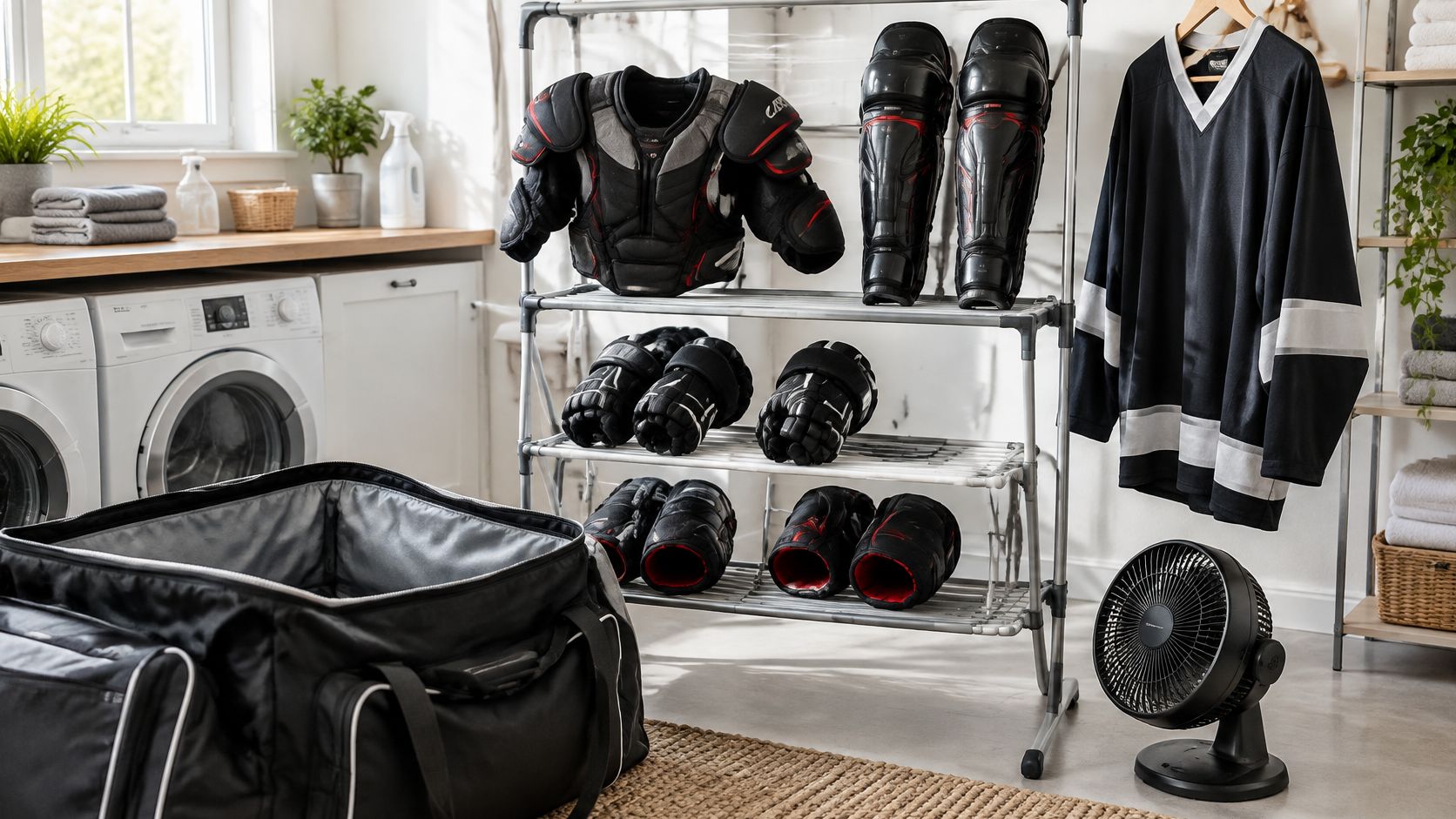
Routing adds days on its own. Pickup scheduling, weekends, inspection, stain testing, pressing, and specialty equipment all sit between the van and your closet. That matters for North York plans around weddings, interviews, and the first cold week. Name the path before asking anyone to hurry it. Bulky sports kit runs on its own clock too: washing hockey gear is a laundry question, and it should not share a due date with a gown.
Why a Ready-By Date Is Not a Guarantee
A quoted ready-by date is an estimate. It is not a promise that every mark will leave, or that the piece will survive a deadline you mentioned too late. Stain type, fabric, construction, lining, embellishments, and material sensitivity change both the timing and the result. A Toronto specialty-care source states outright that stain removal cannot be guaranteed.
What to say at intake
- Name the stain. Say what it is if you know: oil, wine, salt, makeup, ink.
- State the event date. A cleaner cannot protect a deadline they never heard.
- Ask where the work happens. Local treatment and specialty handling are different clocks.
- Separate “ready by” from “guaranteed.” Repeat spotting, drying, inspection, and pressing may be extended on purpose so a delicate fibre is not harmed.
Ontario's dry-cleaning rules require commercial operations to use trained personnel and to manage solvent-related contaminants so environmental discharge stays limited. Compliant processing is controlled handling. It is not a matter of loading a drum and hoping.
A longer window can mean extra quality control or specialty handling, not a shop that is simply slow.
Doorstep customers feel this gap hardest. You can lose several days before anyone tells you the stain or the fabric needs more assessment. If the van already left, the next route may be the first moment you hear that the mark is still there. Confirm exceptions early, in writing, while the piece is still at intake.
Plan Your Next North York Pickup
A single bag can hold three different clocks. A work shirt, a silk dress, and a winter coat may travel together in the same van, but they do not share a timeline. Sort the bundle before you book, and treat each group as its own decision.
Everyday apparel can sit on a several-business-day plan. Leather, suede, wedding dresses, restoration work, and stains you cannot name need a longer window that someone has confirmed in writing. One urgent shirt should never set the date for a beaded gown riding in the same bag.
The routing itself is simple. The delivery team picks up from your doorstep, carries the clothes to the nearest outlet for deep cleaning, and brings the cleaned and pressed pieces back in tidy bundles. For the ordinary doorstep clock, cleaned clothes are delivered back within 48 hours of pickup. Confirm the pickup cutoff, and ask whether weekends or holidays sit inside that window.
Same-day dry cleaning is available on special request for urgent needs. Ask whether the request applies to the actual fabric and the actual stain, since a rush label does not rewrite a leather timeline.
Before the van arrives, split the order into two groups:
- Standard pieces, such as shirts, suits, and everyday dresses that fit the regular return window.
- Flagged pieces, such as silk, velvet, leather trim, or any item tied to a firm date, each with its ready time confirmed separately.
Schedule the pickup through the website, or call CleanOnline, North York's Premium Dry Cleaners to place the route and ask about pricing. Pricing is volume-based, depending on the type of items to be cleaned, so a timing question and a price quote are two different conversations. You will know the clock, and you will know the bill, as two separate answers.
CleanOnline, North York's Premium Dry Cleaners handles dry cleaning, laundry, wedding dresses, outerwear, and doorstep pickup across North York and the Greater Toronto Area, with a return window you can plan around and a same-day option you should confirm against the actual garment. If you have an interview, a wedding, or a coat that cannot miss the week, book the pickup, name the date and the stains, and get the ready date in writing. Visit CleanOnline, North York's Premium Dry Cleaners to schedule the route.
Made with Outrank tool