How to Remove Smoke Smell from Clothes: Fabric-Safe Steps
Learn how to remove smoke smell from clothes safely: sort by exposure, wash by fabric, and know when to call a professional.


Toronto recorded 14 poor-air-quality days in the summer of 2023. On the worst days, average PM2.5 concentrations reached 129 micrograms per cubic metre, almost five times the Canadian Ambient Air Quality Standard, according to Environment and Climate Change Canada's air quality indicators. Nationally, average fine-particulate concentrations in 2023 were 62% above 2009 levels, while peak concentrations were 167% higher.
Repeated smoke exposure can leave fine particles and odour-carrying compounds in seams, pocket linings and spaces between fibres. A coat or pair of wool trousers worn through several smoky episodes may need different care from a cotton shirt exposed once to a fire pit.
Start by matching each garment's exposure to its fabric. That decision comes before washing: water and an unsuitable cleaning method can set residue or damage delicate fibres.
Sort Smoke-Affected Clothes Before You Wash
A cotton T-shirt exposed briefly to fire-pit smoke may tolerate a home wash. A wool coat worn through repeated wildfire haze needs a different decision. Sort by both exposure and fabric before adding water: washing soot or oily residue can spread it, while water can distort or damage some fibres.
Toronto's fire-recovery guidance for smoke- and soot-stained clothing warns that clothing may not come completely clean and directs wool, silk and rayon to dry cleaning rather than a home soak. Smoke exposure varies, so inspect the garment instead of treating every smoky item alike.
Five cases, five destinations
Sort each item before washing. Look for residue as well as odour, and check the care label.
| Exposure case | How to recognise it | Where it goes |
|---|---|---|
| Light odour only | No visible ash; smell fades when the item airs in a ventilated space; fabric feels clean to the touch | Home wash according to the care label |
| Visible ash or oily film | Grey dust, sticky patches or a greasy feel | Keep separate; avoid shaking indoors and seek professional cleaning if residue remains |
| Wool, silk or rayon | Any smoke exposure, even a faint smell | Professional dry cleaning |
| Indoor or structural fire smoke | Soot, heat damage or a sharp chemical smell | Professional restoration assessment |
| Smell returns after three wash cycles | Odour returns once the item is fully dry | Professional textile treatment |
A fire-pit shirt with only a faint smell may be suitable for home washing. A smoky wool coat is better kept out of the washer, even if there is no visible soot.
The decision before you open the washer
Choose a home wash for cotton or viscose with no visible ash or oily residue, following the care label. Set aside wool, silk and rayon, garments with soot or oily film, clothing exposed to indoor or structural fire smoke, and items whose odour persists after washing. For a clearer picture of how professional solvent cleaning differs from washing, read the dry cleaning process explained step by step.
Make two piles: home wash and professional cleaning. Keep residue-covered items apart from clean garments until you decide how to treat them. CleanOnline sorts clothing by fabric, colour and soil level before cleaning.
Why Fabric Type Changes the Smell
Smoke odour does not cling equally to every fibre. Polyester and nylon can retain more odour compounds than cotton or viscose, while wool combines odour retention with a greater risk of damage from home washing.
A 2024 study measured the release of 2-nonenal, an odour compound associated with aged fabric smell, from different fibres after three hours. The researchers found a larger release from nylon than polyester under the test conditions (McQueen, Eyres and Laing's textile study). The difference helps explain why synthetics may need more thorough rinsing, though it does not predict exactly how a smoke-exposed garment will smell.
A University of Alberta summary of Canadian textile research reports that cotton and viscose absorbed and released smaller amounts of odour-causing compounds than polyester, nylon and wool.
What each fibre does with smoke
| Fabric | Odour behaviour | Home approach |
|---|---|---|
| Cotton | Releases smaller amounts of odour compounds | Follow the care label; wash and dry fully |
| Viscose | Releases smaller amounts, similar to cotton | Check the label; structured pieces may need professional care |
| Rayon | Behaves like viscose in air but weakens and distorts when wet | Avoid improvised soaking; follow the care label |
| Polyester | Retains more odour compounds than cotton | Follow the care label and rinse thoroughly |
| Nylon | Released more 2-nonenal than polyester in the cited test | Follow the care label; rinse thoroughly |
| Wool | Retains odour and can be damaged by machine agitation and heat | Use professional care |
| Silk | Delicate fabric that may be affected by water and handling | Check the care label; use professional care when unsure |
Where wool breaks the pattern
Wool can retain odour, but the washing approach suitable for a synthetic top may shrink or matt a wool sweater. That makes wool a poor candidate for improvised home treatment. Use professional care, especially for a wool-dominant blend.
For blended garments, check the care label and consider both the fibres and the cleaning method. Wet cleaning and dry cleaning use different processes, so the right choice depends on what the garment can safely tolerate.
How to Wash Smoke Smell Out Step by Step
Smoke residue can cling to fabric after washing, so treat exposure and fabric type as separate decisions. For washable clothes, Alberta Health Services advises removing oily residue and notes that several rinse cycles may be needed. Its guidance for returning to a smoke-affected home also recommends washing heavily contaminated items off-site in machines suited to the job.
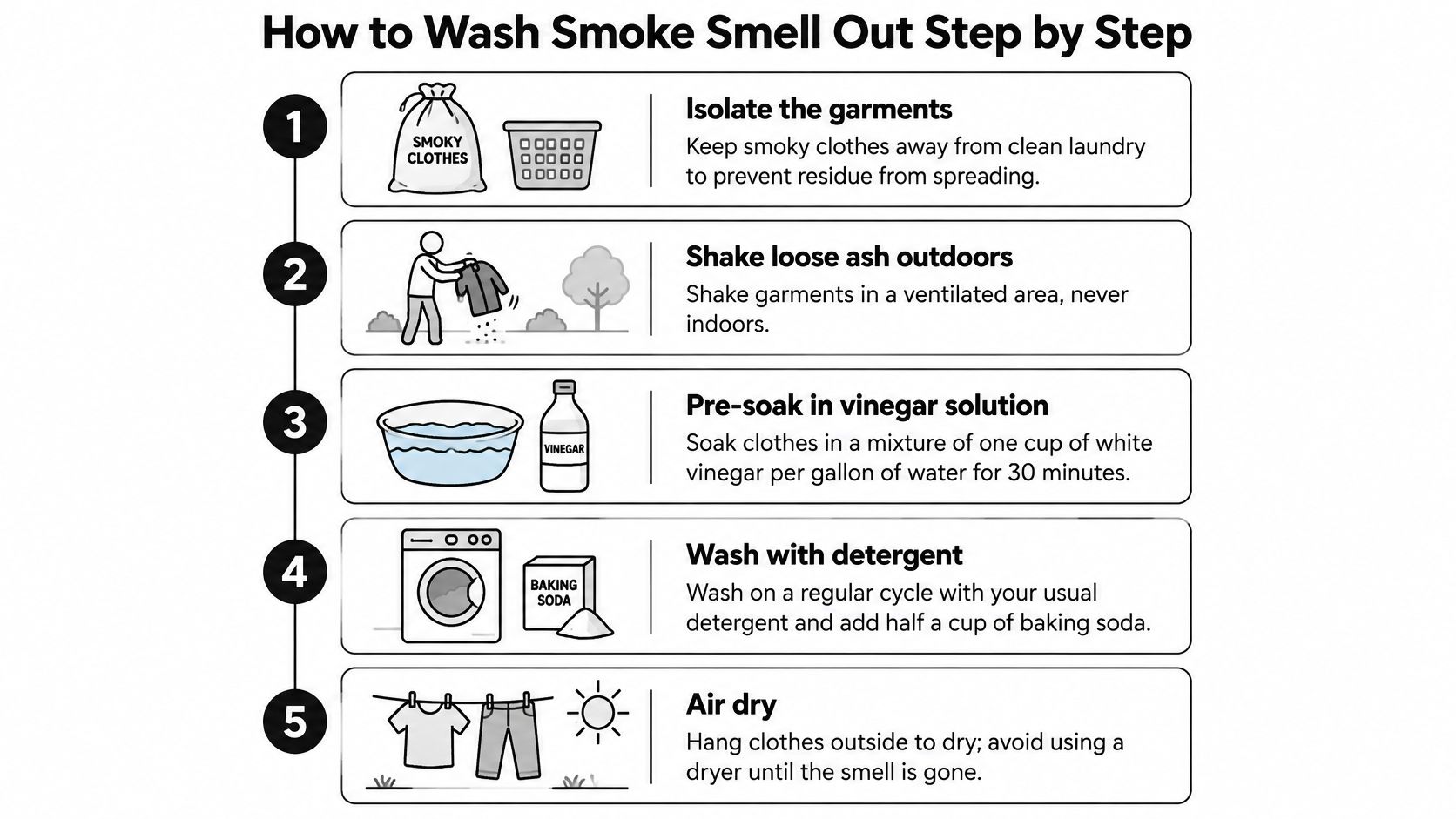
The sequence that works
- Separate smoky clothes. Put them in a bag or basket away from clean laundry. Contact can transfer residue to other items and surfaces.
- Remove loose ash outdoors. Work in a ventilated area and shake gently. Beating a garment can drive particles into the weave and send them into the air.
- Check the care label. Follow its instructions for water and temperature. If the label says dry clean only, do not soak or machine wash the item.
- Wash washable garments with detergent. Choose a cycle suited to the fabric and soil level. Rinse thoroughly to remove both detergent and loosened residue; don't add vinegar as a substitute for washing.
- Repeat the wash or rinse if needed. A single cycle may not remove all the residue, especially from heavily exposed clothes. Use another suitable cycle rather than adding more detergent.
- Check the garment when fully dry. Damp fabric can mask lingering odour. Let it dry completely before deciding whether another wash is needed.
- Air-dry until the smoke smell is gone. Avoid tumble-drying while odour remains. If outdoor air quality is poor, dry the garment indoors in a ventilated area.
What success looks like
The garment should smell neutral when it is fully dry and cool. Keep it out of the closet until then, and repeat a suitable wash and rinse if smoke odour remains.
For washable clothes, rinsing helps carry loosened residue away; drying thoroughly lets you judge whether the odour has cleared. The same attention to complete drying helps with removing musty smells from clothes.
Keep smoky clothes separate from clean items while they dry. For an upholstery-related example of cleaning residue, see The Sofa Cover Crafter urine cleaning.
Handling Delicate and Vintage Pieces Safely
A 1950s beaded cardigan that has absorbed wildfire smoke isn't a laundry problem, it's a conservation problem. The standard routine will cost you the piece.
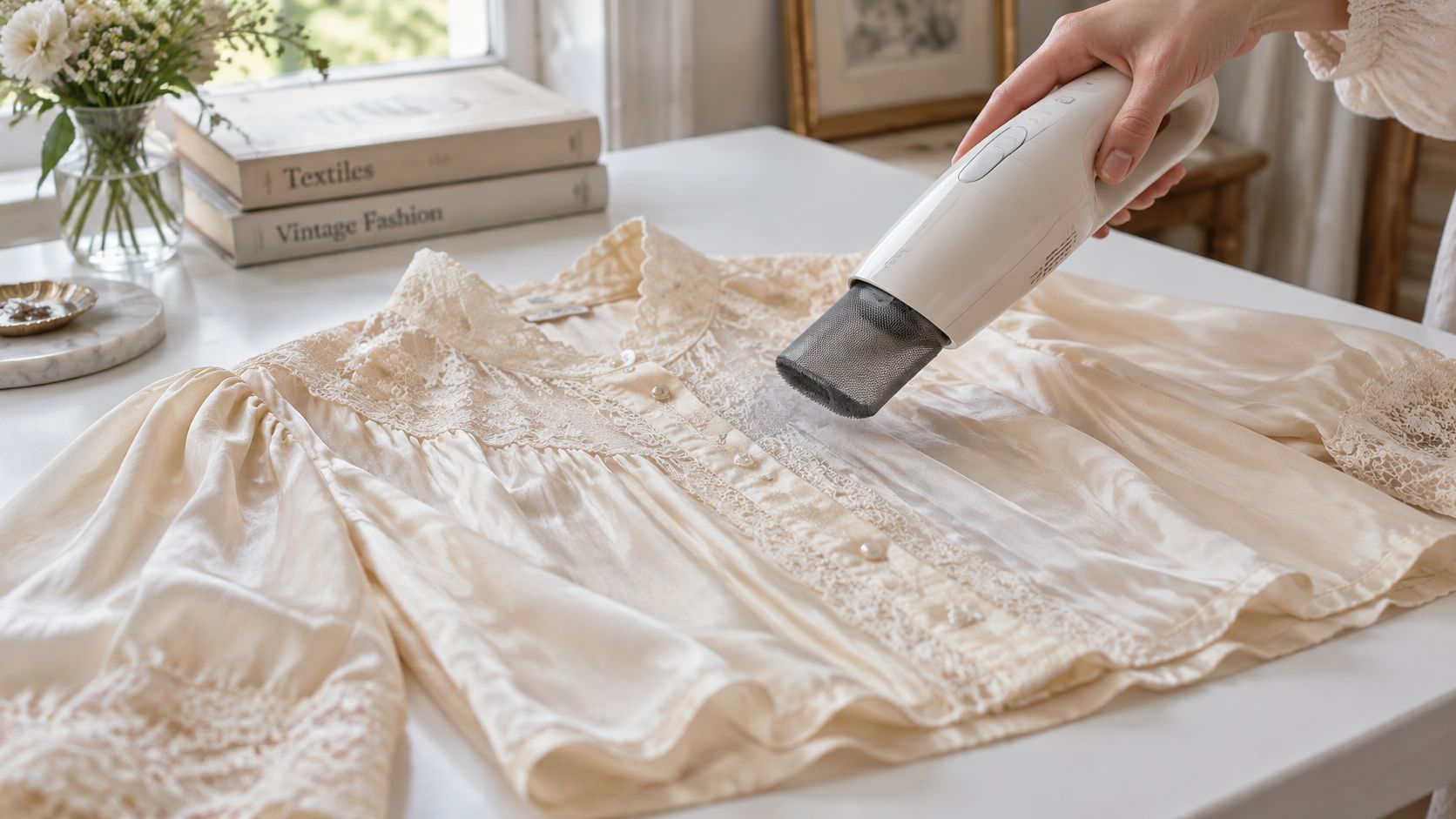
Start at the surface. The Canadian Conservation Institute's notes on caring for textiles recommend removing dust through a nylon or fibreglass screen with a low-powered vacuum, keeping the nozzle off the textile itself. Smoke residue sits on the surface as much as in the fibre, and the screen stops loose threads disappearing up the hose.
The controlled wash for sound, washable pieces
For a piece that's structurally sound and colourfast, the institute's method is precise enough to follow at home. Water at approximately 25 to 35°C, a mild anionic detergent at 5 mL per litre, and gentle pressing through the water rather than rubbing or squeezing. Agitation is what causes dye bleed, distortion and fibre breakage. Rinse four to six times until the detergent is gone, then dry quickly with cool airflow while supporting the garment's shape. No direct heat at any stage.
Work seams, pocket bags and hems last. Soot lodges there and keeps releasing odour after the outer fabric smells clean.
Stop at the vacuum step if a piece is unstable, unusually valuable or non-colourfast, and book a qualified textile conservator. The institute advises against home washers and dryers for fragile historic textiles.
One method to rule out entirely is ozone. Generators sold for home odour control can create hazardous by-products, degrade textiles and affect people and pets in the room, which is why health agencies advise against running them in occupied homes. For commercial-scale work, the odor troubleshooting approach used by hotel managers is a useful contrast, because a hotel can close and ventilate a floor in a way a Toronto apartment can't.
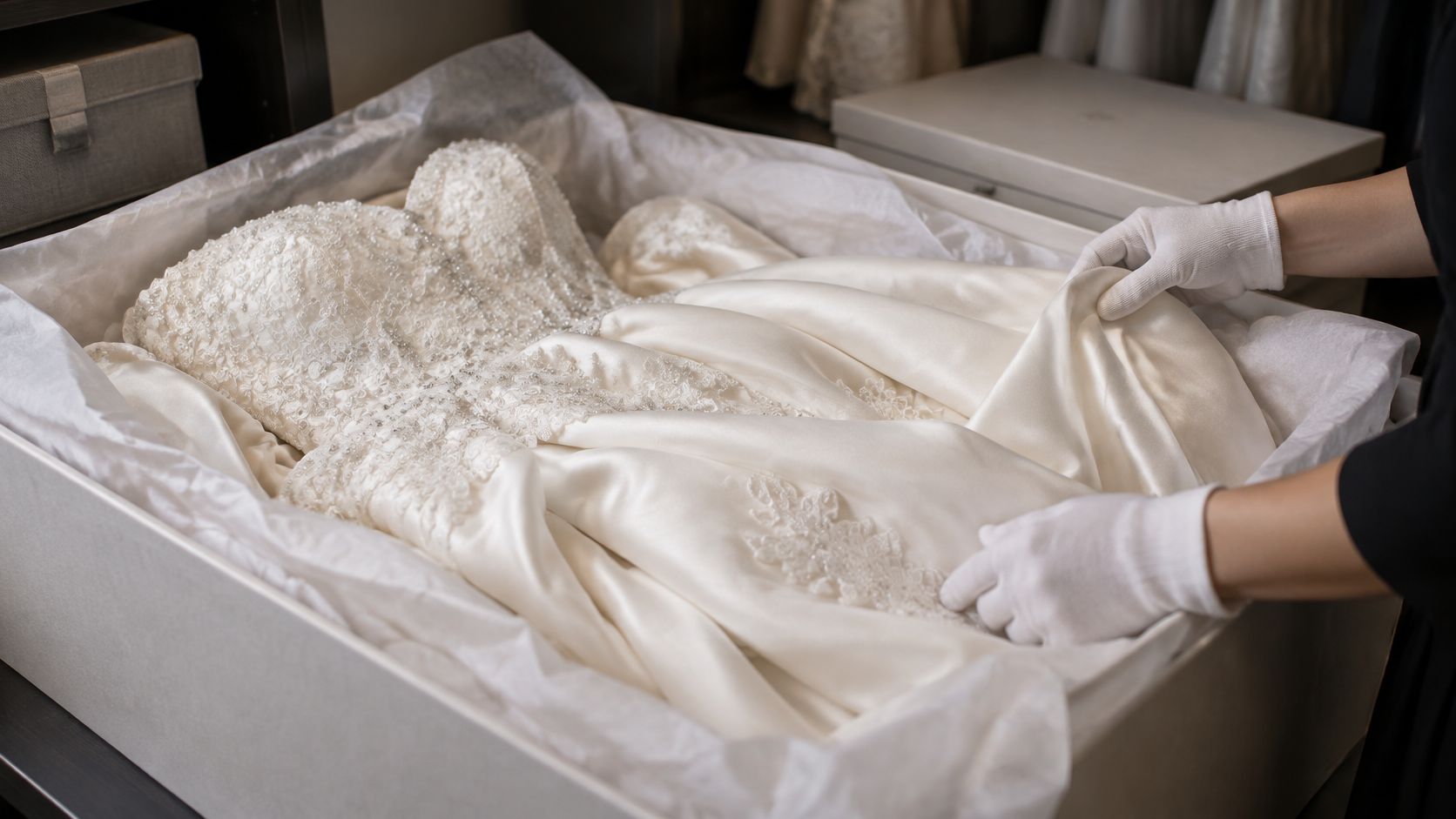
When the piece matters, professional care is cheaper than the alternative, and it's the same reasoning behind having a wedding dress cleaned properly rather than spot-treated at home.
Mistakes That Set the Smell or Damage Fabric
When the first wash fails, the instinct is to try harder. That instinct produces most of the damage: faded panels, shrunken sleeves, and a smell that's now a smell plus a stain.
These are the habits worth dropping.
- Fragrance sprays and scented dryer sheets. They cover the smell and it returns as soon as the spray fades. They also leave an oily film that attracts fresh soil, can mark silk, and wreck your own ability to tell whether the garment is clean.
- Dry sweeping or wiping soot off fabric. A brush or dry cloth lifts particles into the air and pushes them deeper into the weave. Use a HEPA-filtered vacuum, or blot with a damp cloth and rinse it often.
- Rewashing a garment that has failed three times. More of the same treatment rarely works, and each cycle spreads residue through the drum onto the next load. At that point the item needs professional textile treatment, not another dose of detergent.
- Soaking wool and silk repeatedly. Water and agitation distort these fibres, dull their lustre and, on wool, can felt the surface permanently. One failed soak is a warning, not an invitation to try a longer one.
What actually works is changing the approach, not raising the effort. Different chemistry, different temperature, or a different pair of hands.
A three-line check before every attempt
- Check the label. It names the temperature and whether water is allowed at all.
- Check the fibre. Wool and silk go out; cotton and viscose can usually stay home.
- Check the odour dry. A garment only passes once it's fully dry, cool and smell-free.
One more thing worth checking is the room the clothes live in. Smoke residue in walls, ceilings and soft furnishings keeps re-contaminating clean garments, and the process for getting smoke smell out of drywall explains why laundering alone can feel futile after a fire nearby. A wool coat that keeps picking the smell back up needs cleaning that respects the fibre rather than another cycle at home.
CleanOnline, North York's Premium Dry Cleaners handles both the delicate pile and the everyday one: dry cleaning with stain removal and scent therapy for the wool, silk and rayon that can't take water, and wash and fold for everything that can, all sorted by fabric, colour and soil level before cleaning starts. Book a doorstep pickup and your clothes come back within 48 hours, folded or hung the way you prefer. Visit CleanOnline, North York's Premium Dry Cleaners to schedule a pickup in North York, Toronto or the wider GTA.