Dry Cleaning North York: Services, Pickup and Fabric Care
Compare dry cleaning North York services, pickup options and fabric care, plus solvent safety and eco trade-offs before you book.
The dress has been hanging on the back of your bedroom door since the wedding, a faint mark near the hem that you keep meaning to deal with. The duvet won't fit in the machine downstairs. Your work shirts are technically clean and definitely not pressed. Somehow it all becomes one errand, and the errand never happens.
That backlog is normal in a market this size. Toronto's 2021 census profile records 647,195 residents across 261,810 households in North York's community council areas, with average household size running from 2.13 to 3.01 people depending on the area, according to the City of Toronto census profile. Smaller households tend to want occasional specialist cleaning; larger ones want recurring laundry support. Both need the same thing first, which is knowing which service belongs to which item.
Matching Dry Cleaning Services to Your Need
Most bags that arrive at a counter hold three different problems at once. A jacket that smells of last winter's closet. Shirts that need pressing rather than cleaning. A duvet nobody can wrestle into a home machine. Sorting items by need takes about thirty seconds and prevents most disagreements about price, turnaround and results.
Services matched to common needs
| Need | Service | What It Covers |
|---|---|---|
| Everyday shirts and clothing | Wash-and-fold laundry | Folded and returned in bundles |
| Delicate or stained formal wear | Dry cleaning with stain removal | Specialist cleaning and pressing |
| Jackets, coats and sweaters | Outerwear dry cleaning | Woollens, denim and fleece before seasonal storage |
| Comforters, duvets, rugs and curtains | Home linen cleaning | Bulky household textiles |
| Hems, fit and loose stitching | Alterations and repairs | Garments kept in wearable condition |
| Wedding dress | Cleaning and preservation | Acid-free airtight box with display window |
| Shoes | Shoe repair and cleaning | Repair and refresh |
| Fire or water damaged items | Restoration | Textiles, electronics and artwork assessed and treated |
Wash-and-fold versus dry cleaning is the split people get wrong most often. Cotton, underwear, socks, pyjamas, gym clothes and kids' uniforms belong in a wash-and-fold bundle: laundered, dried, folded and returned ready to put away. Dry cleaning is for garments where water or heat changes the surface, such as structured jackets, silk dresses, or anything with a lining that can pucker. If you're unsure which side of the line an item falls on, this comparison of dry cleaning versus laundry works through the method, fabric and cost differences.
Wedding dresses need their own route. Cleaning happens before storage, never months later, because sugars, perspiration and body oils yellow as they oxidize. Preservation means cleaning and then packing flat in an acid-free airtight box with a display window, rather than a plastic hanging bag that traps moisture against the fabric. Restoration is assessment first. Smoke, soot and water wicking up a hem change how a fibre behaves, and some damage is permanent. A shop that quotes before it looks at the item is guessing.
Availability isn't the constraint. Statistics Canada counted 1,097 business locations in Canada's coin-operated laundries and dry cleaners industry in June 2023, five more than a year earlier, per Statistics Canada. Choosing well is the hard part.
The rule that saves the most trouble: name the need first, check the fabric second, and only then choose the service.
Commercial accounts work differently. Hotels, restaurants, salons, gyms and care facilities need recurring volume handled, and their first screening question isn't price. It's how the shop manages its solvents.
Which Fabrics Need Professional Dry Cleaning
The service you pick answers what needs doing. The fibre answers how it gets done, and the two don't always agree. A wool blazer and a cotton shirt can both look like dry-clean-only items on the hanger, and only one of them is.
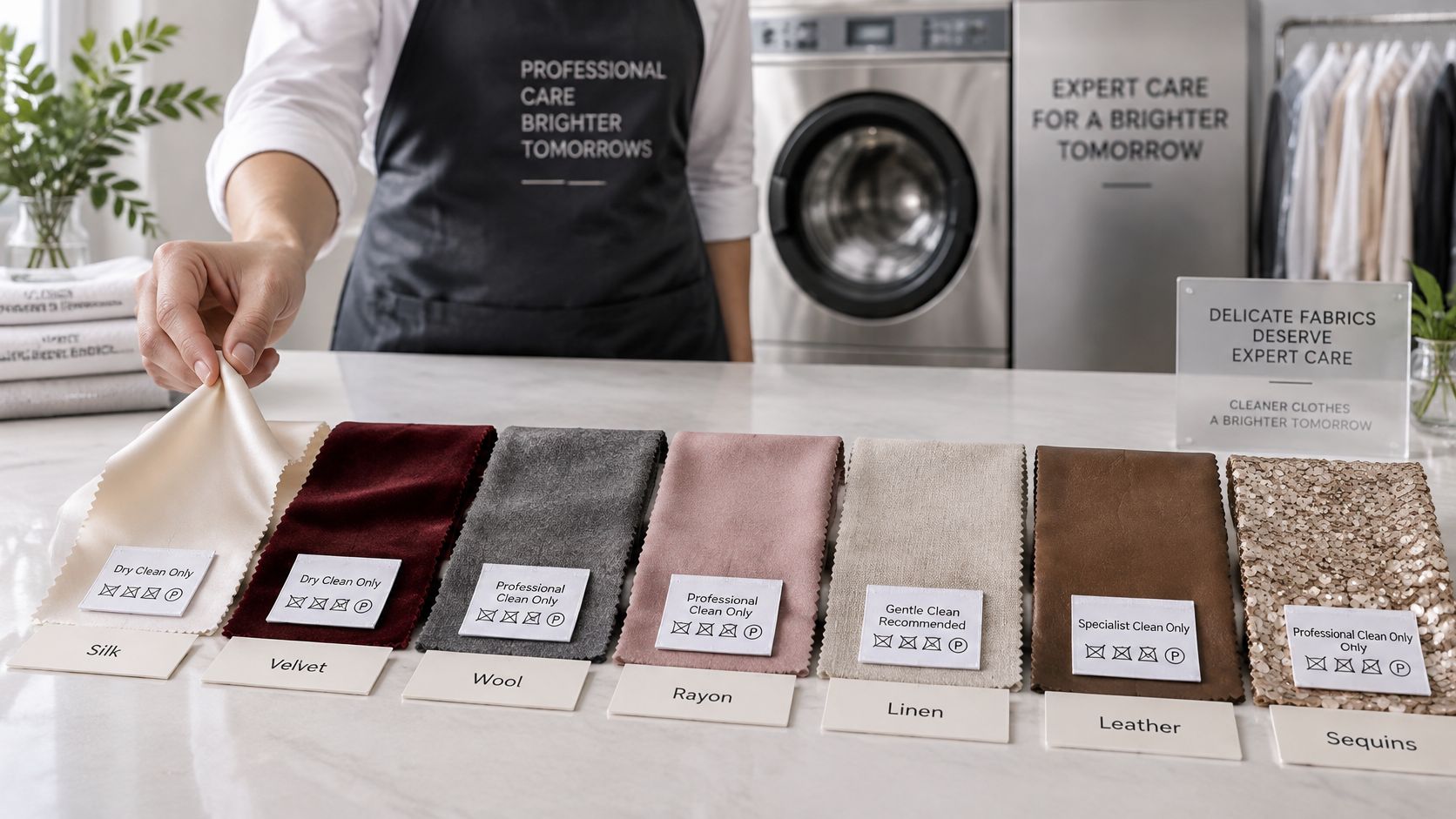
| Fabric | Best Route | Why |
|---|---|---|
| Silk | Dry clean | Water and heat can cause marks and shrinkage |
| Velvet | Dry clean | Moisture and crushing damage the pile |
| Leather | Specialist dry clean | Water stiffens and cracks the surface |
| Rayon | Dry clean or cold hand wash | Hot water shrinks and distorts it |
| Wool coat | Dry clean | Machine washing causes felting and shape loss |
| Wedding gown | Specialist cleaning and preservation | Beading, lace and yellowing need controlled handling |
| Cotton shirt | Wash and fold or laundered shirt service | Routine care; solvent cleaning rarely needed |
Why the fibre decides the route
Silk hides its fragility well. A drop of water on raw silk can leave a ring that only shows once the fabric dries, and a hot iron dulls the lustre permanently. Solvent cleaning avoids both problems. Rayon is the opposite trap: it looks sturdy and behaves like wet paper. Water weakens the fibre, and agitation in a machine or a hot dryer can shrink and distort a garment past saving, so the realistic options are dry cleaning or a cold hand wash with no wringing.
Wool felts through heat, moisture and friction working together. A wool coat washed at home comes back smaller, denser and covered in pills, and no amount of steaming restores the original shape. Velvet fails a different way: moisture flattens the pile and a hanger crease sets permanently if the garment is squashed while damp. Both need solvent cleaning and careful handling on the way back.
When the finish is the harder problem
Leather and suede need someone who works with the material rather than the cloth. Water stiffens leather and cracks it along flex points, and ordinary detergent strips the oils that keep it supple. Beaded and lace gowns stack a second risk on top of the fibre: the trim. Adhesive-set beading, fine netting and invisible residues from perspiration all behave badly under heat or water, which is why gown work sits in its own category rather than in the general queue.
Cotton shirts rarely need solvent at all. Laundering and pressing gives a crisper finish than dry cleaning, costs less, and puts no solvent near the fabric.
Read the label before you trust the table
A care label is the manufacturer's instruction, and it outranks every table, including this one. If it says dry clean only, don't spot-test a hidden seam with water to see what happens; the mark may not appear until the fabric dries. If the label is missing or worn past reading, describe the fibre at the counter instead of the garment name. "Unlined wool trousers, no lining" tells staff far more than "my good pants."
If you're rotating a wool coat out for the season, the wool coat cleaning guide covers brushing, storage and what to check before it goes away.
Worth knowing: rayon can look perfectly fine while wet and shrink two sizes in a hot dryer. Water and heat are the risk, not the cleaning itself.
Treat the fabric table as a starting point. When the label and the table disagree, the label wins, and when the label is unclear, ask before the garment goes in a bag.
How Pickup, Cleaning and Return Work Step by Step
From the outside the cycle looks simple. A bag leaves the door and comes back clean. The steps in between are where quality is built or lost, and the full sequence behind the counter is set out in this explanation of the dry cleaning process.
Sort by treatment, not by owner. Dry cleaning, wash-and-fold, alterations and restoration each start with different equipment. Sort at home into separate bags and the order moves faster with fewer mistakes, because nothing has to be re-sorted at the counter while you wait.
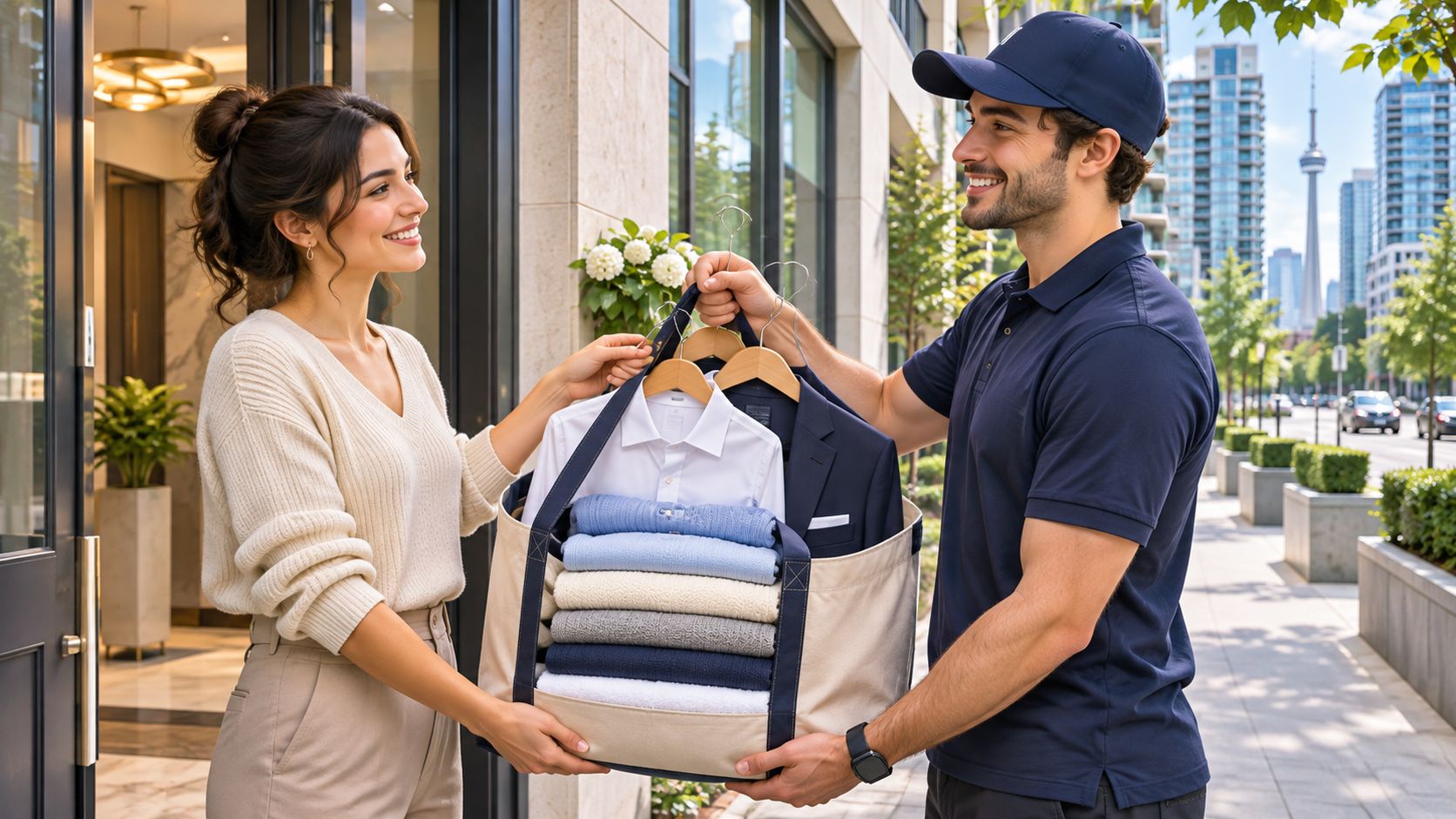
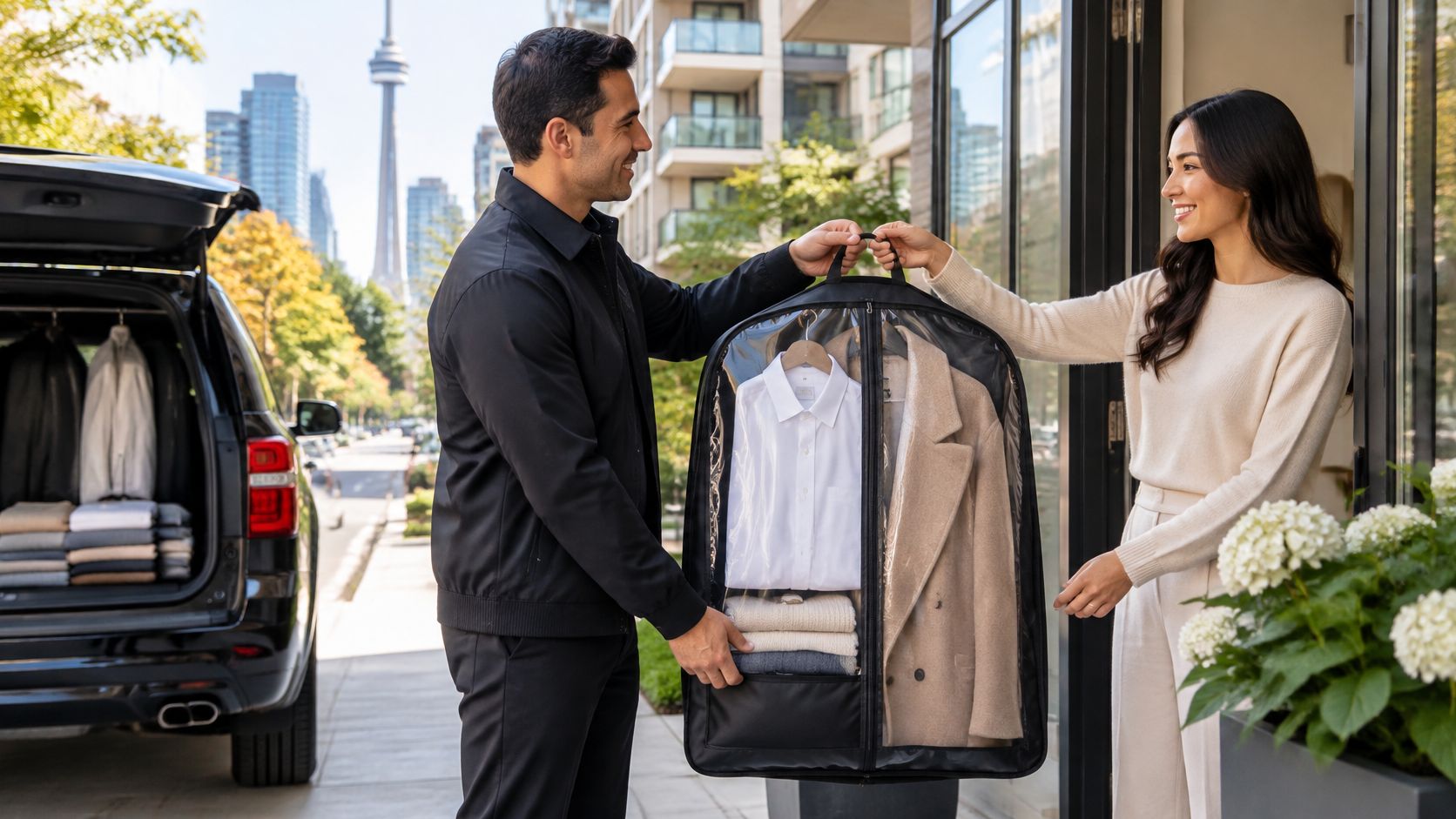
Book the pickup and label the bag. Collection can be scheduled online or through an app, and doorstep service means nobody has to be home for a morning collection. The slip that causes the most trouble is an unlabelled bag, which can't be matched to an address or an order once it's in the van.
Inspect and tag each garment at intake. Staff record existing stains, missing buttons, loose hems and any pre-existing damage before cleaning starts. That record protects both sides, which is why writing a stain on the bag or in the order notes works better than mentioning it verbally at drop-off.
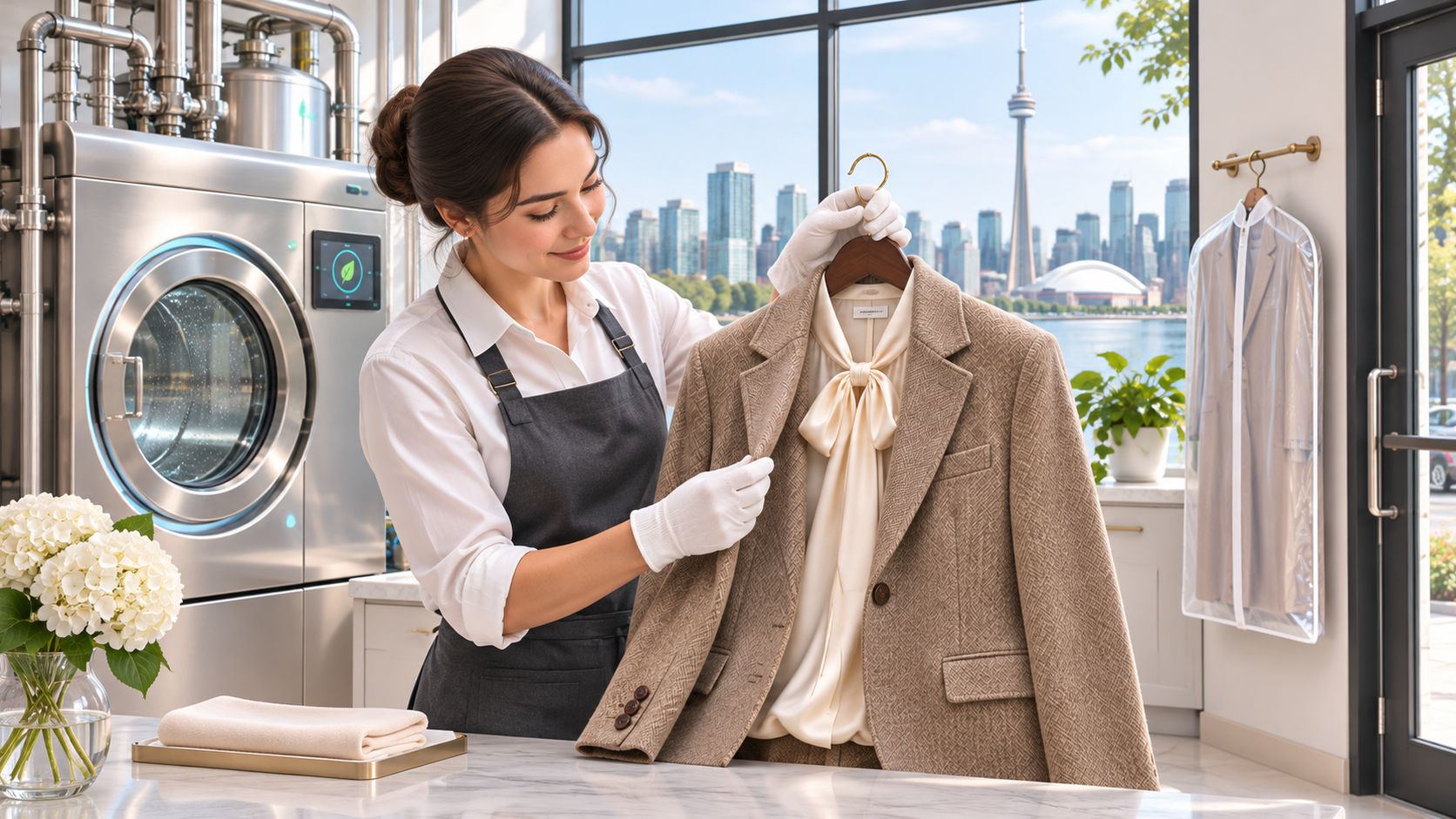
Clean by fibre. Silk gets solvent, cotton gets water, and a wool coat gets neither agitation nor heat. Applying one process to a mixed load is exactly how shrinkage and colour loss happen, so the sorting you did in step one decides the result.
Dry, press and finish at fibre-appropriate temperature. Cool settings for synthetics and silk, a pressing cloth and moderate heat for wool. Let garments cool completely before folding, because a crease pressed into warm fabric stays there.
Return with an itemised record. Items come back hung or folded in bundles, with a list of what was cleaned, repaired and flagged. Check the count against the receipt the day it arrives, since a missing shirt is far easier to trace within a week.
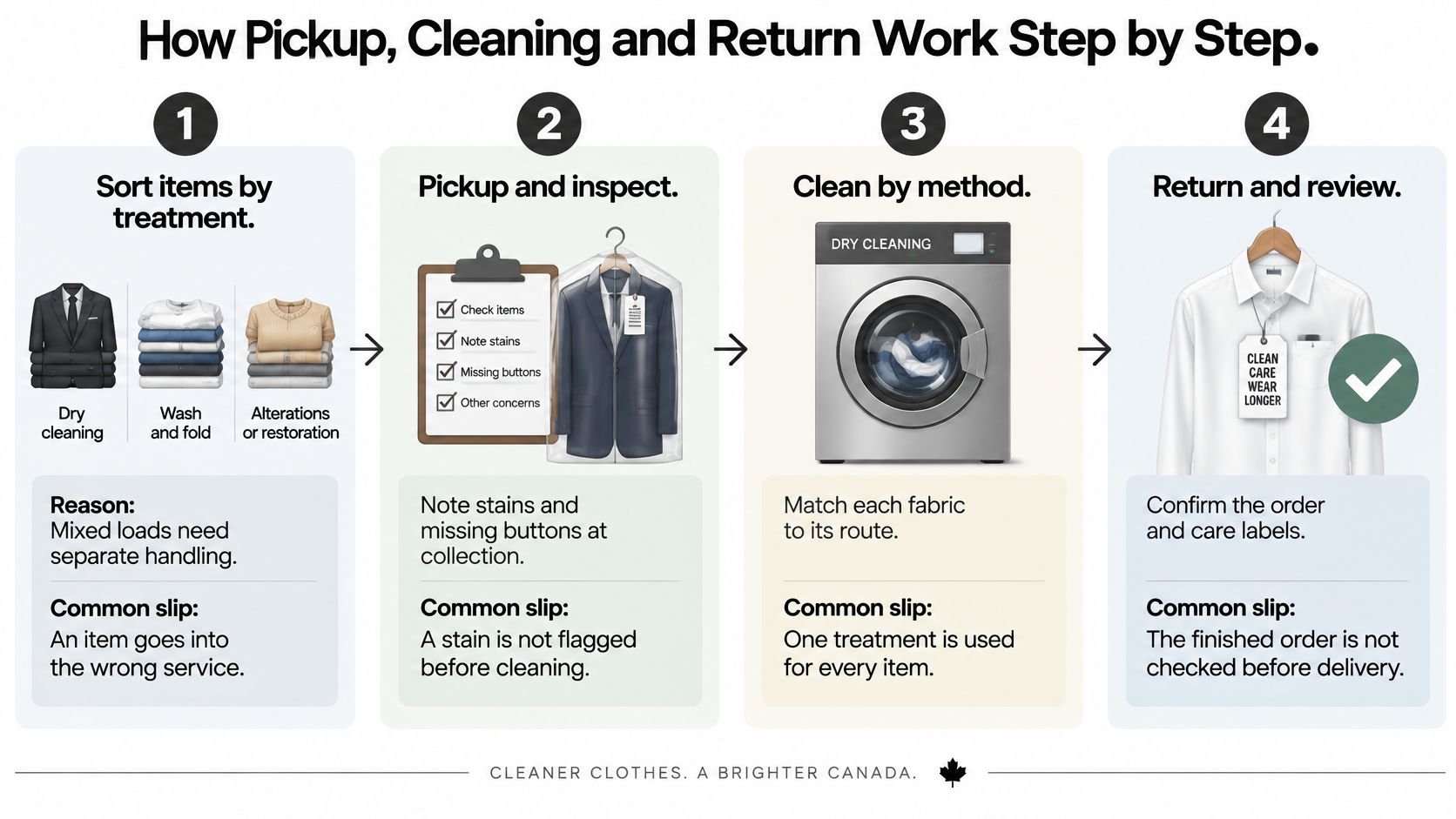
A stain nobody flagged at intake gets set by heat, and heat-set stains are the ones that come back as a permanent shadow.
A well-finished garment gives itself away. No sharp solvent smell, no shine at the seams and pocket edges, buttons intact, hems flat, and the shape the garment had when it was new. If a jacket returns with pressed-in creases down the sleeves or a faint chemical smell, the finishing stage was rushed.
Solvent Safety Questions Worth Asking
If a coat is going back into a closet beside living space, ask what cleaning method was used and how the garment was aired before packaging. Solvent handling affects both garment care and exposure, so a clear answer matters more than an “eco-friendly” label. Ontario Regulation 323/94 requires a commercial establishment using regulated dry-cleaning solvents, including perchloroethylene, hydrocarbon solvents and methyl chloroform, to have a trained person working full time on site whose duties include minimising contaminant discharge, as set out in the Ontario dry-cleaning solvent regulation.
Perchloroethylene is classified as toxic under Canada's Environmental Protection Act. In the 2013 reporting year, Toronto's pollution-prevention program recorded 13,208 kilograms of air releases from 69 facilities, according to the City of Toronto dry-cleaning report. Emissions, spills, residue handling and waste disposal are practical points to ask about. Containment, recovery, maintenance and trained handling help reduce releases.
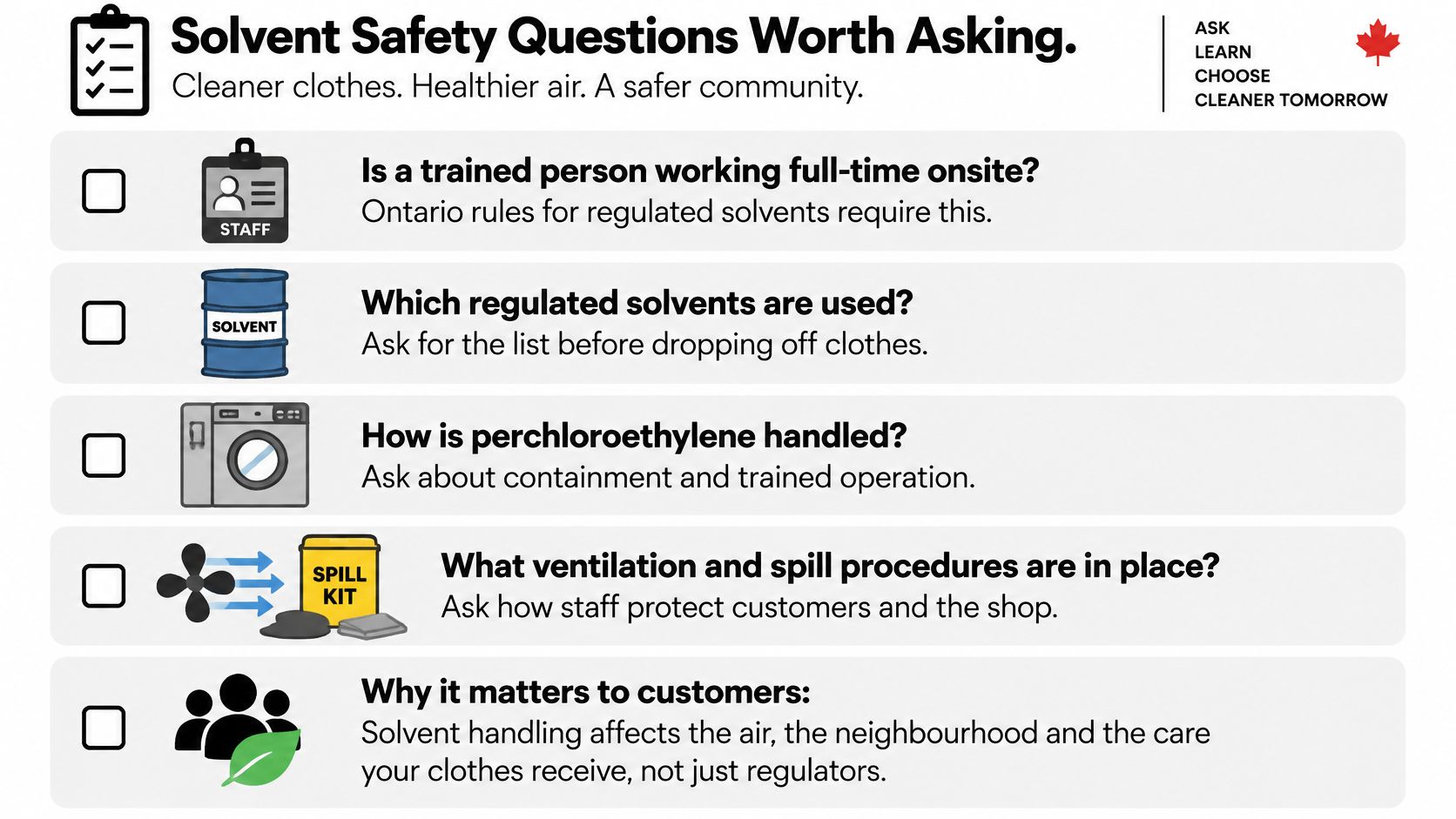
Use these questions to assess a cleaner's process:
Which method will my garment get? Ask for the solvent or wet-cleaning method by name, and whether it suits the fibre and stain. The right method depends on the garment, not the marketing label. Learn more about dry-cleaning solvents and how they differ.
How are residues and wastewater handled? Ask how cleaning residues are managed and disposed of. They should not be poured down a drain.
Who is responsible on site? The provincial rule requires a trained person to be present full time. Ask how the establishment meets that requirement.
Are garments aired before packaging? Ask how the cleaner handles airing before sealing a garment in a bag. Packaging too soon can trap vapour next to the fabric.
A useful answer names the method, explains why it suits the garment and describes how residues are handled. “Eco-friendly” on its own does not explain any of those choices.
For cleaners near homes, ask how they control solvent releases and handle residues. Water-based and wet-cleaning methods suit some garments, but they are not appropriate for every fibre or stain. For a commercial account, get the process details in writing before arranging pickup.
Is Dry Cleaning Always the Greener Choice
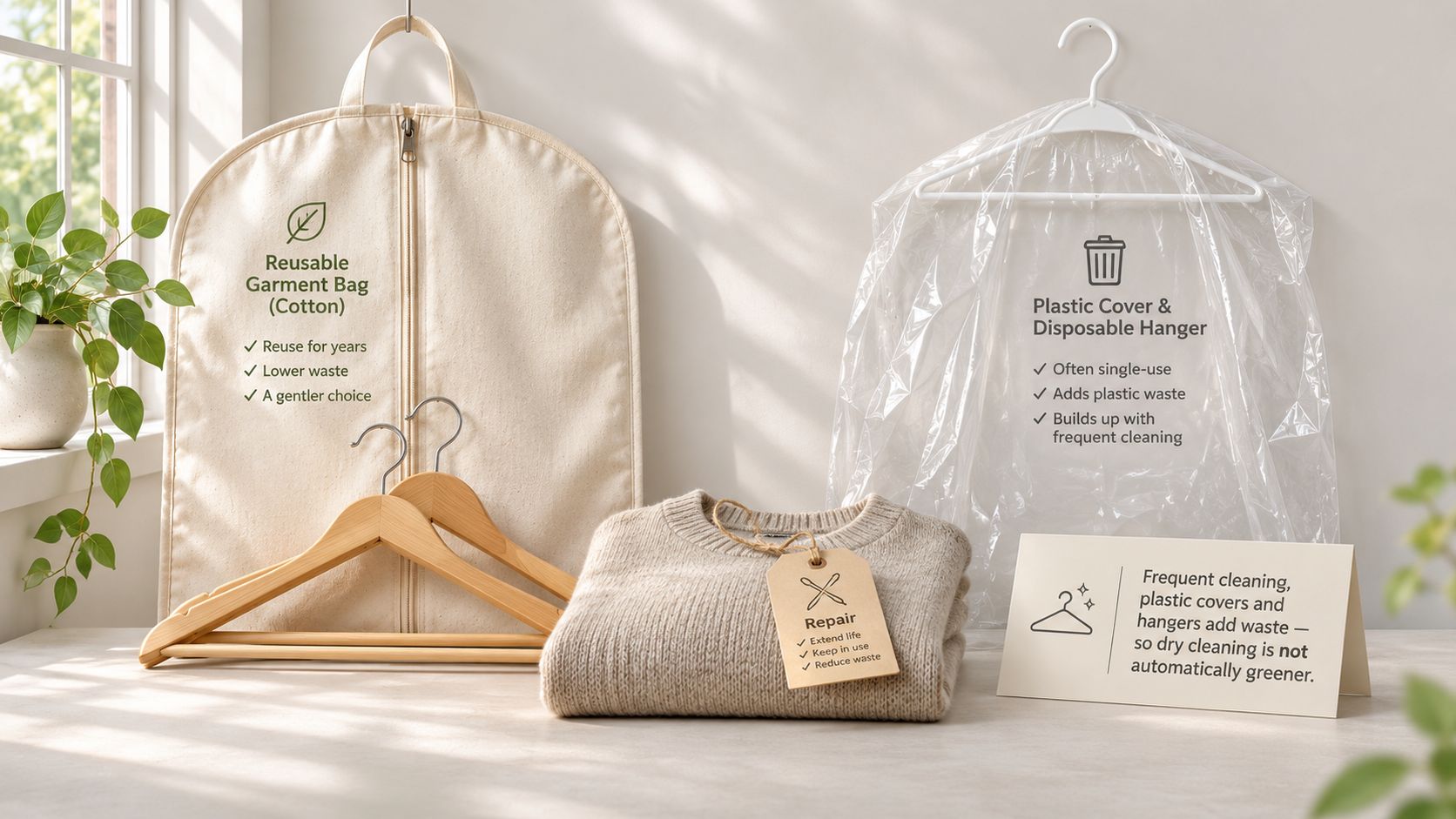
A garment's lowest-impact care is often the method that keeps it wearable longest. That may mean airing a jacket, spot-cleaning a small mark or choosing professional cleaning when the fabric, construction or stain calls for it. Frequent cleaning can stress fibres, while disposable covers and hangers add waste.
Textiles are the fifth-largest category of plastic waste sent to Canadian landfills, and about 98% of plastic textile waste is landfilled, according to the Government of Canada's announcement on textile and apparel plastic waste. Keeping a garment in use longer can help delay that outcome.
Solvent use has also changed over time. Canadian dry-cleaning use of perchloroethylene fell 56% between 1994 and 2000, according to the City of Toronto technical report on dry cleaning. Solvent recovery can reduce consumption, but it does not make unnecessary cleaning a good choice. Eco-friendly dry cleaning still involves trade-offs, so consider the garment, cleaning method and waste practices together.
A decision order that works garment by garment
Air first. Hang the garment in moving air to freshen it and let the fibres recover their shape.
Spot-clean small marks. Match the product to the fibre, work from the stain's outside edge inward, and blot rather than rub.
Wet-clean when the care label allows. Follow the label, especially for garments with structure or mixed materials.
Launder suitable fabrics. Cotton, linen and many synthetics are often suited to water-based washing.
Choose dry cleaning when the fabric or stain calls for it. Structured tailoring, silk, velvet, leather and stubborn oil-based stains may need professional care.
Repairs and alterations can also extend a garment's useful life. Rehemming trousers, replacing a zipper or patching a worn elbow may keep an item in rotation instead of requiring replacement.
Before choosing a cleaner, ask whether it offers reusable garment bags and how it handles uncollected clothes. Those answers give you a more practical basis for comparing waste practices than an “eco” label alone.
Accessible Pickup for Seniors and Multi-Unit Homes
Doorstep pickup gets sold as a time saver. For plenty of North York households it's closer to an access question. Carrying a duvet, a set of drapes or a winter coat down an elevator, across a lobby and onto a bus isn't a minor inconvenience if your mobility, stamina or eyesight limits you.
The city's consultation work reflects that. Toronto's 2025 seniors' strategy materials list laundry and light housekeeping among the personal-support services residents asked for, according to the City of Toronto seniors' strategy consultation background file. That places laundry in the same bracket as other support services rather than in the lifestyle column, and it makes the details of collection worth asking about before booking.
Questions worth settling before the first pickup
Do I have to be home? Ask whether collection is no-contact and what time the bag needs to be out. Some services collect items left outside before 8 a.m., which suits early shifts and medical appointments.
How is the bag secured? A lobby, a concierge desk, a buzzer entry and an open porch are four different handoffs. Confirm which ones the driver can work with.
Can building staff take delivery? If your building has a concierge or a parcel room, find out whether handoffs there are supported and who signs for the order.
How do I change a recurring order? Pause, skip or reschedule in writing, so a holiday or hospital stay doesn't leave bags sitting out.
What happens if a pickup is missed? Get the missed-pickup procedure and the escalation route for lost or damaged items before you need them.
Access is a service design question, not a favour. A provider that has published its collection windows, liability rules and accommodation options has already done the thinking.
Accommodations matter for more than mobility. A customer with hearing loss may not hear a buzzer, and someone with memory loss may not remember to put the bag out. Ask whether a family member can be added as a contact, whether collection reminders can go by text or email, and whether payment can be handled without an app.
State the boundaries plainly before the first order. Delivery windows, what happens to uncollected items, and who is responsible for a damaged button should all be clear while the conversation is still easy.
Book Your North York Pickup With Confidence
A coat needed today calls for a different plan than a routine laundry order. CleanOnline offers free pickup and delivery of laundry and dry cleaning anywhere in Toronto, with same-day dry cleaning available on special request. If your working hours don't match a shop's opening times, choose a doorstep pickup window that fits your schedule and confirm the drop-off or collection time when you book.
For in-store drop-off, CleanOnline has two North York locations: 4664 Yonge Street and 4841 Yonge Street, inside the Yonge Sheppard Centre. Before handing over an order, check care labels for items you're unsure about and ask for an itemised receipt to make the return count easy to check.
CleanOnline, North York's Premium Dry Cleaners, handles dry cleaning, wash-and-fold laundry, household linens, outerwear, wedding dress preservation, alterations, shoe repair and restoration. You can ask about combining items in one order, with each garment handled according to its fabric and care needs. Visit CleanOnline, North York's Premium Dry Cleaners to book a pickup, check pricing or ask about urgent service. For another example of arranging a service around fixed office hours, see booking showings when the office closes.