Alterations in Toronto: What Tailors Fix and What to Ask
Learn which alterations in Toronto tailors can handle, how to prepare for a fitting, and what to ask before you book your appointment.
The trousers fit at the hip and gap at the waist. The coat is lovely and the sleeves end just above the wrist bone. The dress for the June wedding has a hem that catches your heel. Almost nobody in Toronto owns a wardrobe that fits perfectly off the rack, and the distance between "fits well enough" and "fits" is usually a small piece of work.
That gap has been closed here for a long time. Toronto's garment economy grew to mix large factories with dressmakers, tailors and independent specialists who adjusted and repaired clothing for individual customers, so alterations have long been part of the city's clothing trade. What has changed is the question worth asking first. A good alteration earns its cost back in wears; a bad one spends money on a garment that was never worth saving. Knowing which is which is the key skill, and it is what the rest of this guide is for.
Which Alterations Tailors Can Do and Which Are Limited
Most of the work is adjustment rather than transformation. The question before you hand over a garment isn't whether a change exists as a service, it's whether this piece has the material and structure to support it. This is the version I'd give a customer at the counter.
| Alteration | Typical outcome | Limit or watch point |
|---|---|---|
| Hem trousers or skirts | Usually feasible | Depends on the hem allowance left in the fabric |
| Take in or let out side seams | Often feasible | Limited by seam allowance width |
| Adjust waist | Feasible in many cases | Difficult on heavily tailored or pleated waistbands |
| Shorten or lengthen sleeves | Feasible | Lining and cuff detail can complicate the work |
| Adjust jacket shoulders | Limited | Changes the whole structure, so often not practical |
| Replace zipper | Usually feasible | Match length, tape weight and closure style |
| Replace buttons | Feasible | Match size and thread, and check the buttonhole fit |
| Patch holes or worn areas | Usually feasible | A patch can show on delicate or dyed fabric; a darn hides better in wool |
| Resize wedding gown or formalwear | Feasible with lead time | Major changes can alter the design line |
| Change size by several sizes | Often limited | Fabric and seams may not have enough room |
The three limits that decide most jobs
Hem allowance sets the ceiling on length. Trousers bought online often arrive with a narrow strip of fabric turned up inside the hem, sometimes barely enough to hold the stitch. A tailor can drop a hem only as far as that fabric allows. Past that point the choices are a hem facing in matching fabric or a contrast band, and both change the look of the garment.
Seam allowance is a two-way street, and one direction is much harder. Taking a side seam in by a comfortable margin is routine work. Letting a tight garment out usually isn't possible, because ready-to-wear leaves only a small margin inside the seam. Knits and bias-cut fabrics can also keep the old stitch line once a seam moves.
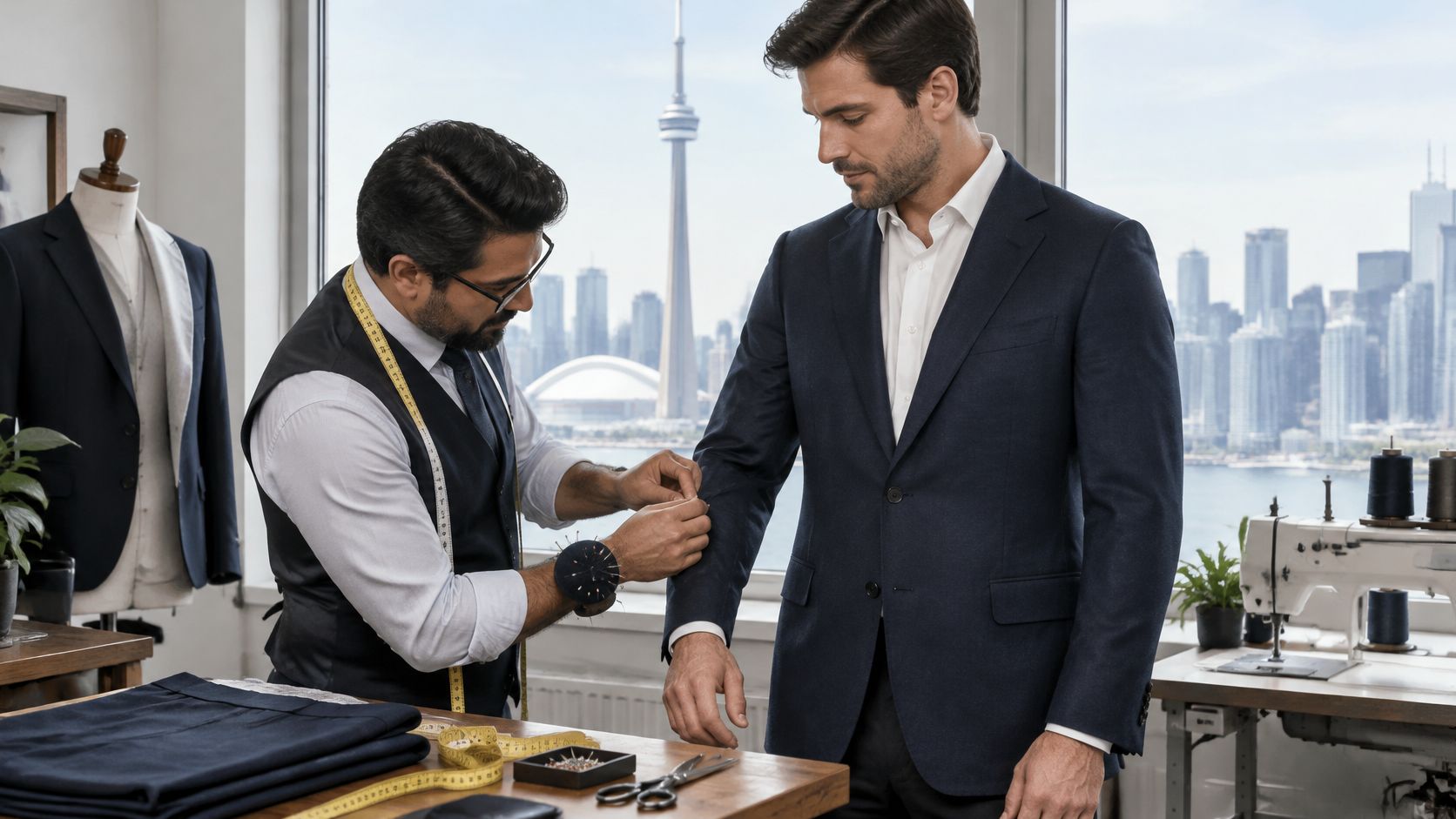
Shoulders are structural, not cosmetic. Narrowing a jacket shoulder means opening the sleeve from the armhole, recutting the shoulder line, resetting the sleeve head and rebuilding the pad and canvas underneath. On an off-the-rack jacket the work usually outruns the value of the garment, and the finished line often looks pulled.
Practical rule: buy the shoulder and the chest, alter the waist and the sleeve. The two ends of a jacket are not interchangeable.
A navy blazer makes the point. Suppose the sleeves sit long enough to swallow your shirt cuff and the shoulders extend past your own. The sleeves can come up in an afternoon. The shoulders cannot come in without recutting the jacket around a different armhole. If the shoulders are the problem, the jacket is the wrong jacket, whatever the discount was.
Sleeve work looks simple until the tailor reaches the cuff. This walkthrough on shortening sleeves shows the order of the work and why a functioning cuff or button placket changes the job.
What makes a garment a good candidate
Three checks decide it before any pin goes in.
- Fabric in reserve: enough turn-up at the hem and enough width at the side seams for the change you want.
- Fabric that forgives a needle: tightly woven wool and cotton recover from pin marks, while fine silk, satin and coated fabrics keep every hole.
- A problem in one zone: a jacket that's tight in the chest, long in the sleeve and wide at the shoulder isn't an alteration job, it's a sizing problem.
If the job is trousers, settle the finished length before the fitting. This guide to how to hem pants sets out the measuring order and where to mark so the tailor and the wearer agree on the same number.
Judging Alteration Value Before You Book
The romantic case for repair is that it keeps clothing out of landfill. The practical case is cost per wear, and the two don't always point the same way. Canada discards roughly 1.1 to 1.3 million tonnes of clothing and textiles each year, and Ontario alone discarded almost 378,000 tonnes in 2022, about 25 kg per person, according to York Region's clothing and textile reuse guidance. That same analysis names the barriers that keep garments in closets: fewer people sew, time is short, and many assume a repair costs more than a replacement.
That assumption is sometimes right. A repair on something you'll wear twice is money spent on a wardrobe you don't use, and a cheap quote on a badly built garment just buys a pricier version of the same problem. The arithmetic favours the tailor only when the garment is good enough to keep and the wears ahead of it are real.
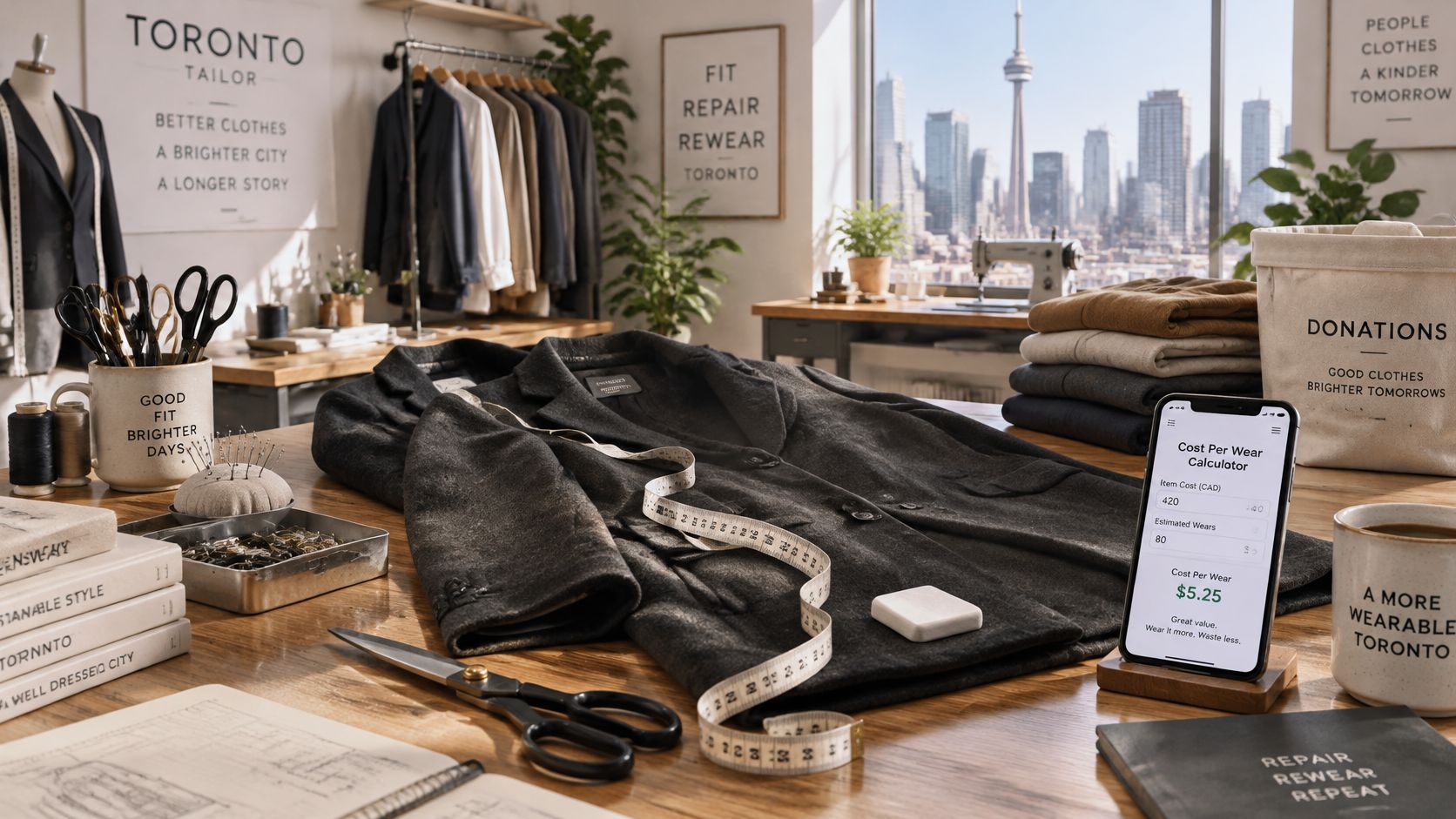
A five-point check before you commit
- Garment quality: check the seams, the lining and the fabric weight. A garment built with a proper seam allowance and a canvas front is worth working on.
- Replacement price: compare the alteration quote with what a new version costs today, not what you paid originally.
- Expected future wear: count the occasions in the next year where you'd reach for it.
- Sentimental value: a parent's coat or a wedding piece is a legitimate reason to spend, and it's the only criterion that overrides the arithmetic.
- Defect complexity: one broken closure or a seam that's come apart is simple work. A shoulder line, a collar or a fully beaded bodice sits at the other end of the price range.
The test that settles most arguments: divide the alteration quote by the wears you expect, then do the same for the replacement. The lower number wins.
The coat that beats its replacement
Say a well-made wool coat needs a new zip and its sleeve linings replaced. The repair bill lands close to the price of a cheap new coat on a sale rack. The old coat gets worn four days a week for years; the cheap replacement loses its shape after a season of Toronto winters and slush. Divide each cost by the number of wears and the repair wins by a distance.
Formalwear makes the same case in a different key. A kilt can't be cut from the bottom, because the selvedge or fringe is the finished edge. It comes up at the waistband instead, which is why adjusting kilt length for weddings is a waist-and-pleat job rather than a hemming job. Construction dictates method, and method sets the price. The same logic applies to occasionwear, so it helps to see what dress alterations cost before you commit to a gown fitting.
Three signs the answer is no
- The fabric itself is failing. Hardware is replaceable. Cloth worn thin at the elbows or the seat isn't, and a new seam there just relocates the weak point.
- The replacement undercuts the repair. On basic pieces, the labour alone can cost more than the garment is worth.
- The garment fits a life you no longer live. Paying to alter a piece for occasions that never arrive spends the same money on a closet that stays full.
When none of those signs apply and the five checks pass, book the fitting. When two or more of them do, the money is better spent on the replacement.
Community Repair Options Across Toronto
The City has funded a repair network since 2018, and it changes the repair-or-replace math for cheaper garments. Four Sewing Repair Hubs run through the Community Reduce and Reuse Programs provide tools, equipment, supplies, workshops and instruction in basic alterations and clothing repair, along with support for redesigning garments made from repurposed textiles, as the City of Toronto program page sets out.
A hub shifts the calculation because the price of a repair there is your own afternoon, not a bill. A worn t-shirt or a pair of play clothes that would never justify a tailor's fee still earns extra wears from a hem you run yourself. That is real value for garments that fail the quality test but are not ready to throw out.
The split for where a garment goes stays simple. A hub teaches a running stitch, a button reattachment and a straight hem. A tailor handles work where the garment has to fit a body under a jacket, hang level at an event or hold its shape after a seam moves.
The dividing line: if the fix is simple and you have the time, try the hub. If the garment matters for an occasion or for fit, book a professional.
Time in the day is the other obstacle. A laundry pickup near me that collects and returns garments removes the trip that keeps a repair sitting on the to-do list.
Questions to Ask a Toronto Tailor Before You Book
A good counter conversation takes two minutes and prevents most disputes. Bring these questions in order, and listen for the shape of the answer rather than the sales pitch.
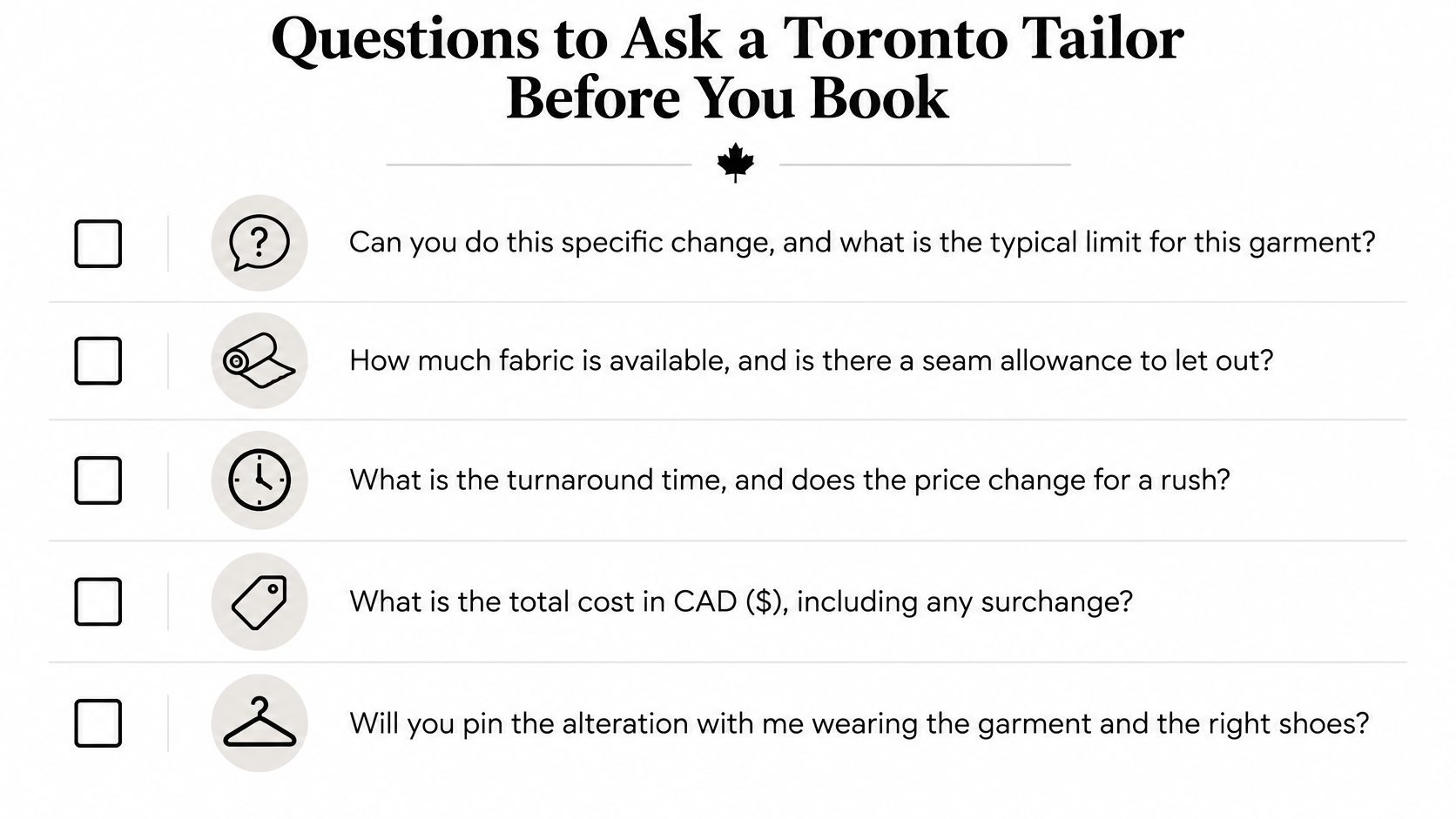
Can you do this specific change, and what's the usual limit on this garment? A shop that answers with a plain sentence about what it can and can't do is telling you how the whole job will go. An answer of "anything is possible" is a warning.
How much fabric is there to work with? Ask about the hem allowance and the seam allowance directly. If the tailor turns the garment inside out to show you, that's the right answer.
Does the price cover one fitting or several, and what happens if the first try needs adjusting? Revisions happen. Knowing whether the second visit is included, or costs a set amount, is the difference between a quote and a bill.
How long will it take, and does a rush change the price? Ask against your event date, not in the abstract, and get the pickup or collection day in writing.
Will you pin the changes with me wearing the garment before I pay? Marked changes are the agreement. If the shop won't show you the chalk line or the pin line, walk away.
What happens if the work damages the fabric? Delicate linings and aged silk can fail under a needle. Ask before the work, not after.
What a good answer sounds like
It names the allowance available, states the limit in plain words and says what a revision costs, all before any cutting. Ask for the quote in writing, itemised by change, so two or three shops can be compared on the same basis. And if the garment also needs cleaning, ask whether that should happen before the fitting, since fabric that shrinks or relaxes changes the measurement. A shop that handles eco-friendly dry cleaning and alterations together can sequence that for you.
How to Prepare Each Garment for a Fitting
A fitting goes wrong more often from missing information than from bad tailoring. A tailor can only measure what's in front of them.
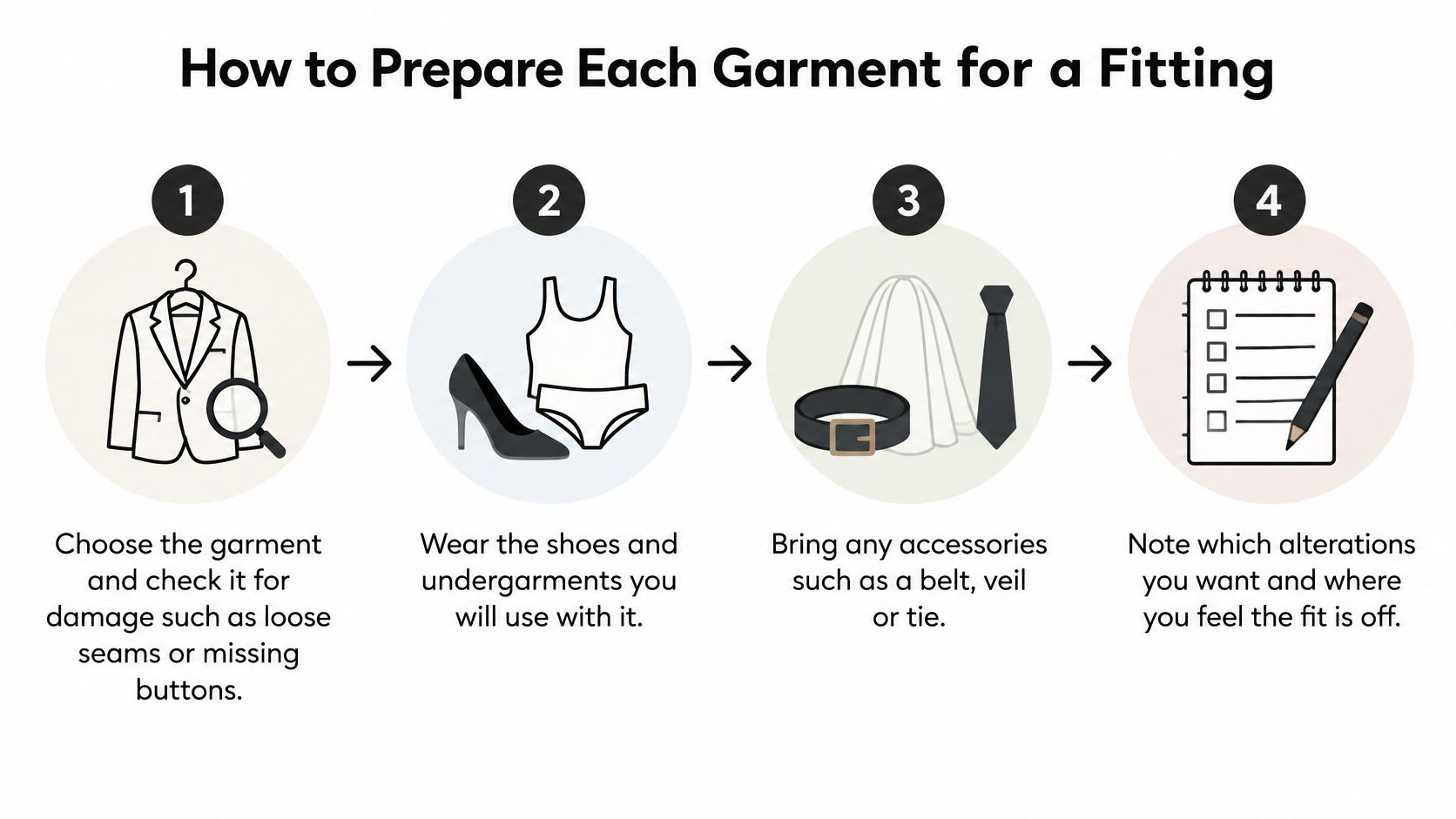
- Choose the garment and check it for damage. Look for loose seams, missing buttons and thinning fabric at the elbows or seat. The tailor should see the damage at the same time as the fit problem, because the two jobs get priced together.
- Wear the shoes and undergarments you'll use with it. Heel height changes where a hem falls, and a different bra changes where the bust line sits. Measuring in flat shoes and wearing heels to the event undoes the work.
- Bring the accessories. A belt sets the waist point, a veil sits above the shoulders, a tie changes the collar. Without them the tailor is guessing at the finished look.
- Note which fit problems you want fixed and where they sit. "The sleeves feel long" is vague. "I want a sliver of cuff showing" is a specification.
- Try the garment on at the fitting with the layers you normally wear. A jacket over a shirt fits differently from a jacket over a sweater, and shoulder room depends on what's underneath.
- Ask for the changes to be marked and the finished length confirmed before you leave. A chalk line on the fabric and a number written on the ticket prevent the most common disagreement, which is two people remembering different instructions.
On hems specifically: the finished length is the one thing worth agreeing in the mirror, with the shoes on. If you're still comparing shops, a hem a dress near me search gives you local options to quote against.
What to bring by garment type
| Garment | Bring to the fitting | Why it matters |
|---|---|---|
| Suit jacket or blazer | Shirt and shoes you wear with it | Shoulder and sleeve length depend on how the jacket sits when worn |
| Trousers or jeans | Shoes with the same heel height | Hem length changes with shoe height |
| Dress or skirt | Undergarments and shapewear | These change the fit line at the waist and hips |
| Wedding gown | Undergarments, shoes and any veil or accessories | The full look is needed for fitting, and lead time is longer |
| Coat or jacket | The heavy layer you usually wear underneath | Shoulder and body room depend on the layers |
| Shirt | The tie or collar setting you usually wear | Collar and sleeve fit are set in the same session |
A good fitting ends with three things in place. The garment sits comfortably when you move, not just when you stand still. The marks on the fabric match what you asked for. And the tailor can explain any limit, such as why the shoulder stays where it is or why the hem can only come down so far, before you leave the room.
Book Your Fitting With the Right Details Confirmed
Once the questions are answered and the marks are agreed, the rest is logistics. Run this check in order.
Match the turnaround to your date. CleanOnline completes alterations within 48 hours of placing the order and delivers them to the doorstep, so work backward from the event rather than forward from today. A wedding or a work trip needs the buffer, and a coat worn daily needs it less.
Choose how the garment travels. CleanOnline offers free pickup and delivery of laundry and dry cleaning anywhere in Toronto, which suits anyone who can't carve out a shop visit. For drop-off in person, there are two in-store locations at 4664 Yonge Street and 4841 Yonge Street, both in North York, Ontario.
Report problems promptly. Any lost or damaged item has to be reported by email to info@cleanonline.ca within 5 business days, so keep the ticket and check the garment the day it comes back rather than the week after.
The booking itself comes last, not first. Confirm the limits and the marked changes you saw at the fitting, then pay. A garment that was described at the counter comes back the way you pictured it, and that's the whole point of the conversation.
If a coat, a pair of trousers or a dress is hanging in the closet because one detail is wrong, CleanOnline, North York's Premium Dry Cleaners takes on alterations and repairs from shirts and jeans through to suits, coats and wedding gowns, with free pickup and delivery anywhere in Toronto and finished work back at your door within 48 hours of the order. Bring your shoes and your layers to the fitting, ask what the allowance will take, and let the shop tell you where a garment stops. Visit CleanOnline, North York's Premium Dry Cleaners to arrange a pickup and get the fitting on the calendar.