Alterations Near Me: Prices, Timing and How to Choose
Looking for alterations near me? Compare prices and turnaround, learn what to bring and get the questions to ask before you choose a provider in Toronto.
The trousers you meant to wear tomorrow pool at the shoe. The jacket closes, but the sleeve covers half your hand. A zipper on a coat you still like has started to split, and a dress for a family event sits an inch too long once you put the heels on. You searched for alterations near me because the garment is still good, and throwing it out feels wasteful as well as expensive.
Fit and repair are the same decision. A sound seam, a working zipper, or a hem that matches the shoes you wear can put a piece back into regular use. A thin, shredded fabric cannot. The notes below are what I walk customers through before a fitting in North York: what the work costs and how long it takes, what to measure, how to choose a counter or a doorstep pickup, what to ask before you hand anything over, and when comfort or a replacement beats a tighter fit.
Alteration Prices and Turnaround Times at a Glance
General alterations and repairs start from $6.00, and routine orders are normally completed within 48 hours of the order being placed, with delivery to the doorstep. That starting point covers the small jobs people postpone: a dragging hem, a loose stitch, a lost button, a tired zipper, or a small patch. The same bench also takes shirts, coats, wedding gowns, dresses, suits, and blazers, so a simple shirt is not booked the same way as a lined coat.
Use the table as a budget guide, not as a final invoice. Where a cell says unconfirmed, that price or date is set only after someone sees the garment.
| Service | What it covers | Starting price | Typical turnaround |
|---|---|---|---|
| General alterations and repairs | Hems, loose stitches, buttons, zippers, patches | from $6.00 | within 48 hours |
| Jacket and coat alterations | Sleeves, outerwear hems, shoulders | Unconfirmed until the coat is reviewed | within 48 hours |
| Wedding dress alterations | Fittings, steaming and pressing for silk, satin, chiffon, lace and tulle | Unconfirmed until the fitting | Set at drop-off, longer than a simple hem |
| Shoe repair | Sole replacement, heel tips, shines | Unconfirmed until the shoe is inspected | Confirm when you book pickup or drop-off |
Why the clock is not the same for every piece
A plain trouser hem is one seam, a matching thread, and a press. A lined wool coat is not. Shortening that sleeve can mean opening the lining, shifting the shoulder pad, resetting the cuff, and closing everything so the arm still swings. A gown in silk, satin, chiffon, lace, or tulle needs fittings plus steaming and pressing, and those layers cannot be rushed the way a cotton hem can. Shoe work is a different bench again: worn soles come off, heel tips are rebuilt, and leather or suede boots and pumps are finished with a shine. That is why the crew at drop-off gives you the expected completion time for that specific order.
Price rule: Treat the table as the floor. The final price is confirmed with staff before any work starts, and prices can change, including when fabric or style differs from what was selected online.
If you are pricing a dress rather than a shirt, read what dress alterations typically cost before you assume a hem is the whole job. I would ask for the completion time on the order slip the same day you drop the piece, so a Friday event is not left to a verbal guess.
What to Bring and Measure Before Your Visit
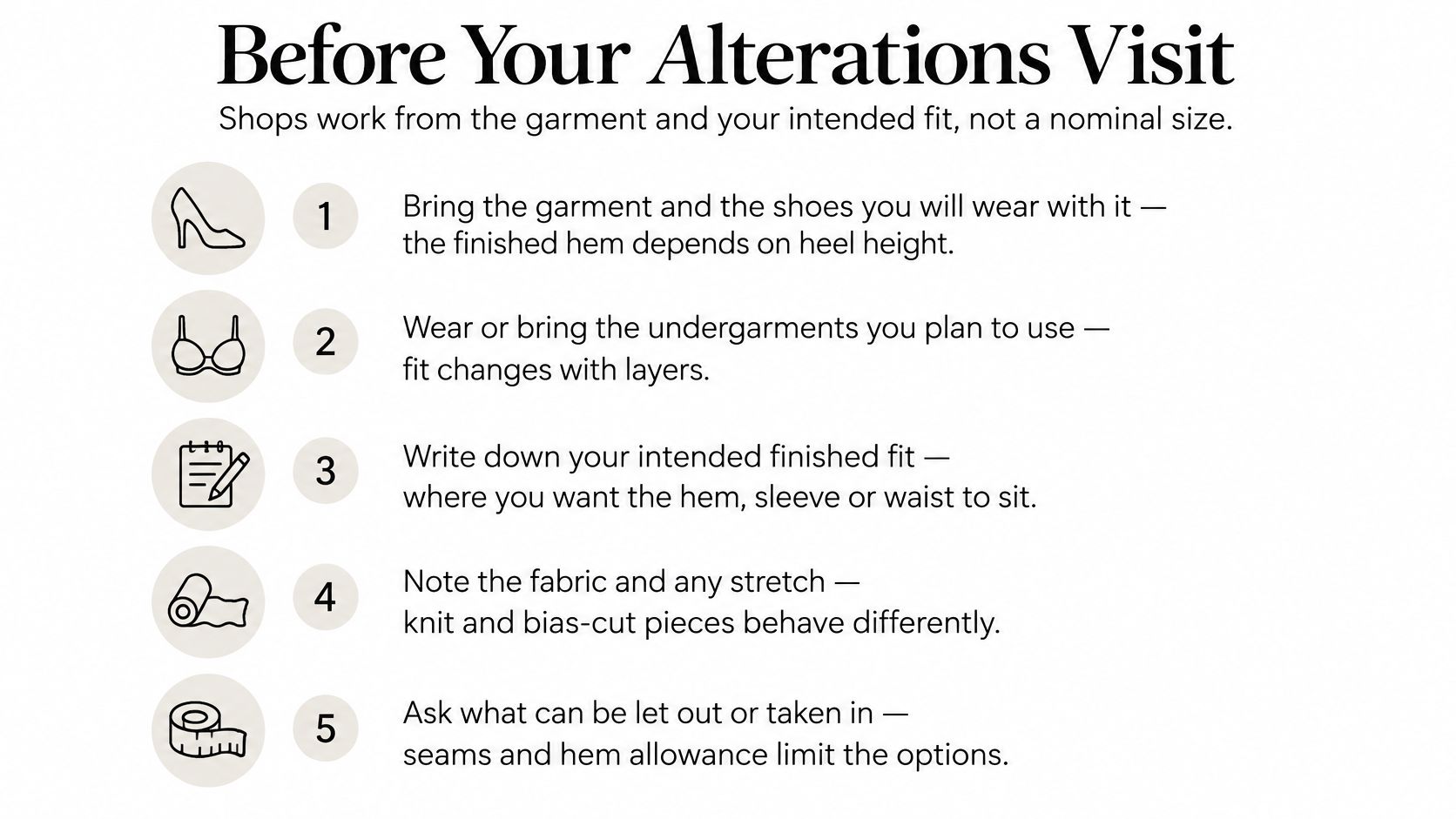
A good fitting starts before the first pin. Bring the garment in the condition it will be worn: clean, pressed, and complete with lining, belt, hood, shoulder pads, and the underlayers you use. Soil can hide the true cloth colour, and a crushed hem can hide whether the original finish was blind-stitched, taped, or rolled.
Labels do not settle the fit. A size 10 from one maker can sit differently in the chest, waist, and hip from a size 10 cut elsewhere, and Toronto's mix of mass-market shirts, uniforms, made-to-measure suits, formalwear, and technical outerwear means the same counter sees very different construction. The City of Toronto reports nearly 50,000 fashion and apparel jobs, with clothing retail at 73.1% of sector employment and clothing manufacturing at 16.3%.
On the garment, the fitter looks for seam allowance, grain, lining, interfacing, zipper type, and the old hem. Those details decide what is possible. A jacket with little allowance can only be eased a small amount; a plaid sleeve has to be shortened so the checks still meet at the cuff; a lined dress may need to be opened through several layers and rebuilt. Write body measurements in centimetres, then write the finished measurement you want, because “waist 76 cm” is not the same instruction as “take the waist in by 3 cm.”
Say so before measuring if the piece is worn seated or dressing happens at home. Standing waist and hem numbers can mislead when a chair, cushion, or mobility aid changes where cloth breaks. For a doorstep handoff, advance measurements still help, but name the garment and the change plainly so the expected finish is clear at drop-off.
Checklist before you leave the house
- Bring the garment clean and complete, with lining and any detachable belt, hood, or pads. Soil hides colour and wear; a crushed hem hides how the original stitch was made.
- Bring the shoes and underlayers you will wear with it. Heel height moves a hem, and a camisole or thick knit shifts where the waist sits.
- Measure waist, hip, chest, sleeve, and inseam in centimetres, and write the finished length you want. A flexible tape follows a curved body better than a rigid ruler; More Sewing's sewing tape measure buying advice helps if your tape is stretched or lacks centimetre marks.
- Note the direction: take in, let out, shorten, or lengthen. Letting out only works where spare cloth was left inside the seam. If that allowance is gone, no careful stitch can invent it.
- Flag stripes, plaids, prints, and nap that must stay aligned. A hem can be the right length and still look wrong if the pattern breaks or velvet shades catch the light differently.
- Bring original hem tape, spare buttons, labels, or matching thread when you still have them. Reusing the old finish keeps the repair from reading as a patch and strengthens the case for altering rather than replacing.
For a single dress hem, the preparation is the same but narrower: clean edge, correct shoes, finished length in centimetres. The guide to hemming a dress near you covers that visit; use this checklist when more than the hem is in play.
Mark the problem while wearing the garment: pinch where it pulls, note where it twists, and check the mirror at seated height if that is how it will be worn. A fitting on the actual garment beats a photo or a size chart because the pin has to solve your posture, not an average body.
How to Find a Convenient Alterations Provider
Start with range, not with the first pin on the map.
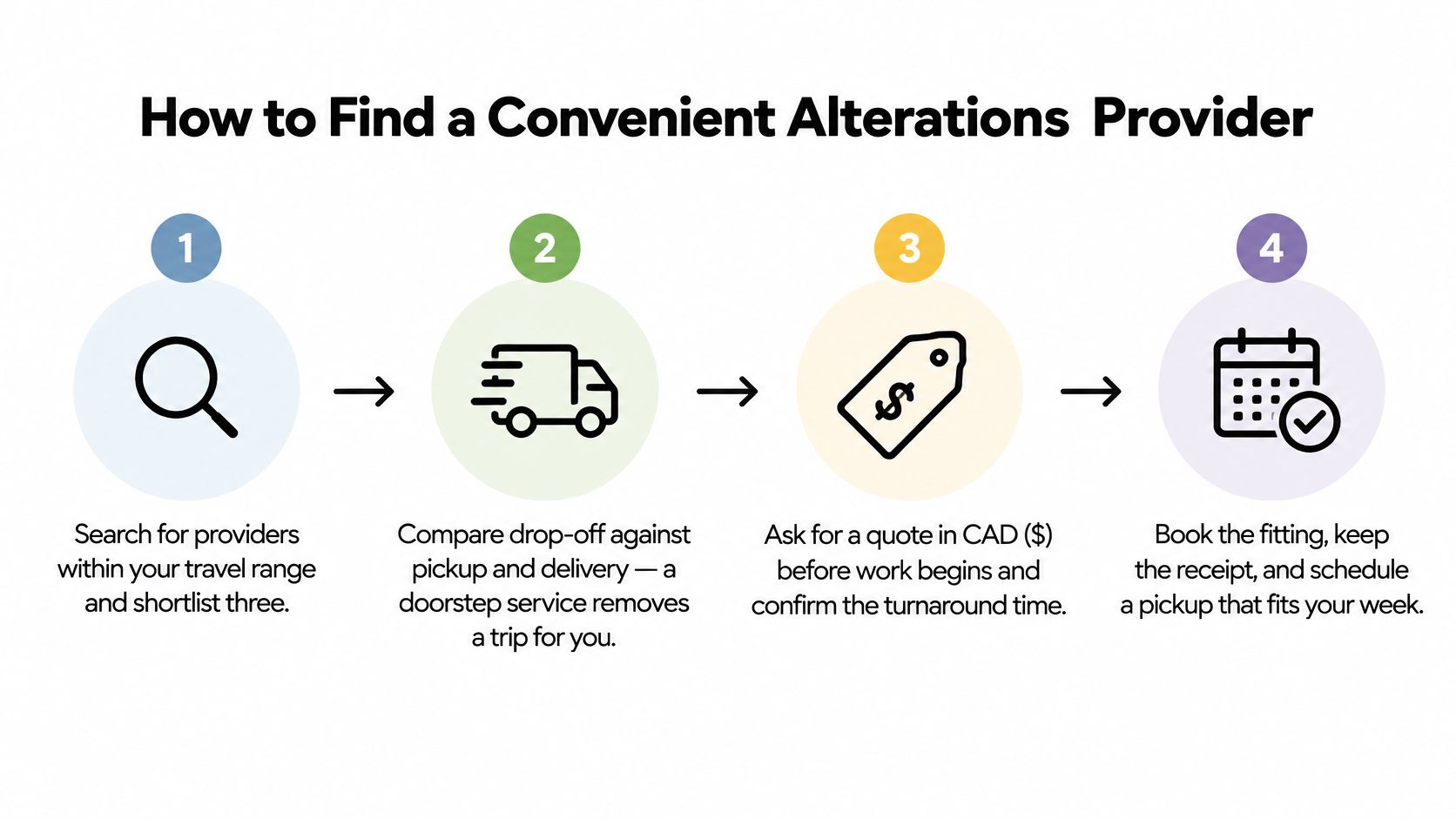
- Search inside the distance you will travel, and shortlist three shops that name your garment type.
- Compare a counter drop-off with pickup and delivery. A doorstep service removes a trip when the piece is bulky, beaded, or hard to carry on transit.
- Check whether same-day pickup is offered when the need is an event, not a slow closet clean-out.
- Confirm the service area includes your address before you pack the garment.
- Call or visit and name the garment. A shop that only shortens jeans is the wrong bench for a lined coat or a gown.
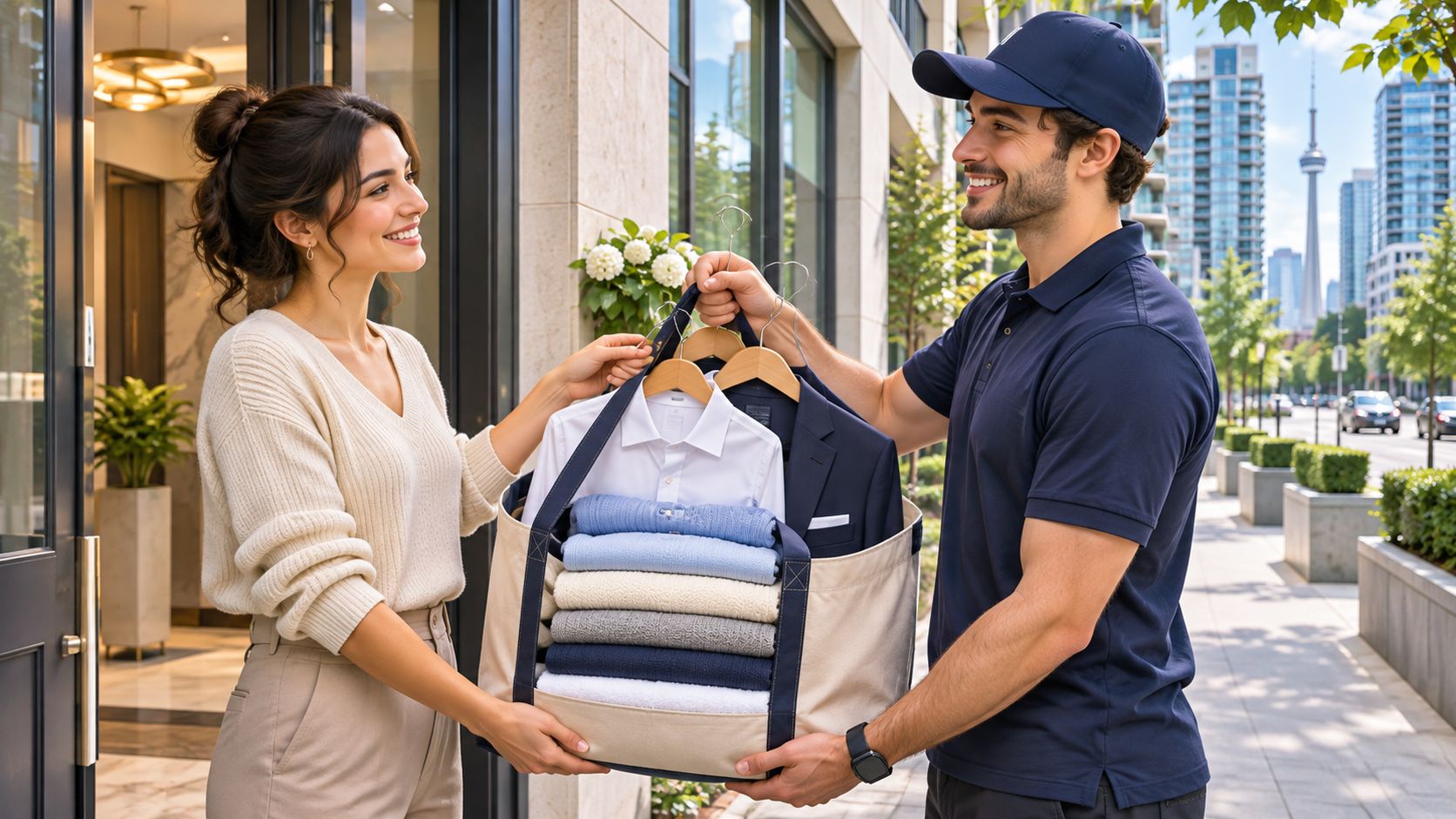
CleanOnline serves Toronto and surrounding areas, with two in-store counters on Yonge Street in North York, at 4664 Yonge Street and 4841 Yonge Street. Same-day doorstep pickup and drop is available, which changes the errand more than another five minutes on the subway does.
Shop visit versus doorstep service
| Option | Best for | Trip needed | Timing |
|---|---|---|---|
| In-store drop-off at 4664 or 4841 Yonge Street | Quick fittings and checking the garment in person | Yes | Expected completion stated at drop-off |
| Doorstep pickup and drop | Bulky or delicate garments and customers with limited mobility | No | Same-day service available |
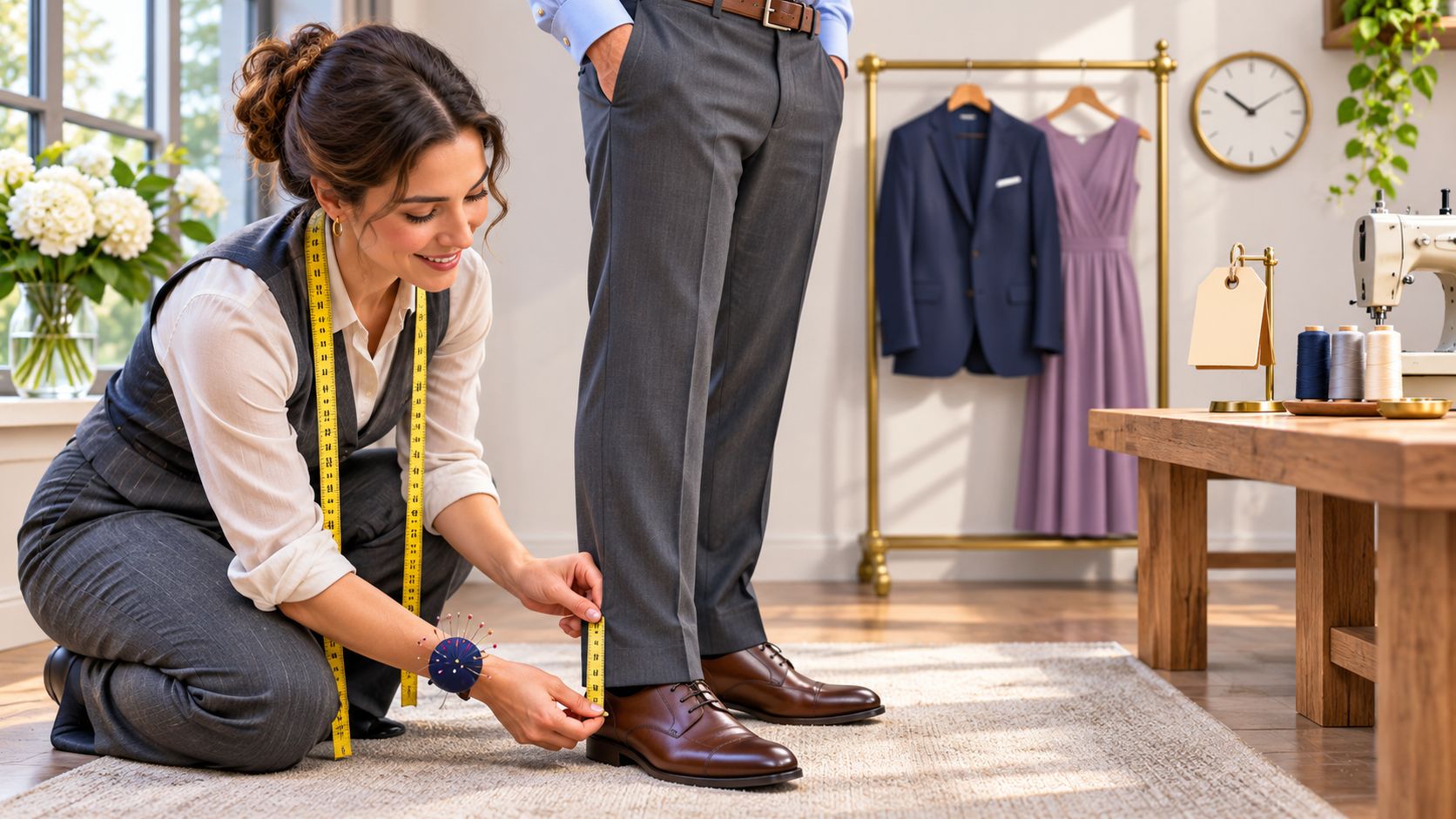
A counter visit is the better choice when someone needs to pin a shoulder or a waist while you are standing in the piece. You see the balance, you can sit, and you leave with the ticket in hand. Doorstep pickup is the better choice for a household that cannot spare the trip, for a gown you do not want on a bus seat, or for anyone who cannot easily get to Yonge Street. The garment still has to match the bench. I would take the nearest provider that will do your garment type well, not the nearest one that only does simple hems.
Questions to Ask Before You Hand Over a Garment
The costly failure is a jacket that comes back with the wrong thread, a puckered seam, or a lining that binds when you lift your arm, followed by a second visit to undo the first. Those errors show fastest on business attire, uniforms, outerwear, and formal clothes, where the cloth is structured and people stand close enough to see the stitch.
Consumer repair has thinned as sewing skills and spare time have shrunk, and inexpensive fast fashion makes a repair feel optional until the damage spreads. Toronto still has a working clothing and leather trade, so specialized work is available locally. You still have to test whether this counter will do it. A sound repair keeps a garment in use longer; a poor one can cost more than replacement.
Secure a loose stitch before the seam opens. Stabilize a frayed hem before you shorten it. Look at worn zipper tape or a tired pocket before it chews the cloth beside it. Early work is smaller work.
What to ask, in the order that prevents rework
- Thread weight and colour: Can the shop match both? A close shade can still read as a scar on fine shirting.
- Original topstitching: Can they reproduce the stitch length and the distance from the edge? A new hem that wanders off the old line is the repair people notice first.
- Lining mobility: Will the lining stay free so the garment moves at the armhole, the seat, and the hem? A lining stitched tight to the shell restricts movement.
- Balance after the change: Will they check that a jacket still hangs level and that trouser legs still break the same way? One side taken in harder than the other twists the whole garment.
- Ease for real wear: Say whether the piece is worn seated, layered over a sweater, washed weekly, or handled by a caregiver. The right answer changes the allowance, not only the measurement.
- Price before work: Ask whether the written quote can change after inspection. Prices can change, and an item priced through an online order may be adjusted with your approval when style, fabric, or other factors differ.
- How many fittings: A hem may need none after the first pin. A shoulder or a gown often needs a second look. Ask for the normal count before you promise the piece to an event.
- Rework if the fit is still wrong: Ask what happens if the finished length is off. A clear answer names who fixes it and whether that fix is included.
- When it will be ready: When you drop the items off, the branch crew tells you the expected completion time. Ask for that time on the order slip as well as hearing it.
A good answer is specific, calm, and willing to show a similar finished piece. A shrug, or "we'll see when we open it," is a reason to keep the garment in your bag.
Alterations for Mobility Needs and Seated Dressing
The best alteration is not always the tightest one. Comfort, independence, safe dressing, and washability can matter more than a sleek line through the waist. Someone who dresses while seated, who has swelling that changes through the day, or who needs a caregiver's help with small buttons, will not be served by a fit that only looks right in a standing mirror.
Most "near me" pages still describe alterations as ordinary fashion tailoring. They skip magnetic closures, easier fasteners, seated-wear changes, adjustable hems, and discreet adjustments that keep the original look. That gap is local, not theoretical. George Brown College students developed adaptive garments for people with mobility challenges, which shows real demand in Toronto for this kind of modification. The same account notes only a small number of Canadian hands-on repair initiatives, including one in Toronto, so you should not assume every tailor already works this way.
Changes that protect independence
- Magnetic or hidden closures can replace small buttons that are hard to pinch.
- Larger zip pulls give a weaker grip something to hold.
- A longer back or a relaxed seat keeps a shirt or trouser from pulling when the wearer sits for long periods.
- An adjustable or split hem can clear a footrest or a wheel without looking unfinished from the front.
- A discreet ease through the side or the underarm can leave the public face of the garment alone.
At the fitting, ask in this order. Can measurements be taken at home if travel is the barrier? Will pickup and delivery cover the address, and how many fittings does this change normally need? How will the cut allow for a wheelchair, for swelling, for orthotics, or for someone else doing up the fastening? Can the person sit, reach, and stand during the check, rather than only stand still?
Bring the person who will wear the garment whenever that is possible. A caregiver can describe the morning routine, but movement is the test of whether the closure, the seat, and the hem work. I would rather leave a little ease, and a closure the wearer can manage alone, than chase a close fit they cannot put on.
Decide Whether to Alter or Replace a Garment
A lot of clothing that looks finished is still worth fixing. Researchers analyzed nearly 11,000 discarded textile items, about 1,800 kilograms, from 10 Ontario municipalities between 2019 and 2020. Seneca Polytechnic reported that 65% of that textile waste was still reusable and another 21% could be recycled. About 40% of the reusable items would need some repair before reuse. Replacing a zipper or a button, closing a seam, adjusting fit, or hemming is exactly that kind of repair. The same findings estimate that Ontarians generate roughly 500 million kilograms of textile waste a year. A hem is a small job against that volume, and it is still one garment kept out of the bag.
Three outcomes, one garment
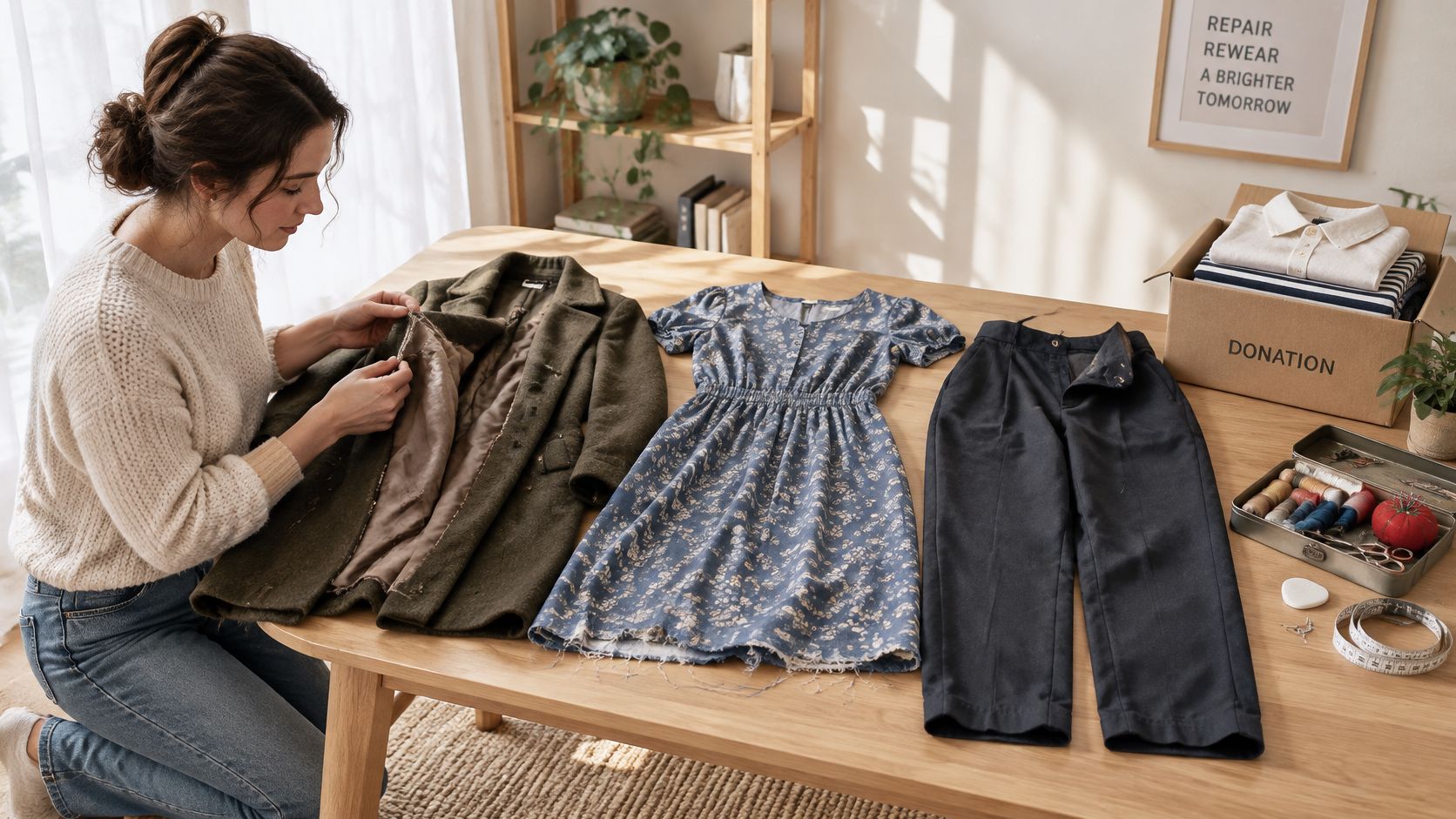
Alter when the problem is the hem, the sleeve, the waist, or the shoulder, and the cloth is still sound. A wool trouser with a clean seat and a tired length is a yes. So is a blazer whose sleeves are long. If you want the sequence for a plain leg, how to hem pants shows why the original crease and the shoe matter before anyone cuts.
Repair when the damage is a loose stitch, a missing button, a failing zipper, or a small tear that has not run into the body of the cloth. Do that before the hole recruits the seam beside it.
Replace when the fabric is worn thin, the lining has failed across the whole garment, or the alteration would cost more than a new piece of similar quality. I would not pay to rebuild a shirt whose cloth already shines at the elbow and the collar. That money is better kept for a piece with years left in it.
Check the garment against the measurements and the shoes, pick a provider that handles that type of clothing, and book the fitting. If the trip is the obstacle, use our pickup and drop instead of leaving the piece in the closet. Book the fitting for any garment you would otherwise discard for fit or for minor damage.
CleanOnline, North York's Premium Dry Cleaners handles alterations and repairs alongside dry cleaning, from hems and zippers to coats, suits, and wedding gowns, with doorstep pickup and delivery across Toronto and the surrounding area. If a piece in your closet only needs a better fit or a small repair, bring it to either Yonge Street counter or book a pickup. Visit CleanOnline, North York's Premium Dry Cleaners to schedule the order and confirm the price before the work starts.